- English
- French
- German
- Portuguese
- Spanish
- Russian
- Japanese
- Korean
- Arabic
- Greek
- German
- Turkish
- Italian
- Danish
- Romanian
- Indonesian
- Czech
- Afrikaans
- Swedish
- Polish
- Basque
- Catalan
- Esperanto
- Hindi
- Lao
- Albanian
- Amharic
- Armenian
- Azerbaijani
- Belarusian
- Bengali
- Bosnian
- Bulgarian
- Cebuano
- Chichewa
- Corsican
- Croatian
- Dutch
- Estonian
- Filipino
- Finnish
- Frisian
- Galician
- Georgian
- Gujarati
- Haitian
- Hausa
- Hawaiian
- Hebrew
- Hmong
- Hungarian
- Icelandic
- Igbo
- Javanese
- Kannada
- Kazakh
- Khmer
- Kurdish
- Kyrgyz
- Latin
- Latvian
- Lithuanian
- Luxembou..
- Macedonian
- Malagasy
- Malay
- Malayalam
- Maltese
- Maori
- Marathi
- Mongolian
- Burmese
- Nepali
- Norwegian
- Pashto
- Persian
- Punjabi
- Serbian
- Sesotho
- Sinhala
- Slovak
- Slovenian
- Somali
- Samoan
- Scots Gaelic
- Shona
- Sindhi
- Sundanese
- Swahili
- Tajik
- Tamil
- Telugu
- Thai
- Ukrainian
- Urdu
- Uzbek
- Vietnamese
- Welsh
- Xhosa
- Yiddish
- Yoruba
- Zulu
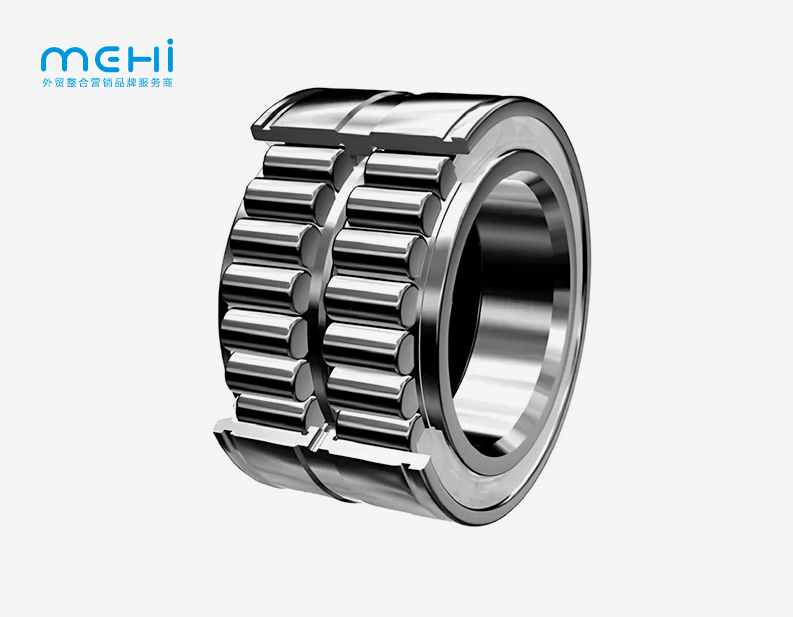
Precision double-row tapered roller bearings can handle heavy radial and axial loads. This complex bearing system has two rows of tapered rollers in one assembly for better load distribution. Tapered bearings are stable under mixed stress. Heavy-duty industrial applications that require reliability and performance use bidirectional locating bearings because they limit axial movement in both directions.
Understanding Double Row Tapered Roller Bearings
Modern industrial machines benefit from double-row tapered roller bearings. The sturdy mechanical components' two rows of tapered rollers handle more stress than traditional bearings.
Design: tapered roller layout with precisely cut rollers for inner and outer raceways. The geometric bearing design spreads loads over a wider contact surface, preventing stress concentrations that could cause premature failure in high-load applications.
Superior Load Distribution Capabilities
Single-row bearings cannot handle loads like dual-row ones. Separate tapered roller rows increase assembly load capacity. This design allows the bearing to withstand strong radial and axial loads in both directions.
Tapered wedging enhances thrust resistance. To maintain performance under different loads, tapered rollers automatically distribute the load as operating forces increase. Applications with changing load patterns benefit from self-adjusting bearings.
Material Excellence and Manufacturing Precision
Double-row tapered roller bearings use advanced steels like GCr15, GCr15SiMn, and G20Cr2Ni4A. Special heat treatment gives premium materials excellent hardness profiles and dimensional stability. GCr15 steel resists fatigue, while GCr15SiMn hardens for larger bearings. Demanding applications suit G20Cr2Ni4A's impact resistance.
Bearing performance depends on manufacturing accuracy. Advanced grinding and finishing reduce friction and wear by smoothing surfaces. Quality control checks micrometer-scale dimensions for production run consistency.
Double Row Tapered Roller Bearing Design Features and Working Principle
Several technical features distinguish double-row tapered roller bearings from others. Understanding these design elements shows their superior performance and operational benefits.
Unique Double-Row Configuration
Double-row tapered rollers in a shared housing distinguish these bearings. Rows carry load and increase assembly capacity. This configuration lets the bearing handle complex loading scenarios that overwhelm single-row options.
Spacing rows increases moment load resistance. The design aids shaft deflection and misalignment. Bearings run without perfect alignment thanks to distributed support in both rows.
Tapered Geometry and Load Transmission
Each conical roller element provides controlled line contact load transfer from the shaft to the housing. Tapered rollers contact continuously, unlike point-contact ball bearings. A large contact area reduces stress and improves load distribution.
Application optimizes cone angle. Shallower angles optimize radial load handling, while steeper angles increase axial load capacity. Operating cone angles are carefully selected by design engineers.
Working Principle and Load Distribution
Double-row tapered roller bearings have precise roller-raceway interaction. Each roller touches the inner ring's inner, outer, and large ribs when loaded. Triple-contact design prevents roller skewing and improves load transfer.
Geometric constraints distribute load automatically in a tapered design. Position and force magnitude divide rows' radial loads. Tapered geometry assigns thrust and axial loads to rows.
Advantages Over Alternative Bearing Types
Double-row tapered roller bearings outperform ball and cylindrical roller bearings in several ways. In load capacity, they outperform ball bearings due to increased contact area and optimized stress distribution. Flexible ball bearings ease rigidity.
Load sharing and lower contact stresses prolong operation. Maintenance is extended by building strength and contamination resistance. These advantages lower operational costs and improve machinery reliability.
Applications and Performance in Industrial Settings
Dual-row tapered roller bearings perform well in harsh industrial environments where others fail. Many heavy-duty applications require their load-handling and reliability.
Mining and Metallurgical Operations
Under high shock loads, contamination, and temperature fluctuations, mining equipment uses these bearings. Double-row tapered roller bearings power crushers, conveyors, and ore processing equipment in harsh environments. Reversing load equipment needs bidirectional capacity.
These bearings excel in steel rolling mills, another important use. Roll neck bearings must withstand shaft deflection, thermal expansion, and massive rolling forces. Adjustable clearance helps maintenance teams optimize performance over long service intervals and account for wear.
Heavy Machinery and Gearbox Applications
Gearbox manufacturers use double-row tapered roller bearings for high-torque shaft support and precise positioning. Rigidity prevents shaft deflection, which damages gear mesh and causes early wear. These moment load-resistant bearings help reducers and transmissions.
Hoisting equipment needs double-row tapered roller bearings for safety and reliability. The bearings have performed well in critical crane lifting operations under extreme loading.
Performance Metrics and Operational Parameters
Industrial-grade double-row tapered roller bearings can handle tons to hundreds of tons, depending on size and configuration. With proper lubrication, cryogenic applications above 200°C can continue. Lubrication, bearing size, and operation limit speed. Over-500 mm bearings handle much at lower speeds. Smaller bearings can handle heavier loads and faster rotation.
Size Range and Configuration Options
Inside diameters are 150 mm to 1778 mm for industrial use. This range covers moderate-duty industrial equipment to massive mining and steel production machinery.
Two configuration types satisfy application needs. TDO bearings are stiff and load-capable, like two single-row tapered roller bearings mounted back-to-back. TDI bearings' cup spacers allow adjustable clearance for medium-load roll neck applications.
Comparison and Procurement Guidance for Double Row Tapered Roller Bearings
Bearing selection depends on application, performance, and operational conditions. Understanding bearing pros and cons improves machinery performance and costs.
Performance Comparison with Alternative Bearing Types
Single-row tapered roller bearings are cheaper but less stiff and load-capable. Double-row designs improve moment load resistance and bidirectional axial positioning. In demanding applications, double-row bearings outperform and last longer despite complexity.
Double-row tapered roller bearings can handle heavier loads than ball bearings in industry. Point contact lowers load capacity and stresses ball bearings more than tapered rollers' line contact. While cylindrical roller bearings can handle high radial loads, tapered ones can handle axial loads. Double-row tapered roller bearings handle mixed loads well.
Configuration Selection Guidelines
The TDO bearing is ideal for high-load, stiffness applications. These bearings work best with constant loads and no service interval clearance adjustment. These rigid bearings benefit heavy-duty industrial drives and large shafts.
TDI bearings excel in thermal expansion and wear-related operational clearance adjustments. The integrated cup spacer lets maintenance personnel optimize clearance settings without bearing replacement, extending service intervals, and lowering costs.
Quality Standards and Supplier Evaluation
Premium bearing manufacturers use ISO 281 for dynamic load calculations and ISO 492 for dimensional tolerances. Certification guarantees supplier performance and interchangeability. Quality management systems certified by ISO 9001 ensure manufacturing consistency.
Certified bearing steel grades and heat treatment processes. Traceability documentation aids quality and failure analysis. Supplier audits show manufacturing and quality control.
Procurement Strategies and Cost Optimization
Big industrial projects can save money by buying in bulk. Annual contracts with qualified suppliers ensure availability and low prices. OEM partnerships provide lifecycle technical support and customized solutions.
Heavy industry project-based purchasing requires lead time. Multiple qualified suppliers ensure supply chain redundancy and competitive pricing. Suppliers should offer technical support for custom applications.
Installation and Maintenance Best Practices
Installing and maintaining double-row tapered roller bearings properly optimizes performance and lifespan. Best practices prevent early failure and ensure reliable operation throughout the service interval.
Pre-Installation Preparation and Housing Requirements
Housing preparation begins with thorough mating surface cleaning to remove contamination that could affect bearing performance. Surface finish requirements are 0.8–3.2 micrometers, depending on bearing size and application. Dimensional verification prevents installation problems and ensures fit.
Shaft preparation includes surface finish and dimensional inspection for bearing compliance. Shoulders must support bearing positioning and allow installation clearances. Carefully consider the shaft shoulder filter radii to avoid bearing corner radii interference.
Installation Procedures and Techniques
Bearing size and configuration affect installation. Larger industrial bearings require hydraulic tools, but smaller ones can be installed mechanically. Heating aids installation and protects bearings.
Installation temperature control prevents bearing material thermal damage. Factory-recommended steel bearing heat is 100-120°C. Induction heating regulates temperature, unlike open flame.
Lubrication Requirements and Maintenance Scheduling
Speed, temperature, and environment affect lubrication. Most industrial applications use grease, but high speed or extreme temperatures may require oil. Chemical reactions that degrade bearing performance are prevented by lubricant compatibility verification.
Manufacturer recommendations and operating conditions should guide maintenance scheduling. Vibration monitoring detects bearing condition changes early, enabling proactive maintenance before catastrophic failure. Temperature monitoring detects lubrication degradation or bearing distress before permanent damage.
Troubleshooting Common Issues
High operating temperatures and uneven wear indicate alignment issues. Laser instruments align shafts and reduce bearing stress. Standard alignment checks prevent gradual misalignment caused by foundation settling and thermal effects.
Replacement bearing storage and sealing prevent contamination. Moisture intrusion accelerates bearing wear and requires immediate attention. Bearing-damaging contaminants are removed by oil-lubricated filtration systems.
Conclusion
Heavy industrial applications requiring high load capacity and reliability require double-row tapered roller bearings. Their dual-row tapered geometry outperforms conventional bearings in harsh environments. The bidirectional load accommodation and high stiffness make these bearings essential for mining, steel mill, and heavy machinery applications. Procurement decisions optimize equipment performance and operational costs by analyzing design, application, and maintenance needs. Double-row tapered roller bearings are reliable for the most demanding mechanical applications as industrial equipment improves.
FAQ
1. What is the typical service life of double-row tapered roller bearings in industrial applications?
Properly maintained industrial bearings can last 20,000–100,000 hours. Operational temperature, load, lubrication, and environmental contamination affect lifespan.
2. How do operating temperatures affect bearing performance and selection?
Proper lubrication keeps these bearings working from -40°C to +200°C. Special lubricants and load capacity may be reduced in high temperatures. Operating clearances require thermal expansion considerations during installation.
3. What distinguishes TDO from TDI bearing configurations?
TDO bearings are stiff and load-capable, like two back-to-back single-row bearings. For periodic clearance optimization, TDI bearings have adjustable cup spacers for clearance adjustment during maintenance.
4. How can installation errors be prevented during bearing mounting?
Incorrect heating, contamination, and clearance settings are common installation mistakes. Following manufacturer instructions, using proper tools, and keeping the environment clean prevent most installation failures. Professional installation training greatly reduces errors.
5. What maintenance indicators suggest bearing replacement is necessary?
Vibration, unusual noise, high operating temperatures, and visible lubricant contamination are indicators. Before catastrophic failure, quantitative condition monitoring systems enable data-driven replacement decisions.
Partner with Meihao for Premium Double Row Tapered Roller Bearing Solutions
Meihao connects you to verified double-row tapered roller bearing manufacturers across China's industrial landscape. Our comprehensive platform connects global procurement teams with premium suppliers who meet heavy industrial application requirements. We provide access to manufacturers using advanced materials like GCr15, GCr15SiMn, and G20Cr2Ni4A steel grades in sizes from 150 mm to 1778 mm inner diameters. Our verified supplier network provides quality and reliability for TDO or TDI configurations for mining equipment, steel mills, and heavy machinery. Contact us at somyshare@gmail.com to learn how our platform simplifies double-row tapered roller bearing supplier sourcing while meeting international quality standards.
References
1. Harris, Tedric A., and Kotzalas, Michael N. "Advanced Concepts of Bearing Technology: Rolling Bearing Analysis." 5th Edition, CRC Press, 2006.
2. Palmgren, Arvid. "Ball and Roller Bearing Engineering." 3rd Edition, SKF Industries Inc., Philadelphia, 1959.
3. Eschmann, Paul, Hasbargen, Ludwig, and Weigand, Karl. "Ball and Roller Bearings: Theory, Design, and Application." 2nd Edition, John Wiley & Sons, 1985.
4. ISO 281:2007. "Rolling Bearings—Dynamic Load Ratings and Rating Life." International Organization for Standardization, Geneva, 2007.
5. ANSI/ABMA Standard 11-1990. "Load Ratings and Fatigue Life for Roller Bearings." American Bearing Manufacturers Association, Washington, D.C., 1990.
6. Tallian, Tibor E. "Failure Atlas for Hertz Contact Machine Elements." 2nd Edition, ASME Press, New York, 1999.