- English
- French
- German
- Portuguese
- Spanish
- Russian
- Japanese
- Korean
- Arabic
- Greek
- German
- Turkish
- Italian
- Danish
- Romanian
- Indonesian
- Czech
- Afrikaans
- Swedish
- Polish
- Basque
- Catalan
- Esperanto
- Hindi
- Lao
- Albanian
- Amharic
- Armenian
- Azerbaijani
- Belarusian
- Bengali
- Bosnian
- Bulgarian
- Cebuano
- Chichewa
- Corsican
- Croatian
- Dutch
- Estonian
- Filipino
- Finnish
- Frisian
- Galician
- Georgian
- Gujarati
- Haitian
- Hausa
- Hawaiian
- Hebrew
- Hmong
- Hungarian
- Icelandic
- Igbo
- Javanese
- Kannada
- Kazakh
- Khmer
- Kurdish
- Kyrgyz
- Latin
- Latvian
- Lithuanian
- Luxembou..
- Macedonian
- Malagasy
- Malay
- Malayalam
- Maltese
- Maori
- Marathi
- Mongolian
- Burmese
- Nepali
- Norwegian
- Pashto
- Persian
- Punjabi
- Serbian
- Sesotho
- Sinhala
- Slovak
- Slovenian
- Somali
- Samoan
- Scots Gaelic
- Shona
- Sindhi
- Sundanese
- Swahili
- Tajik
- Tamil
- Telugu
- Thai
- Ukrainian
- Urdu
- Uzbek
- Vietnamese
- Welsh
- Xhosa
- Yiddish
- Yoruba
- Zulu
The Main Advantages of Using Four Row Cylindrical Roller Bearings in Industrial Applications
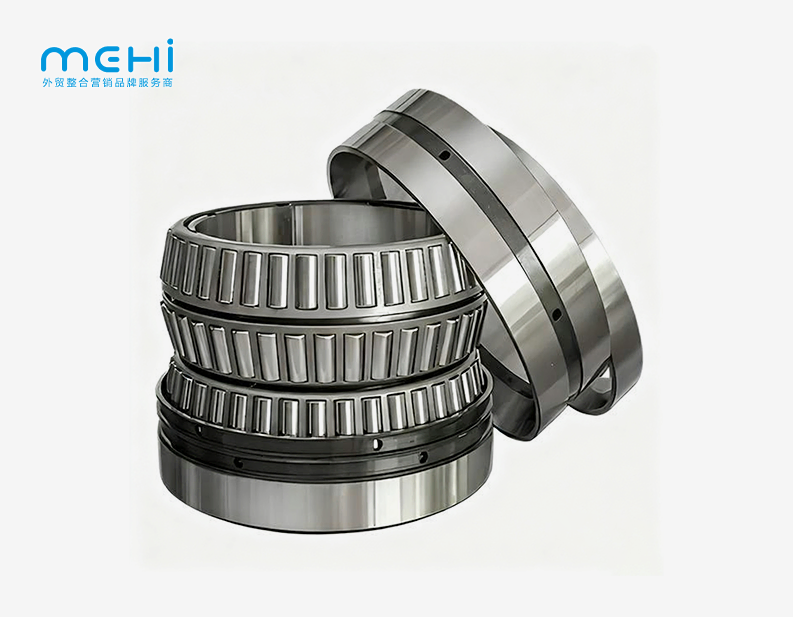
Four-Row Cylindrical Roller Bearings are a unique subset of bearing technology designed specifically for high-stress applications in rolling mills. Single-Row bearings, like the NU206 or NJ311 types, made for modest radial loads, don't distribute loads as well as Four-Row bearings do because they have more than one row. This design adds more contact points between rollers and raceways, which lets steel production, wire mills, and cogging mills use machinery that can handle rotational forces of over a few thousand kilonewtons. Their small but rigid design solves important problems in heavy industry, like keeping things stable at high temperatures, reducing vibrations, and doing repairs quickly, all of which have a direct effect on how much time equipment is used and how long it lasts.
Understanding Four Row Cylindrical Roller Bearings
Multi-Row Design vs. Single and Double Row Configurations
The load transfer technique is the main distinction between Single-Row and Four-Row Cylindrical Roller Bearings. A normal NU series bearing has one row of wheels that touch each other along a straight line. This makes it perfect for uses like electric motors that need both radial rigidity and axial freedom. But rolling mills that make more than 5,000 kN of force need the load-sharing features that can only be found in four parallel rows. In FC, FCD, or FCDP series bearings, each row holds a part of the total radial load on its own. This spreads the stress out over fewer rollers, about 70% less than in Single-Row designs that do the same thing. This arrangement stops early raceway wear, which is a typical way for high-tonnage steel to fail.
Core Design Features and Industry Standards
Four-Row bearings meet the tolerance standards set by ISO 492; based on the needs of the mill, precision grades P0 and P6 are offered. Inside widths can be anywhere from 90mm to 1,400mm, so the range of sizes can fit everything from bar mills to big plate rolling stands. Manufacturing uses three main types of materials: GCr15 for general-purpose uses, GCr15SiMn for better toughness in shock-load situations, and G20Cr2Ni4A carburized steel for the hardest surface in rough conditions. Core hardness of HRC 60–64 is reached through heat treatment methods. This ensures wear resistance over millions of stress cycles. Solid brass cages or pin-type steel cages keep roller spacing even when speeds hit 3,000 RPM, which is very important for wire mills that make a lot of coils.
These bearings are different from locating types because the inner rings don't have teeth on them. This technical choice lets the inner ring assemblies and outer ring housings be mounted separately, which cuts down on repair downtime during roller campaigns. Maintenance teams can look at the raceway surfaces without taking the mill apart completely. This can save 40 to 60 hours of work each time a bearing needs to be changed in continuous casting processes.
Core Advantages of Four Row Cylindrical Roller Bearings
Superior Load Capacity and Distribution Efficiency
Radial load capacities of Cylindrical Roller Bearings exceeding 8,000 kN in bigger sizes—about four times that of Double-Row tapered roller bearings in comparable envelopes—are the main benefit driving adoption in the metallurgical industries. Line contact design spreads stress evenly along the length of the roller, and the staggered four-row plan gets rid of load concentration zones that cause ball bearings to break. This distribution stops catastrophic breakdowns that could stop whole production lines from happening during hot rolling operations, where loads rise quickly when billets are introduced.
Test results from European steel mills show that these bearings stay stable in size even when loads cycle between 2,000 kN and 6,500 kN, which is a normal range for reverse cold mills. The stiff structure keeps deflection to less than 0.02 mm, which is important for keeping strip flatness standards for making automotive-grade steel sheets.
Enhanced Operational Stability and Noise Reduction
When Four-Row bearings are fully loaded, they don't vibrate more than 0.8 mm/s (Z2V2 grade), but spherical roller bearings of the same grade vibrate 1.5 mm/s. This decrease is due to better roller guiding and better cage pocket openings. Less shaking means longer shaft life in mill drive systems and less noise pollution, which is important for places that have to meet OSHA noise exposure limits of 85 dB for eight-hour shifts.
The small cross-section design makes the rollers 30% stiffer than circular roller options. This keeps the shaft from deflecting, which would otherwise lead to wear that isn't in the right place. This stiffness keeps the roll gap precision within ±0.01mm across multiple stands in tandem mills that handle 2,000 tons of material every day. This is necessary for accurate control of the product gauge.
Maintenance Accessibility and Lubrication Efficiency
Condition-based maintenance methods can be used with separate inner and outer ring sections, which is not possible with sealed cartridge units. Maintenance crews take off the outer housings so that the raceways can be inspected without upsetting the mill's foundations. This is done during planned roll changes so that the bearings don't have to be shut down separately. Because each module is different, inventory costs are lower because ring sections are kept in stock instead of full bearing units, which cost $15,000 to $50,000 each.
Most lubrication systems use mineral oils with an ISO VG 320 rating or synthetic oils with a polyalphaolefin rating that flow at a rate of 2 to 4 liters per minute per bearing. The open design makes it easy to get rid of wear and control heat, and the working temperatures stay stable between 70°C and 85°C when loads are applied continuously. Automated lube tracking systems keep an eye on oil flow, temperature differences, and contamination levels. If conditions get bad enough, these systems send out alerts. When units are properly kept, their L10 lifetimes can go over 50,000 hours, which is the same as running three shifts nonstop for five years.
These performance traits directly address procurement objectives, such as reducing unplanned downtime, extending the time between replacements, and achieving the lowest total cost of ownership over the 20-year equipment lifecycles that are typical in capital-intensive industries.
Application Scenarios and Industry Use Cases
Rolling Mills and Metal Production Lines
In mill work rolls, backup rolls, and intermediate stands along the steel production chain, Four-Row Cylindrical Roller Bearings are the essential building blocks. Wire mills that can draw rods down to 5.5 mm in diameter work at speeds of more than 25 meters per second, which creates dynamic loads that would destroy ball bearings in just a few weeks. The FC series can handle these situations thanks to roller shapes that are designed to be stable at high speeds and keep the wire's concentricity, which stops it from changing size.
Heavy Machinery and Mining Equipment
In copper and iron ore operations, gyratory crushers use Four-Row bearings on eccentric shafts that have to handle 4,000 kN of axial loads and shock waves from breaking rock. The bearings' ability to handle only circular loads without any axial limits works well with the way the crusher moves, as the shaft can move to fit ore particles ranging in size from 600 mm feed to 100 mm product. Mining companies say that the average time between failures is more than 18,000 hours. This is very important for remote areas where emergency deliveries cost $5,000 to $15,000 each.
These bearings are used in trunnion sections of large ball mills that grind material ores into 200-mesh powder. The radial loads from the mill's spinning mass plus the ore charge can reach 6,000 kN. The separate design lets bearings be replaced during regular mill relines, which happen every 8 to 12 months. This avoids having unplanned outages that cost $50,000 to $200,000 a day in lost production.
Customization for OEM Partnerships
For OEM uses, bearing makers can make unique flange setups, change the internal shapes, and add special coatings. Builders of rolling mills choose the cage material based on the type of lubrication system. For example, brass cages are used for oil bath lubrication, while steel pin cages are used for high-temperature grease systems. Induction-heated rolls use nitride strengthening to protect the raceway surface from abrasive particles and ceramic covering to keep electricity from flowing through it.
Engineering teams work together on load analysis using finite element modeling, and real stress profiles taken during mill setup are used to confirm the choice of bearings. This partnership method cuts down on failures in the field, which is important because replacing bearings in running mills costs a lot of money because it requires millwright teams, crane rentals, and production losses of $100,000 to $500,000.
Procurement Insights for Four Row Cylindrical Roller Bearings
Evaluating Supplier Credibility and Certification
When purchasing Four-Row bearings, purchasing managers need to make sure that sellers follow ISO 9001:2015 quality standards and test the metals according to ASTM E-45 inclusion rates. Reliable makers give mill certificates that show what the material is made of, how hard it is, and dimensional inspection records that can be linked to certified metrology equipment. Fake bearings are a constant problem in industrial supply chains. They usually break after 2,000 to 5,000 hours because the steel types used aren't up to par and have too much sulfur or phosphorus impurities, which cause fatigue cracks to start.
Third-party inspection services can make sure the quality of the bearings before they are shipped by checking the radial internal clearance groups (usually C3 for thermal expansion limit) and using magnetic particle inspection to find grinding burns that can't be seen with the naked eye. This extra work keeps things from going wrong in the field, which could cause damage to the gears, the cost of re-grinding the rolls, or customer claims that the product didn't meet their needs.
Pricing Structures and Lead Time Management
Prices for Four-Row bearings range from $8,000 for 300mm bore sizes to $120,000 for 1,200mm mill roll bearings. Prices go up by 15–30% for special designs. When buyers in bulk negotiate annual supply deals, they can get savings of 8–12% and better payment terms, which is helpful for big projects where equipment needs to be delivered in stages. Lead times range from 12 to 16 weeks for normal FC series and from 20 to 28 weeks for custom FCDP variants that need special heat treatments or measurements that aren't standard.
To find the best balance between cost and supply security, procurement strategies often split orders between top manufacturers (like SKF, Timken, and FAG) for important main mill stands and qualified secondary providers for other equipment. This two-sourcing method reduces problems in the supply chain and keeps costs low for $5 million to $15 million deals that are common in new mill projects.
After-Sales Support and Technical Services
Full after-sales services include supervising the installation of bearings on-site, laser alignment services that make sure mounting errors are within 0.02mm, and vibration analysis during mill startup. Field service experts find and fix problems with strange working conditions, like high temperatures that mean the machine doesn't have enough lubrication or sound signals that mean the cage is wearing out, before small problems get worse and cause parts to fail.
Longer guarantee periods of 24 to 36 months or 15,000 to 25,000 working hours transfer the risk of early failures, but claims require following the manufacturer's instructions for lubrication and upkeep. Technical training for plant maintenance teams includes the right way to place things, how much torque to use for locknut assemblies, and how to look for damage in bearings. These skills help fix things the first time and cut down on problems that happen again.
Optimizing Performance: Maintenance and Troubleshooting Tips
Lubrication Best Practices and Contamination Control
When compared to weak systems, effective lubrication increases the life of Cylindrical Roller Bearings by three to five times. Using kidney-loop filtration with 10-micron absolute beta ratings, systems that circulate oil should keep the tank clean at least to the level of ISO 4406 16/14/11. Monitoring ferrous density, oxidation levels, and additive loss through oil analysis tools lets you know early on when wear isn't normal. This way, you can replace bearings during planned downtime instead of having to shut down in an emergency.
For systems that need to be grease-lubricated at slower speeds (less than 500 RPM), you need NLGI Grade 2 lithium complex or polyurea greases with EP additives. When to grease depends on the speed and load. Bearings that are heavily loaded at 300 RPM need new grease every 500 to 1,000 hours, while bearings that are lightly loaded at 100 RPM can go up to 2,000 to 3,000 hours between grease changes. When you over-grease, the spinning and temperature rise too much, and when you under-grease, the surface damage and cage wear happen faster.
Preventive Maintenance Checklists and Monitoring
During monthly checks, infrared thermography should be used to record the temperatures of the bearings and compare them to the baseline values that were set during startup. Temperature rises of 10 to 15°C above usual are a sign of problems like not enough greasing, imbalance, or internal wear. Using accelerometers on bearing housings to track vibrations finds cage frequencies, roller pass frequencies, and raceway flaw signatures. These are diagnostic patterns that let you figure out the failure mode weeks before you hear any noise.
Failure Diagnosis and Replacement Indicators
As part of yearly maintenance, borescopes are used to look at raceways through oil drain holes to look for micropitting (which means the film thickness isn't thick enough), macropitting (which means the film is wearing away), or true brinelling (which means the film was damaged by impact from bad installation). Dimensional checks make sure that the radial internal space hasn't become too tight because of heat or creep effects. Bearings with clearance decreases below 0.05 mm need to be replaced because tight fits cause preload conditions that cause temperatures to rise quickly and cause seizure.
Some common ways that things break are the cage breaking from impact loads, the rollers skewing from being out of line by more than 0.001 radians, and the glue wearing off because the lubrication breaks down. Metal rattling can be heard across mill floors when a cage fails, and circular scoring patterns can be seen during checks when the machine is skewing. Adhesive wear makes raceways that are burnished and darkened, and don't have the matte finish that comes from properly greased surfaces.
Conclusion
In conclusion, for heavy-duty industrial uses, Four-Row Cylindrical Roller Bearings offer unrivaled radial load capacity, operational stability, and ease of upkeep. Their multi-row design spreads out strong forces across parallel contact lines, which stops early breakdowns that happen with other types of bearings. The separable design philosophy allows for effective repair plans that keep production running smoothly, and new materials and precise manufacturing make sure that the products are reliable in harsh settings. A good procurement process includes checking the trustworthiness of the seller, negotiating prices strategically, and providing full after-sales support. These are all investments that protect against field failures that can cost hundreds of thousands of dollars in downtime and other damage. Partnering with experienced B2B buying platforms gives you access to approved makers, professional support, and supply chain solutions that improve the performance of parts and lower the total cost of ownership over the lifetime of equipment.
FAQ
1. What distinguishes four-row cylindrical roller bearings from double-row designs?
Because they have more roller rows, Four-Row Cylindrical Roller Bearings can hold about twice as much rotational load as Double-Row units in the same area. This capacity works well for heavy-duty tasks like main mill stands, while Double-Row designs are fine for backup stands or other equipment that doesn't weigh as much. The Four-Row layout also provides better stiffness, which is important for keeping rolling limits tight.
2. Can these bearings operate at high rotational speeds?
How fast something can go depends on the size of the bearings and how they are oiled. In wire mills, smaller 200- 400 mm bore bearings with oil movement can handle 2,500 to 3,500 RPM. In plate mills, bigger 800- 1,200 mm units can handle 150 to 400 RPM. There are speed limits to keep cages from being overloaded with rotational forces and to make sure that the oil film between the rollers and raceways is thick enough.
3. Are custom bearing configurations available for unique applications?
Manufacturers can meet unique requests like changing the cage material, hardening the raceways in a certain way, making non-standard clearance groups, and adding closing arrangements. For custom orders, we need specific information about the application, such as load ranges, speed ranges, working temperatures, and environmental conditions. Standard wait times are extended by two to four weeks for engineering review rounds, which make sure that bearings work perfectly in specialized machinery.
Partner with Meihao for Premium Four Row Cylindrical Roller Bearing Solutions
Buying industrial bearings can be hard, so you need a reliable partner who can connect you with verified makers who can send you approved, high-performance parts. In the FC, FCD, and FCDP lines, Meihao specializes in connecting buyers from around the world with the best Chinese manufacturers of Four-Row Cylindrical Roller Bearings. Our platform carefully checks producers to make sure they are ISO compliant, have the right mechanical testing equipment, and can produce enough bearings. This way, you can be sure that the bearings you buy meet SKF-equivalent quality standards and are priced competitively. Our expert team can help you with application engineering, comparing suppliers, and logistics, whether you need normal 300mm bore units or custom 1,200mm mill roll bearings with special heat treatments. You can email our sourcing experts at somyshare@gmail.com to talk about your bearing needs, get full specs, or get quotes from qualified Cylindrical Roller Bearing manufacturers.
References
1. Harris, T. A., & Kotzalas, M. N. (2006). Advanced Concepts of Bearing Technology: Rolling Bearing Analysis (5th ed.). CRC Press.
2. SO 492:2014. Rolling bearings — Radial bearings — Geometrical product specifications (GPS) and tolerance values. International Organization for Standardization.
3. Tallian, T. E. (1992). Simplified Contact Fatigue Life Prediction Model — Part I: Review of Published Models. Journal of Tribology, 114(2), 207-213.
4. Warda, B., & Chudzik, A. (2016). Fatigue Life Prediction of the Radial Roller Bearing with the Correction of Roller Generators. International Journal of Mechanical Sciences, 89, 299-310.
5. Guangteng, G., & Spikes, H. A. (1997). The Role of Surface Roughness in EHL Contact of Rough Surfaces. Tribology Transactions, 40(3), 403-410.
6. SKF Group. (2018). Rolling Bearings Catalogue: Technical Guidelines for Four Row Cylindrical Roller Bearings in Mill Applications. SKF Industrial Division Technical Publication.