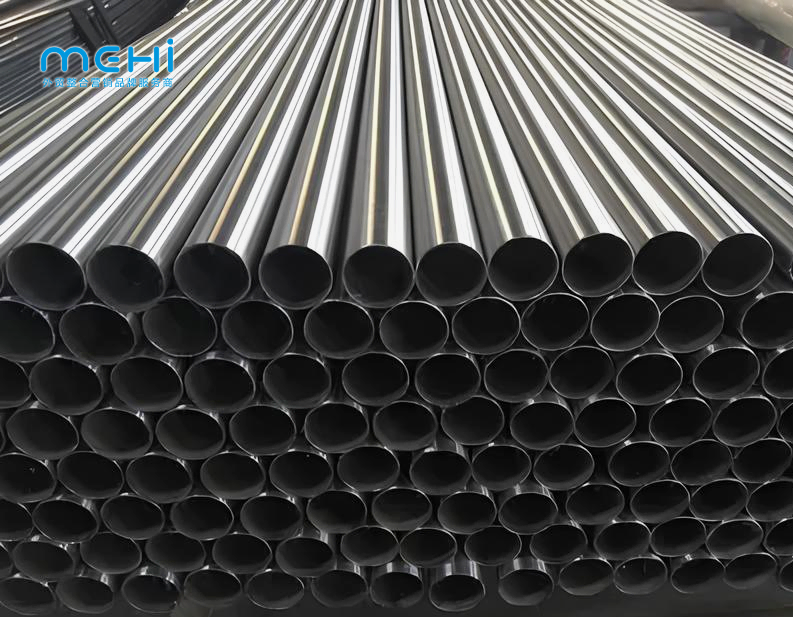
When it comes to choosing between Nickel 200 Sheet and Nickel 201 Sheet for use in industrial applications, the fundamental difference resides in the amount of carbon that each sheet contains and the performance characteristics that emerge from that carbon content. Nickel 200 Sheet has a lower carbon content (maximum 0.15%), which makes it ideal for high-temperature applications above 600 degrees Fahrenheit (315 degrees Celsius). On the other hand, Nickel 201 Sheet, which has an even lower carbon content (maximum 0.02%), excels in environments with moderate temperatures and offers superior ductility for complex forming operations.
Understanding Nickel Alloy Fundamentals
The sheets of nickel 200 and nickel 201 are both examples of economically pure nickel alloys that possess remarkable qualities in terms of their resistance to corrosion. These high-purity nickel materials are used in crucial capacities across a variety of sectors, including aerospace, chemical processing, and electronics, where the dependability of the material directly influences the performance of operations.
The optimization of the carbon content is the primary factor that contributes to the basic difference between these nickel alloy variations. It is possible to retain somewhat greater carbon levels in nickel 200, which results in increased strength qualities even when the temperature is raised. Nickel 201, on the other hand, is ideal for delicate manufacturing procedures since it achieves maximum ductility despite having a low carbon content.
The industry requirements for both materials adhere to the norms of ASTM B162, JIS H4551, and EN 2.4066, which guarantees that the quality will remain constant throughout all supply chains across the world. Cold rolling, hot rolling, solution annealing, and bespoke fabrication procedures are some of the manufacturing processes that are used in order to fulfill specific dimensional requirements.
Chemical Composition Analysis
The changes in chemical composition of various materials result in unique performance profiles, which in turn impact the selection of applications according to the following:
In terms of composition, nickel 200 sheet
- For nickel and cobalt, a minimum of 99.0%
- Maximum carbon content: 0.15%
- Maximum manganese content is 0.35%
- To a maximum of 0.40% iron
- To a maximum of 0.35%, silicon
In terms of composition, nickel 201 sheet
- For nickel and cobalt, a minimum of 99.0%
- Maximum carbon content: 0.02%
- Maximum manganese content is 0.35%
- To a maximum of 0.40% iron
- To a maximum of 0.35%, silicon
As a result of the greatly decreased carbon content in Nickel 201, carbide precipitation is prevented at intermediate temperatures, which allows the material to keep its ductility throughout extensive temperature ranges. If you want constant mechanical qualities between 600 and 1200 degrees Fahrenheit, then Nickel 201 is the material that is better suited for the requirements of your application.
Mechanical Properties Comparison
The mechanical performance characteristics of various nickel sheet materials differ significantly from one another, which has a direct influence on the degree to which they are suitable for these particular industrial applications:
Data on the Tensile Strength:
- (380-585 MPa) Nickel 200: 55,000-85,000 pounds per square inch
- Nickel 201: 50,000 to 80,000 pounds per square inch (345 to 550 megapascals)
Taking Measurements of Yield Strength:
- 15 000–60 000 pounds per square inch (105–415 megapascals)
- The pressure range for nickel 201 is 10,000-55,000 psi (70-380 MPa).
The elongation percentages of Nickel 201 demonstrate considerable ductility benefits, with the material generally reaching elongation in the range of 40-50%, in contrast to the range of 35-45% that Nickel 200 exhibits. Because of its improved formability, Nickel 201 is a material of choice for those complicated geometries that need substantial deformation throughout the production process.
Nickel 200 provides exceptional performance for heat exchanger applications and chemical processing equipment that operates at temperatures higher than 600 degrees Fahrenheit. This is for situations in which you want maximum strength retention at increased temperatures.
Temperature Performance Characteristics
The performance of these materials at different temperatures is an important selection factor that differentiates them across a variety of industrial applications. When it comes to difficult operating situations, having a solid understanding of thermal behavior enables the best possible material selection.
Nickel 200 is a suitable choice for high-temperature chemical processing applications because it retains its outstanding strength qualities up to 1800 degrees Fahrenheit (980 degrees Celsius). Under circumstances of high thermal cycling, the material demonstrates just a little amount of thermal expansion and maintains its structural integrity throughout the process.
Nickel 201 has exceptional performance in temperature ranges that are mild up to 1200 degrees Fahrenheit (650 degrees Celsius). Carbide formation, which might damage ductility during heat processing procedures, is prevented by its low carbon concentration, which prohibits it from occurring.
The following are important thermal characteristics:
- The thermal conductivity of both materials is around 52 BTU/hr-ft-°F, which is comparable to one another.
- When comparing the two alloys, the coefficient of expansion is 7.4 x 10⁻⁶ in/in/°F.
- Both varieties have a melting point of around 1435 degrees Celsius (2615 degrees Fahrenheit).
Nickel 201 offers more predictable performance characteristics for your precision metal applications, which is ideal if you want mechanical capabilities that remain stable throughout thermal cycling across temperatures ranging from room temperature to one thousand degrees Fahrenheit.
Corrosion Resistance Evaluation
Because of their remarkable corrosion resistance qualities, both of these materials are very useful in chemical processing settings as well as maritime situations. The application applicability of these materials is determined by their performance in corrosive media across a wide range of industrial sectors.
It has been shown via corrosion testing that it is very resistant to a variety of chemical environments:
In alkaline solutions, both materials exhibit corrosion rates that are less than 0.001 inches per year in sodium hydroxide solutions with concentrations up to fifty percent even when the temperature is standard.
When exposed to acidic environments, performance might vary depending on the precise kinds and quantities of acid. In concentrations lower than 10%, the resistance of both materials to hydrochloric acid continues to provide outstanding results.
Because of its composition stability, nickel 200 sheets exhibit somewhat greater performance in high-temperature oxidizing atmospheres. This is due to the fact that it is oxidizing conditions.
In chloride-containing settings, the resistance of both materials against pitting and crevice corrosion is shown to be outstanding. The inherent passivation qualities of marine applications, which shield them from localized assault, are beneficial to these applications.
In the event that you need corrosion resistance over an extended period of time in chemical environments that are subject to fluctuations, either material offers an outstanding service life when it is appropriately chosen for particular operating circumstances.
Industrial Applications and Use Cases
The selection of an application is contingent upon certain performance criteria that are in accordance with the distinctive qualities of each distinct material. It is important to have a solid understanding of common use scenarios in order to properly specify materials for the best outcomes.
Utilizations of Nickel 200 Sheet Include:
- Heat exchanger components operating above 600°F
- Chemical processing equipment for high-temperature operations
- Aerospace components requiring strength retention at elevated temperatures
- Welding-grade applications where post-weld heat treatment occurs
Applications of Nickel 201 Sheet Examples:
- Electroplating equipment requiring excellent formability
- Food processing equipment where purity matters
- Electronics manufacturing components needing precise dimensions
- Medical device applications requiring biocompatibility
Manufacturing versatility allows both materials to be processed into plates, sheets, coils, foils, strips, and flats with thickness ranges from 0.1 mm to 100 mm. Custom processing capabilities include solution annealing, cold rolling, and hot rolling techniques.
Nickel 201 has high production flexibility for complicated geometries, making it an excellent choice for components that need lengthy forming processes followed by service at moderate temperatures.
Cost Analysis and Economic Considerations
The choices that are made regarding the selection of materials are influenced by economic variables, especially in large-scale manufacturing operations where cost optimization has an effect on the overall feasibility of the project.
Raw material prices are very comparable for nickel 200 sheets and nickel 201 sheets, with changes mostly reflecting market circumstances rather than basic manufacturing differences. Nickel 200 sheets are more expensive than Ni 201 sheets. The manufacturing and processing concerns, on the other hand, generate significant cost benefits for certain applications.
Among the elements that affect processing costs are
- In terms of forming difficulty, the increased ductility of nickel 201 helps to minimize the costs of forming operations.
- In order to meet the standards for heat treatment, Nickel 200 may need to undergo extra thermal processing processes.
- Properties of the machining process: Both of these materials have machinability scores that are comparable.
The long-term operating expenses are favored by materials that are chosen suitably for the circumstances under which they are intended to be used. Failure that occurs prematurely as a result of faulty material selection substantially outweighs any initial cost reductions that may have been achieved via inadequate selections.
Due to the fact that the dependability of the supply chain has an effect on the total cost of ownership, the selection of suppliers is essential for the maintenance of production schedules. Value that extends beyond initial cost considerations is provided by established suppliers that give consistent quality and delivery performance.
Quality Standards and Certifications
Because the criteria for quality assurance differ from industry to industry, it is vital to comply with established standards in order to satisfy the requirements for material acceptance and regulatory approval.
Both of these materials are in accordance with a number of international standards, such as ASTM B162, JIS H4551, AISI specifications, DIN 17751, EN 2.4066, and GB/T standards. The implementation of these standards guarantees that all worldwide supply chains adhere to the same chemical composition, mechanical characteristics, and dimensional tolerance requirements.
Some examples of typical certificates are
- Documentation of chemical analysis is provided by Mill Test Certificates (MTC).
- The results of the mechanical property tests
- Reports on the dimensions of the inspection
- All paperwork pertaining to heat treatment, if appropriate
For applications in the aerospace and medical industries, traceability standards necessitate the creation of extensive documentation across the supply chain. All suppliers of materials are required to keep comprehensive records that provide evidence of product certification and regulatory compliance.
Testing verification by a third party offers an extra layer of assurance for important applications in which the performance of the material directly influences the dependability and safety of the application.
Conclusion
In most cases, the decision between Nickel 200 Sheet and Nickel 201 Sheet is determined by the requirements for the operating temperature as well as the requirements for the manufacturing complexity. In applications that need high temperatures exceeding 600 degrees Fahrenheit, nickel 200 performs very well, but nickel 201 offers excellent ductility for complicated fabrication activities that take place at moderate temperatures. Both of these materials have an extraordinary resistance to corrosion and continue to retain good mechanical qualities over the service ranges for which they were designed. When these basic distinctions are understood, it is possible to make an educated material selection that achieves optimal performance, minimizes expenses, and guarantees dependable operation over an extended period of time in difficult industrial situations.
Source Nickel 200 Sheets Through Meihao’s Verified B2B Network
Meihao is a professional business-to-business (B2B) supply chain and digital marketing service provider that is committed to connecting customers from around the world with certified Chinese manufacturers of nickel 200 sheets and any other nickel alloy goods that are connected. We are not directly involved in the production or delivery of materials. Meihao, on the other hand, acts as a reliable sourcing gateway, assisting purchasers in locating authorized manufacturers that provide sheets, plates, and custom forms that are in accordance with international standards and application requirements. Enhancing both the openness and efficiency of sourcing, our platform provides assistance for the verification of suppliers, the sharing of technical information, and the coordination of inquiries for high-standard markets all over the globe. Please send an email to somyshare@gmail.com if you have any questions about sourcing or collaboration.
References
1. Davis, J.R. "Nickel, Cobalt, and Their Alloys." ASM International Materials Handbook, Vol. 2: Properties and Selection of Nonferrous Alloys and Special-Purpose Materials, 2nd Edition, 1991.
2. Rebak, R.B. and Szklarska-Smialowska, Z. "The Mechanism of Stress Corrosion Cracking of Alloy 600 in High Temperature Water." Corrosion Science, Vol. 38, No. 6, pp. 971-988, 1996.
3. American Society for Testing and Materials. "Standard Specification for Nickel and Nickel Alloy Plate, Sheet, and Strip." ASTM B162-99, Annual Book of ASTM Standards, Vol. 02.04, 2018.
4. Metals Handbook Committee. "Heat-Resistant Materials." ASM Handbook Volume 1: Properties and Selection of Irons, Steels, and High-Performance Alloys, 10th Edition, ASM International, 1990.
5. Japanese Industrial Standards Committee. "Nickel and Nickel Alloy Sheets and Plates." JIS H4551-2018, Japanese Standards Association, Tokyo, 2018.
6. European Committee for Standardization. "Nickel and Nickel Alloys—Chemical Composition and Form of Wrought Products." EN 2.4066 Standard Specification, CEN Publications, Brussels, 2019.