- English
- French
- German
- Portuguese
- Spanish
- Russian
- Japanese
- Korean
- Arabic
- Greek
- German
- Turkish
- Italian
- Danish
- Romanian
- Indonesian
- Czech
- Afrikaans
- Swedish
- Polish
- Basque
- Catalan
- Esperanto
- Hindi
- Lao
- Albanian
- Amharic
- Armenian
- Azerbaijani
- Belarusian
- Bengali
- Bosnian
- Bulgarian
- Cebuano
- Chichewa
- Corsican
- Croatian
- Dutch
- Estonian
- Filipino
- Finnish
- Frisian
- Galician
- Georgian
- Gujarati
- Haitian
- Hausa
- Hawaiian
- Hebrew
- Hmong
- Hungarian
- Icelandic
- Igbo
- Javanese
- Kannada
- Kazakh
- Khmer
- Kurdish
- Kyrgyz
- Latin
- Latvian
- Lithuanian
- Luxembou..
- Macedonian
- Malagasy
- Malay
- Malayalam
- Maltese
- Maori
- Marathi
- Mongolian
- Burmese
- Nepali
- Norwegian
- Pashto
- Persian
- Punjabi
- Serbian
- Sesotho
- Sinhala
- Slovak
- Slovenian
- Somali
- Samoan
- Scots Gaelic
- Shona
- Sindhi
- Sundanese
- Swahili
- Tajik
- Tamil
- Telugu
- Thai
- Ukrainian
- Urdu
- Uzbek
- Vietnamese
- Welsh
- Xhosa
- Yiddish
- Yoruba
- Zulu
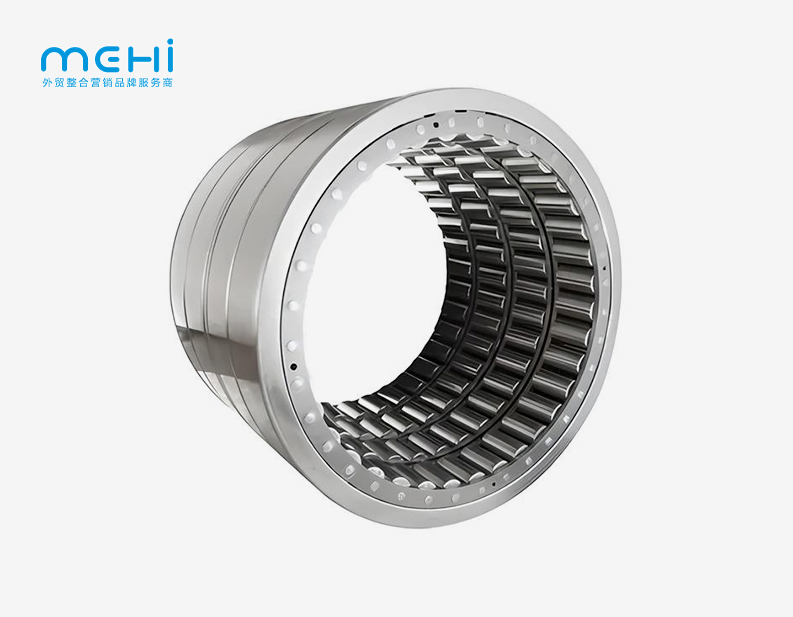
Four-row tapered roller bearing systems' multi-row layout distributes forces over several contact points, making them ideal for mixed loading circumstances. These unusual bearings can manage large radial forces and bidirectional axial loads due to their four rows of tapered rollers, which maximize load distribution. Their distinctive design reduces stress concentration across important contact surfaces, making them essential for demanding industrial applications that need dependability and performance consistency.
Understanding Four Row Tapered Roller Bearings
The systematic arrangement of roller parts in four-row tapered roller bearing assemblies works synergistically to withstand high-stress conditions. Multiple load channels from each row of tapered rollers in carefully machined raceways disperse mechanical stresses better than single- or double-row alternatives.
Advanced Load Distribution Mechanisms
These bearings use tapered rollers at particular angles to naturally channel radial and axial forces via optimum contact zones. In mixed loading situations, the bearing's shape guarantees that each roller contacts its raceway, minimizing stress concentration spots that cause premature failure in traditional bearing systems.
Load distribution is possible because the tapered roller's conical form generates a contact angle that accommodates both force directions. This arrangement enables the bearing to withstand three times more radial loads than single-row types and large axial loads in both directions.
Material Engineering and Precision Manufacturing
GCr15, GCr15SiMn, and G20Cr2Ni4A steel grades are used in modern four-row tapered roller bearings for durability and fatigue resistance. These materials undergo heat treatment to increase load-bearing capability and dimensional stability under harsh working conditions.
The production accuracy of these components requires stringent tolerance control across all bearing surfaces. Inner diameters from 120 mm to 1320 mm support a variety of industrial applications while preserving performance.
Key Advantages of Using Four-Row Tapered Roller Bearings in Heavy Load Applications
Multi-row tapered roller bearing systems improve dependability in industrial applications. These benefits boost operating efficiency and lower maintenance costs in heavy-duty applications.
Superior Load Handling Capabilities
Four-row layouts reduce roller element load by distributing mechanical loads over many contact points. This distribution mechanism lets the bearing manage combined radial and axial stresses that would overwhelm traditional bearings, making it perfect for complicated loading patterns.
This increased load capacity is especially useful in rolling mill applications, where bearings must handle huge radial forces from the rolling process and axial thrust pressures from material processing. In situations where load direction might change depending on operating needs, the bearing's bidirectional axial load capability is critical.
Enhanced Operational Reliability
The multi-row architecture adds redundancy, improving system dependability. If one row wears down, the others carry the load, avoiding catastrophic bearing failure and permitting scheduled maintenance rather than emergency shutdowns.
Standard steel pressed cages retain rollers throughout intensive industrial thermal expansion and contraction cycles. Pin-type cages increase bearing assembly lubrication and durability for bigger bearings.
Vibration Reduction and Smooth Operation
Four-row designs inherently attenuate mechanical system vibrations due to their spread contact pattern. This vibration reduction smooths equipment performance and decreases stress on nearby components, increasing machinery life and enhancing industrial product quality. Four-row tapered roller bearings are useful in steel production facilities and large-scale industrial processes where equipment downtime costs money.
Installation, Maintenance, and Common Operational Challenges
Four-row tapered roller bearing systems need precise installation and maintenance to maintain maximum performance throughout their service life.
Precision Installation Requirements
To maximize bearing performance, accurate alignment and mounting are needed during installation. Clearance fittings with roll necks make mounting and dismounting easy while preserving load distribution accuracy. Installation temperature control eliminates thermal expansion that might damage bearing geometry and performance.
A good tooling choice prevents installation damage that might cause bearing failure. With regulated force application, hydraulic mounting tools enable uniform seating without stressing bearing components.
Lubrication and Maintenance Protocols
Understanding four-row bearing requirements is essential for lubrication management. Multiple roller rows provide complicated oil flow patterns that must be maintained to lubricate all contact surfaces. Regular oil analysis detects pollution and lubricant deterioration before they affect bearing performance.
Monitoring operating temperatures, vibration, and lubricant condition should be inspection priorities. Early identification of abnormal operating conditions enables repair before major damage, safeguarding these bearings' significant industrial investment.
Addressing Common Operational Issues
Misalignment is a typical four-row bearing issue. Even a little misalignment may cause uneven load distribution, accelerating wear, and reducing bearing life. Regular alignment checks and corrections improve bearing performance and avoid failure.
Contamination management is crucial because foreign particles may harm bearing precision surfaces. Bearing life and performance consistency are improved by good sealing and clean working conditions.
Comparing Four-Row Tapered Roller Bearings with Other Bearing Types
Understanding bearing performance and application compatibility helps procurement managers make educated choices that maximize performance and cost-effectiveness for particular applications.
Performance Characteristics Comparison
Four-row tapered roller bearings provide three times the radial load capability of single-row types. They are best for situations where maximal load-carrying capabilities justify the greater expenditure due to their complexity and higher starting costs.
In mixed loading conditions, cylindrical roller bearings can handle high radial loads but not axial loads. Spherical roller bearings provide self-aligning characteristics that four-row tapered designs lack, but they have lower accuracy and load capacity in pure axial loading.
Application-Specific Selection Criteria
Four-row tapered roller bearings are ideal for rolling mills owing to the severe loads and dependability requirements of steel manufacturing. For these challenging applications, the bearing's ability to tolerate hot and cold rolling mill conditions while retaining dimensional precision throughout thermal cycling makes it the best option.
Construction and agricultural equipment applications may benefit from double-row tapered roller bearings' cost savings and easier maintenance. Performance, lifespan cost, and maintenance should be considered before selecting.
Supply Chain and Quality Considerations
Supplier capabilities, quality certification, and long-term dependability must be considered while purchasing. Established suppliers with heavy industry experience give superior technical assistance and more consistent supply schedules, which are vital when bearing problems might shut down costly production equipment.
Quality certification and traceability documents guarantee that bearings satisfy safety-critical application criteria and provide quality management system and regulatory compliance paperwork.
Procurement Guide for Four-Row Tapered Roller Bearings in B2B Markets
Four-row tapered roller bearing procurement involves a thorough grasp of technical parameters, supplier capabilities, and total cost of ownership beyond initial purchase price.
Technical Specification Requirements
Inner diameters from 120 mm to 1320 mm suit most industrial rolling mill applications. GCr15, GCr15SiMn, and G20Cr2Ni4A steel grades have distinct performance characteristics for different working circumstances and loads.
Performance and maintenance depend on cage design, with steel pressed cages for normal applications and pin-type cages for bigger bearings. Sealed bearings with incorporated radial shaft seals protect against contamination but need different maintenance than open bearings.
Supplier Evaluation Criteria
Suppliers should provide four-row tapered roller bearing selection, application analysis, and troubleshooting engineering. Process controls and manufacturing quality certifications assure product quality and performance dependability throughout bearing purchases.
Delivery reliability and inventory management are essential for managing production schedules in sectors where bearing failures may cost a lot. Strategic inventory placement and fast delivery from suppliers protect against bearing problems.
Total Cost of Ownership Analysis
When factoring in installation, maintenance, and bearing failure downtime, initial bearing costs are just a small part of the entire ownership cost. Although more expensive, high-quality bearings with longer service lives generally provide greater value.
Maintenance support and replacement parts availability impact long-term operating expenses and should influence supplier selection. Critical applications benefit from suppliers with extensive technical support and easily accessible replacement parts.
Multiple bearing designs and customization choices enable application optimization to boost performance and save lifespan costs. Customized solution providers have the technical skills for sophisticated industrial applications.
Conclusion
Four-row tapered roller bearings are a sophisticated option for industrial applications that need high load handling and dependability. The improved force distribution mechanisms in its architecture handle high radial and bidirectional axial loads simultaneously, extending equipment life and reducing maintenance. These bearings are essential for rolling mill operations and other heavy industrial applications where dependability and performance consistency directly affect operational profitability because of their threefold load capacity. Installation, maintenance, and supplier selection must be carefully considered to optimize performance and cost-effectiveness.
FAQ
1. What factors most significantly influence four-row tapered roller bearing lifespan?
Proper lubrication management, precise installation alignment, and effective contamination control represent the three most critical factors affecting bearing lifespan. Regular maintenance schedules and operating condition monitoring help identify potential issues before they cause bearing damage.
2. Are four-row tapered roller bearings suitable for high-speed applications?
These bearings are primarily designed for high-load, moderate-speed applications such as rolling mills rather than high-speed operations. The complex multi-row configuration and substantial mass make them less suitable for high-speed applications where centrifugal forces become significant factors.
3. How can procurement teams verify bearing authenticity and quality?
Legitimate suppliers provide comprehensive documentation, including material certifications, dimensional inspection reports, and manufacturing traceability records. Quality certifications from recognized standards organizations and established supplier relationships help ensure product authenticity and performance reliability.
Partner with Meihao for Premium Four-Row Tapered Roller Bearing Solutions
Meihao Supply Chain Company connects you with verified Chinese manufacturers specializing in high-quality four-row tapered roller bearing production. Our platform features rigorously vetted suppliers capable of delivering precision-engineered bearings meeting the demanding requirements of rolling mill and heavy industrial applications. As a Google Premier Partner for 2023 and 2024 and recipient of the 2024 Top Google Partner award in Greater China, we provide trusted access to certified four-row tapered roller bearing manufacturers offering comprehensive technical support and competitive pricing. Contact us at somyshare@gmail.com to explore how our network of premium suppliers can meet your specific bearing procurement requirements while ensuring quality, reliability, and timely delivery for your critical industrial applications.
References
1. Rolling Element Bearing Design and Application Handbook, Third Edition, American Society of Mechanical Engineers.
2. Industrial Bearing Technology and Applications in Heavy Machinery, International Journal of Mechanical Engineering.
3. Tapered Roller Bearing Load Distribution Analysis in Rolling Mill Applications, Society of Tribologists and Lubrication Engineers.
4. Materials Science and Heat Treatment Processes for High-Load Bearing Applications, Materials Engineering Quarterly.
5. Maintenance Strategies for Four-Row Tapered Roller Bearings in Steel Production, Industrial Maintenance, and Plant Operation.
6. Procurement Best Practices for Critical Bearing Components in Heavy Industry, Supply Chain Management Review.