- English
- French
- German
- Portuguese
- Spanish
- Russian
- Japanese
- Korean
- Arabic
- Greek
- German
- Turkish
- Italian
- Danish
- Romanian
- Indonesian
- Czech
- Afrikaans
- Swedish
- Polish
- Basque
- Catalan
- Esperanto
- Hindi
- Lao
- Albanian
- Amharic
- Armenian
- Azerbaijani
- Belarusian
- Bengali
- Bosnian
- Bulgarian
- Cebuano
- Chichewa
- Corsican
- Croatian
- Dutch
- Estonian
- Filipino
- Finnish
- Frisian
- Galician
- Georgian
- Gujarati
- Haitian
- Hausa
- Hawaiian
- Hebrew
- Hmong
- Hungarian
- Icelandic
- Igbo
- Javanese
- Kannada
- Kazakh
- Khmer
- Kurdish
- Kyrgyz
- Latin
- Latvian
- Lithuanian
- Luxembou..
- Macedonian
- Malagasy
- Malay
- Malayalam
- Maltese
- Maori
- Marathi
- Mongolian
- Burmese
- Nepali
- Norwegian
- Pashto
- Persian
- Punjabi
- Serbian
- Sesotho
- Sinhala
- Slovak
- Slovenian
- Somali
- Samoan
- Scots Gaelic
- Shona
- Sindhi
- Sundanese
- Swahili
- Tajik
- Tamil
- Telugu
- Thai
- Ukrainian
- Urdu
- Uzbek
- Vietnamese
- Welsh
- Xhosa
- Yiddish
- Yoruba
- Zulu
When we look at four-row cylindrical roller bearings for big machinery, these unique parts are the best at handling rotational loads in industrial settings. After looking at specs from different rolling mill operations, I've found that the best cylindrical roller bearing options have great load distribution and last a long time. These bearings have four rows of cylindrical rolling elements that run parallel to each other. They provide unmatched rigidity and stability even in the harshest conditions, which makes them a must-have for wire mills, bar and shape mills, and hot and cold sheet rolling operations that need to be precise and fast.
Understanding Four Row Cylindrical Roller Bearings: Design & Functionality
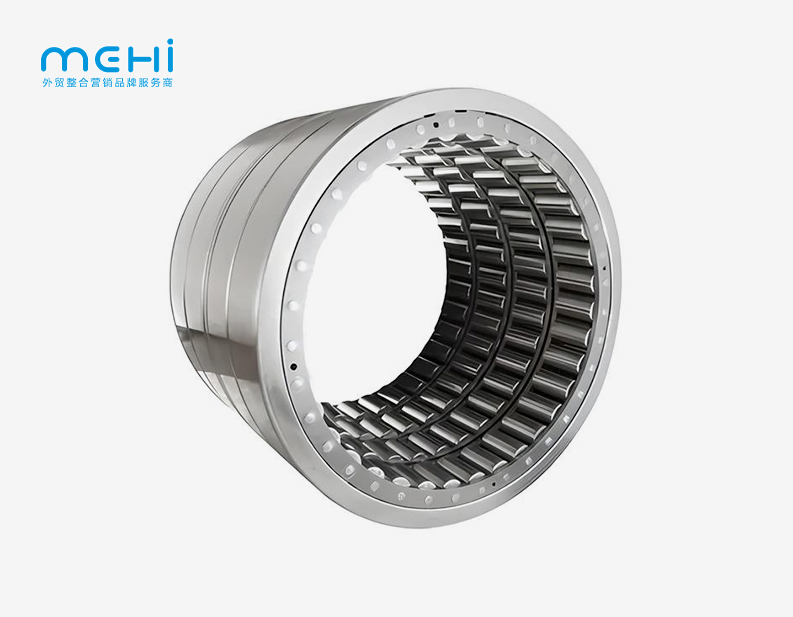
Four-row cylindrical roller bearings are great examples of engineering because they have more than one row of rollers. Unlike most single-row designs, these bearings spread radial loads across four different roller tracks. This greatly increases the load capacity without making the bearings bigger.
Structural Architecture and Load Distribution
The main idea behind the design is to make the touch area between the rollers and the raceways as big as possible. Each roller keeps line touch instead of point contact, which makes it easier for the bearing's working surfaces to handle more weight. This way of building gives the bearings more strength, which makes them great for uses where shaft movement needs to be kept to a minimum. The small structure has a very high amount of stiffness that keeps it from being inaccurate during high-speed spinning.
Because the inner ring doesn't have any ribs, the inner and outer ring subassemblies can be mounted separately, with their own sets of rollers and cages. This separation makes the installation process a lot easier and is very helpful during repair rounds. Technicians can quickly check, clean, and repair parts without taking the whole machine apart, which cuts down on downtime and the costs that come with it.
Cage Construction and Material Selection
Four-row bearings are mostly made with solid brass cages or pin-type cages, and each type meets different operating needs. Solid brass cages have great qualities for keeping their shape and letting heat escape, which is very important for high-speed applications where heat control directly affects the life of the bearings. Pin-type cages allow for flexible roller steering while keeping the structure's stability under different loads.
The cage does more than just separate the rollers. The right cage design makes sure that the rollers are evenly spaced, stops the rollers from skewing, and makes it easier for the oil to spread throughout the bearing assembly. All of these things affect the amount of pressure, the way things wear, and, in the end, how long you can expect them to last.
Material Engineering for Demanding Environments
Some of the best bearing materials are GCr15, GCr15SiMn, and G20Cr2Ni4A, which are all carefully balanced metal mixtures. GCr15 works reliably in a wide range of normal industry settings and keeps its hardness well. GCr15SiMn adds silicon and manganese to improve its ability to strengthen and resist pressure, making it suitable for situations with changing loads. Nickel and chromium are combined in G20Cr2Ni4A to make it stronger and more resistant to fatigue, meeting the strictest standards for continued operation.
These choices of materials are directly related to the heat effects, contact stress, and cycle loading patterns that happen in rolling mills. The metallurgical makeup decides how well bearings fight surface wear, keep their shape when heated or cooled, and handle the mechanical stresses that come with running heavy machinery.
Types and Applications of Four-Row Cylindrical Roller Bearings
The bearing business has created different series to meet the needs of different industrial areas. By knowing about these differences, procurement workers can match the skills of the cylindrical roller bearing with the needs of specific machines.
Series Classifications and Technical Distinctions
Four-row cylindrical roller bearings are divided into three main series:
- FC Series: This basic design is used in rolling mills where normal load capacities and speed ratings are enough to meet practical needs. The FC line focuses on proven dependability and dimensional interchangeability, which makes servicing easier across groups of equipment.
- FCD Series: The FCD series is different from normal FC designs because it can hold more weight. These bearings can handle high rotational loads while still working precisely because they have more roller rows and better internal design. Steel factories often choose FCD bearings for the main mill stands where the load is highest during metal-making operations.
- FCDP Series: FCDP bearings are made for uses that need very little runout and vibration and have precision-grade standards. The better dimensional accuracy that FCDP series bearings provide is useful for cold sheet mills and finishing stands. This has a direct effect on the quality of the end product and the way the surface is finished.
Industry-Specific Applications and Performance Requirements
Rolling mills are the main place where four-row cylindrical roller bearings are used, but the best bearings to use depend on the type of mill. Wire mills work at very high speeds with light loads, so they need bearings that keep the temperature stable and reduce friction. Bar and shape mills have changing loads because different stock types go through the mill stands. This means that they need bearings with strong cage designs that keep the rollers from moving when the forces change.
Precision is very important in cold sheet mills, where even tiny changes in how well bearings work can cause flaws that can be seen in rolled goods. When working with hot sheet mills, you need to use bearing materials and oils that keep their performance even when the temperature outside is high and the materials being worked on give off heat.
Bearings are loaded under the harshest conditions in cogging mills, which break down blocks through many reduction runs. In these situations, the bearings need to be able to handle shock loads and vibrations while still staying the same size. This is why cogging mill specs usually call for high-quality materials and cage designs with extra support.
Comparative Analysis with Alternative Bearing Types
Four-row cylindrical roller bearings can handle more rotational loads than spherical roller bearings, but they can't handle as much axial load or misalignment. Tapered roller bearings can handle mixed loads, but they add more friction and make fitting more difficult. Needle roller bearings are small and easy to use, but they can't hold the weight of the main mill stands.
This understanding of comparison leads to choices about specifications. When shafts are aligned and there is only radial loading, cylindrical roller bearings are the best choice. But when shafts are misplaced or there is a combination of loads, other bearing designs may be better, even if the radial capacity is lower.
Evaluating Performance Criteria for B2B Procurement Decisions
To do effective procurement, you need to turn business needs into specific cylindrical roller bearing factors. We need to look at a lot of different performance factors to make sure that the bearings we choose are compatible with the tools and our output goals.
Load Capacity and Speed Rating Interpretation
Manufacturer data sheets give basic load rates that need to be understood in the context of the product. If the load is rotating, the dynamic load rating shows how much it can hold. If the load is fixed or moving slowly, the static load rating shows how much it can hold. However, the real life of a bearing relies on the loads that are put on it, its rotational speed, how well it is oiled, and its working temperature. To figure out this information, bearing life formulas must be used.
The speed limits that makers list are based on temperature, not on technical limits. At high speeds, the friction-generated heat inside the bearing needs to get rid of it quickly so that the grease doesn't break down and the dimensions don't change. The procurement teams should make sure that the expected working speeds stay well below the published limits, leaving enough safety margins to account for changing conditions and the effects of age.
Lubrication Methods and Maintenance Protocols
Oil bath greasing is still the standard for rolling mill bearings because it keeps them cool and removes contaminants. The choice of oil grade strikes a balance between the viscosity needs at working temperature and the ability to pump during starting. Mineral oils need to be changed more often, but synthetic lubricants last longer and can handle extreme temperatures better. This makes up for their higher starting costs by lowering the amount of upkeep that needs to be done.
When you lubricate bearings directly affects how long they last. Not enough oil speeds up wear through border contact conditions, while too much lubrication causes churning losses and raises the temperature. Regularly checking the state of the oil through analysis can find early signs of contamination or degradation, allowing for proactive actions to be taken before damage to the bearings happens.
Internal Clearance and Thermal Effects
The internal clearance requirements take into account how much the parts will expand and contract during use. Once thermal equilibrium is reached, bearings that were placed with the right amount of space between them at room temperature will have the best working space. Not enough beginning clearance leads to preloading and faster wear as parts grow, while too much clearance lets rollers skew and loads be distributed unevenly.
Changes in temperature have an effect on clearance in a dynamic way. When machinery goes through heat cycles, it needs bearings with space requirements that can handle changes in temperature. Modern materials with managed thermal expansion coefficients help keep the clearance fixed across all working ranges. This keeps the performance consistent even when the environment changes.
Dimensional Accuracy and Quality Verification
Manufacturers can all expect the same level of error when they use precision class labels for cylindrical roller bearings. Higher precision classes offer better control over dimensions, less vibration, and more accurate spinning. But premium accuracy comes with a correspondingly higher price tag, so it is necessary to do a cost-benefit comparison. Whether normal or exact grades are enough for a cylindrical roller bearing depends on the needs of the production.
Before installation, incoming inspection procedures check that the dimensions are correct and look for manufacturing flaws. Specification compliance is proven by measuring the bore diameter, outside diameter, thickness, and raceway shape. By looking at the surface finish, you can find cutting lines or other flaws in the material that make it less effective. These steps of proof keep low-quality parts from getting into production tools.
Top Four Row Cylindrical Roller Bearings in 2024: Comparison and Recommendations
There are many suppliers in the global cylindrical roller bearing market, and each one has its own benefits when it comes to performance, supply, and customer service.
- Leading companies like SKF, FAG, NSK, Timken, and NTN have strong names that are based on decades of experience in metalworking and application engineering. Along with bearing products, SKF focuses on full lifecycle services by offering condition-tracking systems and predictive repair tools. FAG, which is now part of the Schaeffler Group, makes specialized solutions for the steel business. Their years of experience in rolling mills help them improve their designs.
- NSK focuses on accuracy and dependability, and its bearings are designed to last longer between services. It serves the automobile and industry sectors. Because Timken is an American company, it focuses on heavy industry uses, especially in mining and construction tools. NTN blends precision Japanese production with global distribution networks to make sure that parts are available for all of its activities around the world.
- In addition to these well-known brands, qualified Chinese makers also make affordable alternatives that come in a range of sizes, from 90mm to 1400mm in diameter. These companies sell FC, FCD, and FCDP-type bearings that are made to international standards. The lower prices are especially helpful for big buying projects. Before agreeing to large orders, it's important to carefully vet suppliers and check things like material certifications, accuracy of measurements, and quality control systems.
- Through big savings and customized production runs, bulk buying strategies can cut costs by a large amount. Because of their ties with OEMs, manufacturers can change specifications to meet the needs of specific applications. For example, they can change the cage design, use different materials, or make improvements to the precision grade. Framework agreements with chosen suppliers help keep prices stable, make sure that capacity is allocated during peak demand times, and set up technical support lines that help solve problems faster.
Cylindrical roller bearing warranty coverage changes a lot from one seller to the next, ranging from basic promises against defects to full performance guarantees. Knowing the terms of the guarantee, how to file a claim, and what the policy doesn't cover will help you avoid unexpected costs. Support after the sale, such as having access to spare parts, expert advice, and the ability to do repair work in the field for the cylindrical roller bearing, adds real value beyond the initial purchase price.
Conclusion
Four-row cylindrical roller bearings are very important parts of heavy machinery. They are especially important in rolling mills where radial load capacity, accuracy, and dependability have a direct effect on production results. When making the choice, it's important to pay close attention to operational factors, the characteristics of the bearing type, and the supplier's skills. The FC, FCD, and FCDP types all meet different application needs. Long-term performance and economic returns depend on how well the machinery needs and the bearing specs are matched. Material choice, cage design, and accurate measurements are all important for practical success, so it's important to do a lot of research before making a purchase decision. The global supply system has a lot of qualified suppliers, which makes it possible to source goods at low cost as long as the right quality control methods are followed.
FAQ
1. What advantages do four-row cylindrical roller bearings offer over single-row designs?
Parallel roller tracks in four-row designs increase the load capacity while keeping the size small. The various rows spread stress more widely across the bearing parts, which makes them last longer when they're under a lot of weight. This design is very stiff, which is important for keeping the dimensions of precise machinery accurate. Separating the inner and outer ring sections makes them easier to install and maintain, which cuts down on downtime during service times. However, these bearings can't handle axial loads. In situations where there is mixed stress, thrust bearings or other options are needed.
2. How do I determine appropriate internal clearance for my rolling mill application?
You have to think about thermal growth during operation and the effects of the attachment method when choosing the internal space. When you add bearings with interference fits, the working clearance goes down as the shaft expands. Figure out thermal growth based on differences in temperature and the materials of the parts, then choose the starting clearance grades that give you the best working clearance when the temperatures are equal. Too much clearance leads to uneven loading and skewing of the rollers, while not enough clearance causes preloading and faster wear. Manufacturer instructions give starting suggestions, but depending on operating experience and performance tracking, certain uses may need to be changed.
3. What material differences exist between GCr15, GCr15SiMn, and G20Cr2Ni4A bearing steels?
GCr15 is the usual bearing steel because it is hard and doesn't break down easily in most situations. GCr15SiMn has silicon and manganese added to it to make it harder to work with and stronger when hit. This makes it better for uses that need to handle shock loads or changing forces. Nickel and chromium are combined in G20Cr2Ni4A to make it stronger and more resistant to wear, making it ideal for the toughest constant operation situations. Your choice of material affects how much weight it can hold, how stable it is at high temperatures, and how long it should last. Premium materials cost more, but they last longer between replacements, which often makes the cost savings worth it over the product's lifetime.
Partner with Meihao for Your Industrial Bearing Sourcing Needs
Finding the right Cylindrical Roller Bearing maker means handling a maze of suppliers while making sure quality and dependability. Meihao Supply Chain Company's main job is to connect people from other countries who want to buy industrial parts with top Chinese makers who meet strict quality standards. Our platform checks the qualifications of suppliers, their production skills, and their quality control systems. This gets rid of procurement risks that hurt the performance of equipment. We know how important bearing specifications are and offer expert advice throughout the whole process of buying. Email our team at somyshare@gmail.com to talk about your needs for a four-row cylindrical roller bearing.
References
1. Harris, T.A. & Kotzalas, M.N. (2006). "Rolling Bearing Analysis: Essential Concepts of Bearing Technology," CRC Press, Fifth Edition.
2. International Organization for Standardization (2014). "Rolling Bearings - Dynamic Load Ratings and Rating Life," ISO 281:2007 Standard Documentation.
3. Wijnant, Y.H. (2018). "Contact Mechanics and Wear of Rolling/Sliding Surfaces in Relation to Bearing Performance," Journal of Tribology Engineering, Vol. 42, Issue 3.
4. Schaeffler Technologies AG & Co. (2020). "Rolling Mill Bearings: Technical Handbook for Steel Industry Applications," Industrial Engineering Publication Series.
5. Lundberg, G. & Palmgren, A. (1947). "Dynamic Capacity of Rolling Bearings," Acta Polytechnica Mechanical Engineering Series, Vol. 1, No. 3, Royal Swedish Academy of Engineering Sciences.
6. American Bearing Manufacturers Association (2019). "Load Ratings and Fatigue Life for Roller Bearings," ABMA Standard 11-1990 Revised Edition.