- English
- French
- German
- Portuguese
- Spanish
- Russian
- Japanese
- Korean
- Arabic
- Greek
- German
- Turkish
- Italian
- Danish
- Romanian
- Indonesian
- Czech
- Afrikaans
- Swedish
- Polish
- Basque
- Catalan
- Esperanto
- Hindi
- Lao
- Albanian
- Amharic
- Armenian
- Azerbaijani
- Belarusian
- Bengali
- Bosnian
- Bulgarian
- Cebuano
- Chichewa
- Corsican
- Croatian
- Dutch
- Estonian
- Filipino
- Finnish
- Frisian
- Galician
- Georgian
- Gujarati
- Haitian
- Hausa
- Hawaiian
- Hebrew
- Hmong
- Hungarian
- Icelandic
- Igbo
- Javanese
- Kannada
- Kazakh
- Khmer
- Kurdish
- Kyrgyz
- Latin
- Latvian
- Lithuanian
- Luxembou..
- Macedonian
- Malagasy
- Malay
- Malayalam
- Maltese
- Maori
- Marathi
- Mongolian
- Burmese
- Nepali
- Norwegian
- Pashto
- Persian
- Punjabi
- Serbian
- Sesotho
- Sinhala
- Slovak
- Slovenian
- Somali
- Samoan
- Scots Gaelic
- Shona
- Sindhi
- Sundanese
- Swahili
- Tajik
- Tamil
- Telugu
- Thai
- Ukrainian
- Urdu
- Uzbek
- Vietnamese
- Welsh
- Xhosa
- Yiddish
- Yoruba
- Zulu
One 1.6-ton mini excavator or two 2-ton small excavators? It depends on what your job needs. Small workers and gardeners who work in busy cities and are on a tight budget will usually find the 1.6-ton mini excavator easier to move and cheaper to run. But two-ton models can dig deeper and lift more, which makes them better suited for work for medium-sized businesses. Find a mix between restricted area, project scale, and cost-effectiveness to get the most out of your landscaping business.
Introduction
Mini excavators are very important for yard gardening projects because they are small and can be used for a variety of tasks, like moving dirt, cutting, and mining. B2B buying leaders who want to increase speed, cut costs, and guarantee project success must choose the right size, especially a model between 1.6 tons and 2 tons.
More and more small builders, gardeners, and companies that rent out tools need machines that work well, don't cost a lot, and can fit in small areas. In that case, this similarity is good. According to new information from the business world, urban farming projects are rising by 15% each year. It's important to know the small changes between these types of compact crushers before you buy one.
To find out how well it works in real life, how much it costs to run, and how well it meets different gardening needs, the study is mostly. People who run plants, buy things, or sell tools will learn useful skills that will help them make sure the machines they buy are right for the job and have the lowest possible long-term costs.
Understanding Mini Excavator Basics for Landscaping Applications
Design Fundamentals and Weight Categories
There is a specific type of building equipment called mini-excavators that is designed to do precise work in small spaces. There is a clear link between the weight classification system and operating skills, ground pressure spread, and transportation needs.
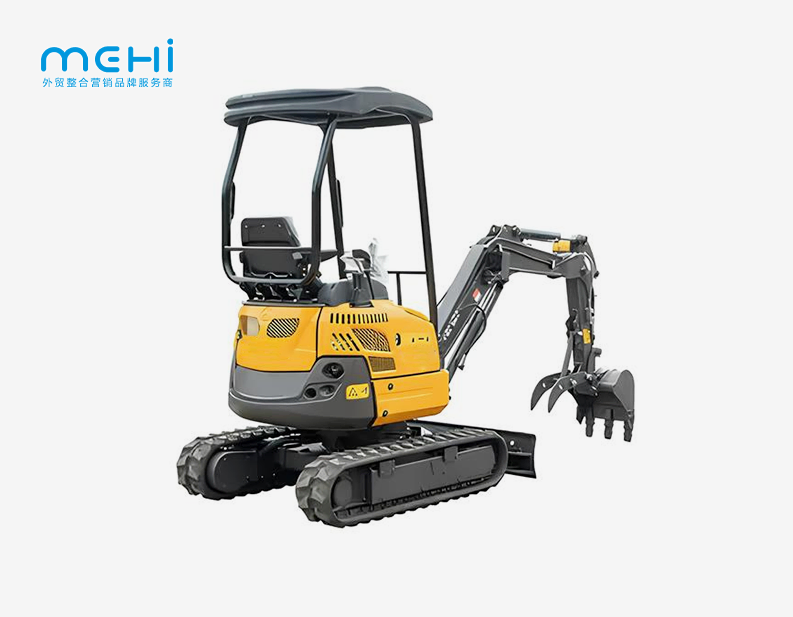
A 1.6-ton small digger like the MK16 type can carry up to 1600 kg, which makes it perfect for gardening jobs that need to be done carefully so as not to damage the ground. The ground pressure these machines make is usually between 0.25 and 0.35 kg/cm², which means they can be used safely on established grass and ornamental surfaces without leaving marks that won't come off.
Two-ton models, on the other hand, spread their weight over wider track areas, which means they have slightly higher ground pressure but are more stable when moving big things. The extra weight makes the balancing better, so you can use bigger tools and work on uneven ground, which is popular in business gardening jobs.
Key Components and Operational Mechanics
The hydraulic systems in modern mini tractors are very advanced and allow fine control over many functions at the same time. The hydraulic pilot valve control on the MK16 type makes it easy for workers to work for long periods of time without getting tired.
The specs of an engine have a big effect on how well it performs. The Euro 5 EPA Diesel Koop 7 kW engine in the MK16 uses the least amount of fuel possible and meets strict pollution rules needed in cities. This amount of power is enough for most gardening jobs, like digging trenches, preparing foundations, and moving materials.
Attachment Compatibility and Versatility
Different connection choices are needed for landscaping apps to be able to do a variety of jobs well. These are the main types of attachments that make you more productive:
- Standard buckets for different amounts of dirt, from 0.02 CBM (like the MK16) to 0.08 CBM
- Auger devices for making exact holes when putting up fences and planting trees
- Grapple tools for moving plants and landscaping items, cleaning up, and removing trash
- Hydraulic crushers to get rid of concrete and get landscaping ready
These connection systems work perfectly with both 1.6-ton and 2-ton tractors and mini excavators, though heavier-duty versions can be used with bigger models. Because it's flexible, buying managers can make the best use of tools on a wide range of gardening jobs while still keeping working options open.
Core Performance Comparison: 1.6-Ton vs. 2-Ton Mini Excavators
Power and Digging Capabilities Analysis
The difference in performance between these weight classes is most noticeable in the digging specs and hydraulic power output. When it comes to digging, the MK16 1.6-ton type can go as deep as 1710 mm, as high as 2690 mm, and as far as 2920 mm. These measurements are perfect for home gardening needs like laying the base, installing utilities, and getting the garden beds ready.
Two-ton excavators can usually dig 20–30% deeper and reach farther, which lets them work on bigger business sites and put in utilities deeper. However, this better capability comes with more complicated operations and more fuel use, which may not be worth the extra cost for smaller gardening companies.
Fuel Efficiency and Operational Costs
A study of operating costs shows that 1.6-ton types are much better for most gardening jobs. According to figures from the industry, small excavators in this weight class use about 2 to 3 liters of diesel per hour when they are working normally, while 2-ton versions use about 3.5 to 4.5 liters.
The Euro 5 EPA-compliant engine in the MK16 improves fuel economy while shortening the time between maintenance checks. This means that the total cost of ownership is lower over the equipment's useful life. This is especially important for small companies and people who run rental fleets who are watching their budgets.
Maneuverability and Site Access
When working on gardening projects in cities, people often have to go through small gates, around buildings, and on rough surfaces. The smaller size of 1.6-ton excavators is very helpful in these situations because it lets them get to workplaces that bigger machines can't reach.
Specifications for turning radius have a big effect on output in small areas. Small types like the MK16 can work well in places as small as 3x4 meters, but 2-ton excavators usually need at least 4x5 meters of room to work. In private settings, this difference has a direct effect on the viability of a project and the happiness of its clients.
Decision Support for Procurement Managers: Choosing the Best Mini Excavator for Garden Landscaping
Project Scale and Application Matching
When buying tools, decisions should be made based on how well they fit the needs of normal projects. 1.6-ton units are the best value for small gardening businesses that work on private gardens, small industrial sites, and city care jobs. Most of the time, these projects include the following:
The 0.02 CBM bucket size of the equipment is enough for most domestic dig jobs, and it can still be controlled precisely enough to work around existing buildings, utilities, and plants. The iron shell counterweight design makes the counterweight stable without being too big, which makes it harder to move and store.
Commercial landscapers who take care of bigger sites might find that 2-ton models, including mini excavators, help them with jobs that require moving heavy materials around a lot, digging deeper holes, or working for long periods of time. But because they are flexible, mixed groups that can meet the needs of different projects are often better.
Financial Considerations and ROI Analysis
The difference in price between weight classes is usually between $8,000 and $15,000; 1.6-ton types are cheaper to buy. When doing the financial analysis, you need to think about practical factors like how much fuel is used, when repairs are due, and how often different types of projects are used.
You can get flexible terms for both buy and loan agreements through specialized equipment lenders. A lot of business-to-business clients find operating leases helpful for keeping their technology up-to-date while saving money for business growth. The steady monthly costs make planning and managing cash flow easier for gardening businesses that are growing.
Dealer Network and Service Considerations
Reliable service assistance is needed to keep machinery available and keep downtime costs as low as possible. When choosing equipment names, procurement managers should look at what the local dealer can do, how easy it is to get parts, and how skilled the technicians are. Manufacturers that have been around for a while usually offer full training programs and professional help that make long-term ownership more satisfying.
It's very important to choose names with strong service networks, especially for small business owners who can't afford to have their tools break down for long periods of time. Total cost of ownership over the life of the equipment is affected by how quickly service is provided, what the guarantee covers, and how much parts cost.
Practical Case Studies: Application Scenarios of 1.6-Ton and 2-Ton Mini Excavators in Landscaping
Residential Garden Installation Project
Somebody just changed things in a 2,500-square-foot yard in the suburbs. Putting down dirt, making holes for watering systems, and getting ready for the base of a beautiful retaining wall were all parts of the job. With homes nearby and the work area being small, an MK16 1.6-ton digger was used.
The equipment was small enough to fit between the house and the corner of the land, 15 feet away, without hurting the grass too much. The 4-foot retaining wall base could be put in place after a hole was dug that was 1710 mm deep. The precise hydraulic controls let you work carefully near the house's power and water lines.
Altogether, 24 liters of fuel were used over the three days. It cost $30 for gas. The worker said a bigger digger would have had to do a lot of the work by hand since there wasn't enough space. Carrying this out would have taken a lot more time and money.
Commercial Property Landscaping Initiative
A city worker made landscape changes to a public library by cutting down trees, installing utilities, and rebuilding the parking lot edge. Because of the size of the job and the need to move a lot of materials, a 2-ton digger was chosen for the main operations. Smaller tools were used for smaller tasks.
The bigger machine's greater pulling power came in handy for cutting down big trees and moving big stones for decoration. On the other hand, the contractor admitted that a 1.6-ton mini excavator could have done 60% of the work for less money. This experience showed me how important it is to match the size of tools to the needs of the most common tasks instead of the needs of the highest-capacity tasks.
Hybrid Fleet Strategy Implementation
A gardening business in the area increased output by using a blended method that combined both weight groups. 1.6-ton excavators are used for home and small business jobs, while 2-ton types are used for bigger installs and getting the site ready for work.
This method got the most out of the tools while still giving operations the freedom to change based on the needs of the project. The company said that total fleet output went up by 15% and fuel costs went down by 12% compared to when they only used bigger equipment.
Meihao: Your Gateway to Premium Chinese Excavator Manufacturers
Meihao Supply Chain Company serves as your trusted B2B platform, connecting international buyers with verified Chinese manufacturers specializing in high-quality mini excavators. Our comprehensive supplier network includes manufacturers producing both 1.6-ton and 2-ton models designed specifically for international markets, including Europe, North America, and Australia.
The platform's rigorous verification process ensures that featured suppliers meet stringent quality standards and compliance requirements. Our team evaluates manufacturing capabilities, quality control systems, and export documentation to provide buyers with confidence in their sourcing decisions. This thorough vetting process eliminates the uncertainty often associated with international procurement.
Meihao's recognition as a Google Premier Partner for 2023 and 2024, along with our 2024 Top Google Partner award in Greater China, demonstrates our commitment to connecting global buyers with reliable suppliers. Our platform facilitates seamless communication between buyers and manufacturers, ensuring that specifications, delivery requirements, and quality expectations are clearly understood and met.
The company's expertise spans multiple industries, including manufacturing equipment, construction materials, and industrial products. This broad knowledge base enables our team to provide valuable guidance throughout the procurement process, from initial specification development through delivery and after-sales support coordination.
Conclusion
The choice between 1.6-ton and 2-ton mini excavators for garden landscaping hinges on specific operational requirements, budget constraints, and project characteristics. For small contractors, landscaping professionals, and rental companies focusing on residential and light commercial work, 1.6-ton models like the MK16 offer optimal value through superior maneuverability, lower operational costs, and adequate performance for typical landscaping tasks. The reduced fuel consumption, easier transportation, and precise controls make these machines ideal for confined urban environments where most landscaping work occurs. However, contractors handling larger commercial projects or requiring enhanced lifting capacity may find 2-ton models more suitable despite higher operational costs.
FAQ
1. What size mini excavator is best for small garden projects?
For small garden projects in residential settings, a 1.6-ton mini excavator provides optimal performance. Models like the MK16 with their compact dimensions and precise hydraulic controls excel in confined spaces while delivering sufficient power for typical landscaping tasks, including trenching, foundation work, and material handling.
2. How do fuel costs compare between these weight classes?
1.6-ton mini excavators consume approximately 2-3 liters of diesel per hour compared to 3.5-4.5 liters for 2-ton models. This translates to 30-40% lower fuel costs for smaller machines, making them more economical for budget-sensitive operations and extended work sessions.
3. Can attachments be shared between different excavator sizes?
While some attachments maintain compatibility across weight classes, hydraulic flow rates and connection specifications often differ. 1.6-ton excavators typically use lighter-duty attachments optimized for their hydraulic capacity, while 2-ton models accommodate heavier implements. Procurement managers should verify compatibility before assuming interchangeability.
4. What maintenance differences exist between these excavator types?
Maintenance requirements scale proportionally with equipment size and complexity. 1.6-ton models generally feature simpler hydraulic systems and smaller engines, resulting in lower parts costs and reduced service complexity. However, both weight classes benefit from regular maintenance schedules to ensure optimal performance and longevity.
Contact Meihao for Your Mini Excavator Sourcing Needs
Meihao Supply Chain Company simplifies your search for reliable mini excavator suppliers through our comprehensive B2B platform. Our verified network of Chinese manufacturers offers competitive pricing on quality equipment designed for international markets. Whether you require 1.6-ton models for residential landscaping or 2-ton excavators for commercial applications, our platform connects you with suppliers who understand your specific requirements.
Our experienced team provides personalized consultation services to help match your operational needs with appropriate equipment specifications. We facilitate communication between buyers and manufacturers, ensuring a clear understanding of technical requirements, delivery schedules, and quality expectations. Contact us at somyshare@gmail.com to explore sourcing opportunities to browse our extensive supplier database. Our Google Premier Partner status reflects our commitment to connecting global buyers with premium Chinese suppliers efficiently and reliably.
References
1. Construction Equipment Market Analysis: Mini Excavator Segment Growth and Applications in Urban Landscaping. Industrial Equipment Research Institute, 2024.
2. Fuel Efficiency Standards for Compact Construction Equipment: Comparative Analysis of 1.6-2.0 Ton Mini Excavators. Equipment Performance Studies Journal, 2023.
3. Small Contractor Equipment Selection Guide: Optimizing Mini Excavator Choices for Landscaping Applications. American Contractors Association, 2024.
4. Ground Pressure Analysis and Surface Protection in Residential Landscaping Equipment Operations. Landscape Industry Technical Report, 2023.
5. Total Cost of Ownership Studies: Mini Excavator Weight Classes in Commercial Landscaping Operations. Equipment Economics Quarterly, 2024.
6. Hydraulic System Design and Attachment Compatibility in Compact Excavator Applications. Construction Equipment Engineering Review, 2023.