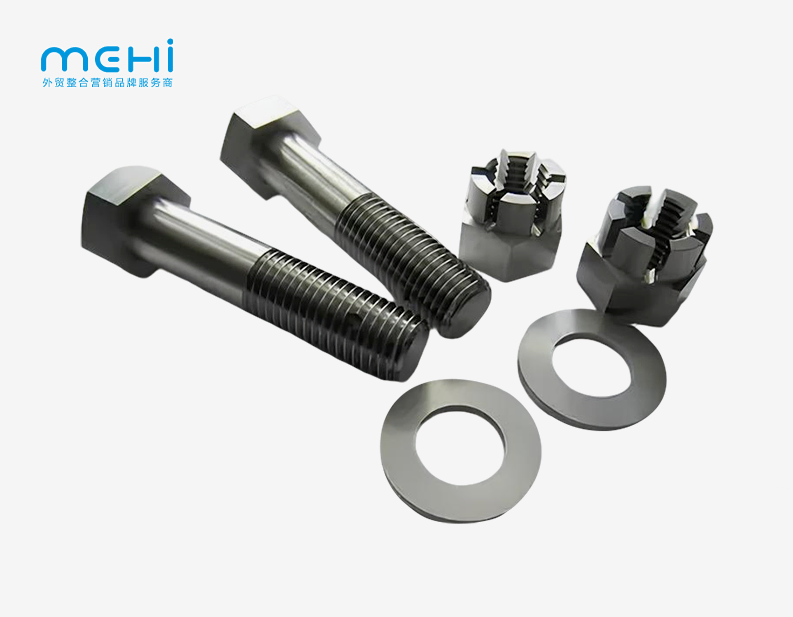
In today's tough market, procurement experts who want to find a balance between quality andcost must be awarw about Nickel 200 forged parts. forged parts pricing. These high-performance parts are very important in the aerospace, chemical processing, and marine industries. Their great resistance to corrosion and strong mechanical properties make them worth the high price. Changes in the cost of raw materials, how complicated it is to make the product, quality requirements,and the details Buyers can make good decisions that improve performance, lower costs, and keep the supply chain running smoothly if they know what causes these costs.
What Are Nickel 200 Forged Parts and Their Key Characteristics?
Nickel 200 is very useful for tough jobs because it is commercially pure nickel with great qualities. The forging process brings out the best in metals, making parts with better strength and performance.
Standards Compliance and Material Composition
The chemicals in these forged parts meet strict international rules like ASTM, JIS, AISI, GB, DIN, and EN. This compliance makes sure that the quality is always the same in different places and at different times in the production process. The material usually has at least 99.0% nickel, along with small amounts of carbon, manganese, iron, sulphur, silicon, and copper that are carefully controlled. These exact compositional needs have a direct effect on procurement costs because keeping those levels of purity requires complex quality control measures and refining processes.
Size Limitations and Certifications for Manufacturing
These days' factories can make forged parts with diameters from φ30 to φ600 mm and a maximum thickness of 600 mm to meet the needs of different industries. Every shipment comes with a Material Test Certificate (MTC) that meets EN 10204/3.1 standards. These certificates give a full report on the chemicals in the material, its mechanical properties, and how it was made. These certifications are useful, but the strict testing and paperwork needed for them raises the overall cost.
Better Performance Features
Some of the special traits of these Nickel 200 forged parts are that they can be used in a lot of different environments without rusting, they can be easily shaped into complex designs, and they work well in a lot of different temperature ranges. These features make them great for aerospace applications where the weight-to-strength ratio is important, for chemical processing equipment where resistance to corrosion is key, and for marine environments where exposure to saltwater makes things difficult.
Major Cost Factors Influencing Nickel 200 Forged Parts Pricing
There are many factors that are connected to each other that affect the price of these special parts. People who buy things for a living need to know these factors so they can make smart buying decisions.
The changing conditions in the market for raw materials
Nickel prices change based on the world's supply and demand, mining output, politics, and the economy. These changes in the market directly affect the prices of goods at the end of the queue. This makes timing an important factor for people who buy a lot of goods. Also, the high purity needs for electronics and aerospace applications make the materials much more expensive than those used in industrial-grade applications.
The difficulty of the manufacturing process
The process of forging itself is very expensive because of the need for special tools, a lot of energy, and skilled workers. Specialised furnaces and a controlled atmosphere are needed for hot forging. After that, machining requires precise tools and ways to make sure the tools are working right. Essential for getting the best mechanical properties, heat treatment processes add extra costs through energy use and longer production cycles.
Quality Control and Certification Needs
Strict checks on the quality of the work done at every stage of production make sure that goods meet global and customer-specific standards. Non-destructive testing, dimensional verification, chemical analysis, and mechanical property testing all add to the final costs. The paperwork needed for aerospace and medical uses is higher than the standard industrial practices. This means that more resources and special staff are needed.
Comparing Cost and Value: Nickel 200 Forged Parts vs Alternative Materials
To judge these parts against other kinds of materials, one must know the short-term costs and long-term benefits for different uses.
Performance Benefits Compared to Other Options
Stainless steel options might seem like the better choice at first because of their price, but they don't usually have the corrosion resistance and ductility needed for tough applications. Inconel alloys work better at high temperatures, but they are much more expensive and harder to work with. Copper alloys are great at conducting electricity, but they aren't as strong or durable in tough conditions as nickel-based materials.
An Analysis of Total Cost of Ownership
The longer service life and lower maintenance needs of properly specified Nickel 200 forged parts often make the higher up-front costs reasonable. These high-quality materials are reliable and long-lasting, so they help industries that have to often replace parts or can't work because of expensive downtime. In aerospace applications, where the risks of part failure are much greater than the costs of the materials, this view of lifecycle value becomes very important.
Strategies to Optimize Procurement Costs for Nickel 200 Forged Parts
Long-term partnerships with suppliers, cost control, and quality requirements can all be met with smart procurement strategies.
Choosing Suppliers and Building Partnerships
It is safer to work with manufacturers who know what the industry needs and always meet those standards because it lowers the risks of material failures or delivery delays. Long-term partnerships often lead to better prices, quicker appointment times, and tech support that adds value beyond just looking at the prices.
Strategic Planning and Optimisation of Orders
Buying in bulk can save a lot of money through economies of scale, but you need to plan ahead to avoid the costs of having too much inventory. Final prices can also be affected by when you buy things in relation to market conditions and production schedules. Understanding minimum order quantities and lead times helps procurement teams plan ahead and avoid having to pay extra for rushing orders.
Conclusion
When procurement professionals know the cost of these custom Nickel 200 forged parts, they can make good decisions that meet performance needs, stay within budget, and reflect the quality of the parts.ffected by the interplay of the cost of materials, the difficulty of manufacturing, the need for quality, and changes in the market. While the first costs might be higher than those of normal materials, the long-term value usually makes the investment worth it because it needs less maintenance, lasts longer, and performs reliably even in tough situations. If organisations want to get the most value out of thTheir strategic procurement methods should focus on supplier partnerships, order optimisation, and total cost of ownership analysis. These methods will also help them maintain the quality standards their operations need.
Frequently Asked Questions
Nickel 200 costs a lot more than stainless steel because it is easier to get and takes more work to make parts from.
A: These parts cost more because the special way they are made makes them more pure and less likely to corrode. The raw material is very costly since it is mostly (at least 99%) nickel. When forging and quality control are done, they use high-tech machines and stricter tests than regular stainless steel production.
Q2: What things should I consider when I compare suppliers for these parts?
A: Do you meet international standards? Can you make things in the sizes you need? How do you control quality? How reliable is delivery? What kind of technical support services are offered? These are all important questions to ask. Suppliers should be rated based on how well they understand your industry and how well they can provide all the right paperwork, including MTC certificates that meet EN 10204/3.1 standards.
Q3: How does the amount in an order affect the price of custom forged pieces made for you?
A: The cost of each one is usually lower when you order more. This is because larger projects make it cheaper to buy materials, start making things, and keep an eye on quality. There may be a minimum order quantity, though, and the best order size depends on your cash flow, how you use it, and how much it costs to keep in stock. If custom specifications require them, higher minimum amounts may be needed to make the costs of setting up and buying tools worth it.
Partner with Meihao for Premium Nickel 200 Forged Parts
Meihao is a professional B2B supply chain and digital marketing service provider dedicated to connecting global buyers with verified Chinese manufacturers of Nickel 200 forged parts. We do not manufacture or supply forged components directly. Instead, Meihao acts as a trusted sourcing platform, helping qualified manufacturers showcase their production ranges, standards compliance, and testing documentation to international buyers. Through our verified network, buyers can identify manufacturers capable of meeting ASTM, JIS, DIN, EN, and other international standards, with proper EN 10204/3.1 certification support. Meihao facilitates inquiries, technical communication, and buyer–supplier matching to improve sourcing efficiency. For cooperation or sourcing inquiries, please contact somyshare@gmail.com.
References
1. Davis, J.R. "Nickel, Cobalt, and Their Alloys: Properties and Applications." ASM International Handbook, Materials Park, Ohio, 2000.
2. Geddes, B., Leon, H., and Huang, X. "Superalloys: Alloying and Performance." ASM International, Materials Park, Ohio, 2010.
3. Donachie, M.J. and Donachie, S.J. "Superalloys: A Technical Guide, Second Edition." ASM International, Materials Park, Ohio, 2002.
4. Reed, R.C. "The Superalloys: Fundamentals and Applications." Cambridge University Press, Cambridge, United Kingdom, 2006.
5. Pollock, T.M. and Tin, S. "Nickel-Based Superalloys for Advanced Turbine Engines: Chemistry, Microstructure and Properties." Journal of Propulsion and Power, Vol. 22, No. 2, 2006.
6. Sims, C.T., Stoloff, N.S., and Hagel, W.C. "Superalloys II: High-Temperature Materials for Aerospace and Industrial Power." John Wiley & Sons, New York, 1987.