- English
- French
- German
- Portuguese
- Spanish
- Russian
- Japanese
- Korean
- Arabic
- Greek
- German
- Turkish
- Italian
- Danish
- Romanian
- Indonesian
- Czech
- Afrikaans
- Swedish
- Polish
- Basque
- Catalan
- Esperanto
- Hindi
- Lao
- Albanian
- Amharic
- Armenian
- Azerbaijani
- Belarusian
- Bengali
- Bosnian
- Bulgarian
- Cebuano
- Chichewa
- Corsican
- Croatian
- Dutch
- Estonian
- Filipino
- Finnish
- Frisian
- Galician
- Georgian
- Gujarati
- Haitian
- Hausa
- Hawaiian
- Hebrew
- Hmong
- Hungarian
- Icelandic
- Igbo
- Javanese
- Kannada
- Kazakh
- Khmer
- Kurdish
- Kyrgyz
- Latin
- Latvian
- Lithuanian
- Luxembou..
- Macedonian
- Malagasy
- Malay
- Malayalam
- Maltese
- Maori
- Marathi
- Mongolian
- Burmese
- Nepali
- Norwegian
- Pashto
- Persian
- Punjabi
- Serbian
- Sesotho
- Sinhala
- Slovak
- Slovenian
- Somali
- Samoan
- Scots Gaelic
- Shona
- Sindhi
- Sundanese
- Swahili
- Tajik
- Tamil
- Telugu
- Thai
- Ukrainian
- Urdu
- Uzbek
- Vietnamese
- Welsh
- Xhosa
- Yiddish
- Yoruba
- Zulu
Maintenance of single-row cylindrical roller bearings is crucial to industrial equipment performance and dependability. These tough components perform well in steel rolling mills, mining equipment, and metallurgical machinery with high radial loads and continuous operation. Proper maintenance improves operating efficiency, reduces unplanned downtime, and extends bearing life. Industrial engineers and procurement managers know that preventative maintenance may cut ownership costs by 40% while preserving performance. This detailed reference gives experts handling high-load industrial applications practical maintenance advice to ensure cylindrical roller bearings work consistently under the most demanding operating situations.
Understanding Single Row Cylindrical Roller Bearings and Their Maintenance Needs
Design Architecture and Core Components
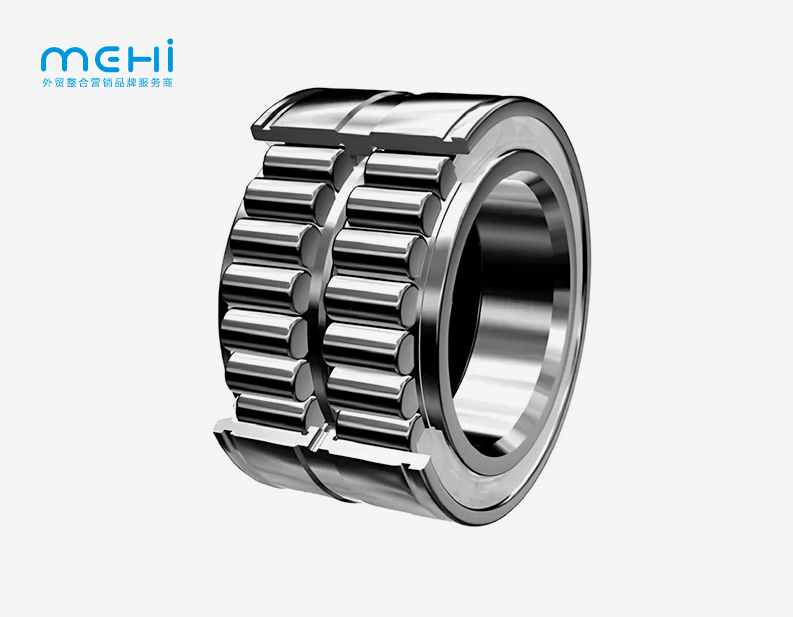
There are four different parts to a single-row cylindrical roller bearing: the inner ring, the outer ring, the rollers, and the cage assembly. When compared to sealed bearings, this removable design makes installation and upkeep easier. Two ribs on the bearing ring make sure that the rollers move in the right way, which keeps the friction low and the load evenly distributed.
These bearings come in NU, NJ, N, and NF series variants with different flange arrangements to meet application needs. The N design allows maximum shaft motion, whereas NJ series bearings include inner ring flanges for axial guiding. Manufacturing standards commonly support inner diameters from 120 mm to 1320 mm using premium materials like GCr15, GCr15SiMn, and G20Cr2Ni4A for durability and performance.
Operational Characteristics and Performance Parameters
Compared to equivalent-sized ball bearings, cylindrical roller bearings have high radial load capacity and impact resistance. These components perform well in high-speed rotation applications with accurate shaft alignment. The inner-outer ring axis angle must be below 4 degrees to avoid premature wear and performance loss.
An advanced profile on rollers and raceways compensates for tiny misalignments and optimizes load distribution. This design makes them ideal for rolling mills, heavy-duty industrial shafts, and large-scale manufacturing equipment that requires constant performance under varying load situations.
Critical Failure Modes and Prevention Strategies
Lack of lubrication, pollution, incorrect installation, and high operating temperatures cause failure. Extended service intervals or improper lubricant choices cause lubrication breakdown. Wear and surface degradation may be increased by metal particles, dampness, or chemicals.
Maintenance teams may build focused preventative tactics by understanding these failure patterns. Condition monitoring, sealing maintenance, and lubrication schedules decrease failure risks and increase operating life.
Top 7 Maintenance Tips to Extend Bearing Life and Optimize Performance
Essential Lubrication Management Practices
Lubrication is the most important aspect in single-row cylindrical roller bearings' lifespan and performance. Here are the primary lubricant management solutions for industrial maintenance teams:
- Choose lubricant viscosity depending on operating temperature and rotating speed to ensure film thickness under all situations.
- Maintain regular relubrication intervals based on operating environment severity, load circumstances, and manufacturer standards to avoid lubricant deterioration.
- Regularly sample and analyze lubricant to identify contamination, oxidation, and additive depletion before performance effects.
- Store lubricants in prescribed temperature ranges and avoid moisture contamination that might affect bearing performance.
Effective bearing maintenance programs depend on these lubrication procedures, which affect service life and operational dependability in tough industrial situations.
Installation and Alignment Protocols
Proper installation optimizes bearing performance and prevents failure. Reliable operation starts with shaft and housing preparation, including surface polish and dimensional accuracy inspections. Installation damage is avoided, and perfect fits are guaranteed using temperature-controlled technologies like inner ring induction heating.
Precision measurement devices show shaft deflection is within permissible limits. Proper torque application during assembly minimizes bearing preload problems that impair performance or life.
Contamination Prevention and Sealing Effectiveness
Environmental protection and extensive sealing solutions are needed to control pollution. Proper seal inspection and replacement prevent abrasive particles, moisture, and chemicals from accelerating bearing wear. Labyrinth or contact seals, dependent on the severity of the operational environment, give adequate protection.
Keep assembly areas clean and use correct handling methods during maintenance to avoid contamination. Regular bearing housing and surrounding area cleaning removes contamination sources that might affect bearing performance.
Temperature Monitoring and Thermal Management
Continuous temperature monitoring detects problems before they cause catastrophic failure. Establishing baseline operating temperatures and installing warning systems for high temperatures enables proactive maintenance. Maintenance of the cooling system provides heat dissipation under heavy load.
Thermal imaging checks show temperature distribution patterns that may suggest alignment, lubrication, or component damage. Regular thermal analysis helps maintenance personnel spot and fix problems before they disrupt production.
Comparison Insights: How Maintenance Practices Differ Between Single-Row Cylindrical Roller Bearings and Other Bearings
Load Capacity and Maintenance Frequency Variations
Due to their design and function, single-row cylindrical roller bearings need different maintenance than ball, spherical, and needle bearings. Bearing types vary in maintenance as shown below:
Due to line contact stress patterns between rollers and raceways, cylindrical roller bearings perform well in radial load applications but need more regular lubrication monitoring. Under similar operating circumstances, point-contact ball bearings have longer lubrication intervals but lower load capacity. Spherical roller bearings may misalign more, but need specific lubrication to handle complicated load distributions.
Needle bearings, although comparable to roller designs, have greater contact pressures and need more regular inspections and contaminant control. These basic design changes affect maintenance schedules, lubricant selection, and inspection.
Inspection Techniques and Monitoring Requirements
Due to frequency signatures and failure development patterns, bearing types need different vibration analysis methods. The vibration patterns of cylindrical roller bearings depend on roller passage frequencies and cage rotation. Specialized analysis and frequency range monitoring are needed to distinguish these characteristics from ball bearing vibration patterns.
Acoustic emission monitoring may detect early-stage surface distress in cylindrical roller bearings before vibration analysis can. Bearing design and heat-generating patterns affect temperature monitoring sites and sensor placement.
Procurement and Supply Chain Considerations for Maintenance Efficiency
Strategic Supplier Selection and Quality Assurance
For effective bearing maintenance, consider quality, dependability, and technical support when sourcing. Reliable manufacturers offer technical documentation, application engineering assistance, and consistent product quality, which affects maintenance and operational dependability.
Customizable suppliers allow bearing parameters to be optimized for individual applications. Material selection, clearance changes, and specialist coatings enhance service life and decrease maintenance in difficult operating situations.
Inventory Management and Maintenance Planning
Strategic inventory management balances crucial bearing component availability and carrying costs. Condition-based maintenance schemes demand adequate spare bearing stocks and little capital expenditure in slow-moving goods.
Inventory turnover and component availability during scheduled outages are optimized by coordinating procurement schedules with maintenance operations. Partnering with technical support and emergency delivery vendors improves maintenance program performance and decreases unexpected downtime.
Supply Chain Logistics and Lead Time Management
Lead times for unique bearing configurations must be planned and coordinated with manufacturing. Custom bearing requirements, especially for heavy industrial large-diameter applications, need lengthy production lead times that must be accommodated in maintenance planning cycles.
Regional distribution networks and various certified suppliers provide supply chain resilience and decrease essential maintenance delivery risks. Vendor-managed inventory strategies for high-usage bearing components decrease procurement administration and ensure availability.
Conclusion
Understanding single-row cylindrical roller bearing design, operating requirements, and failure modes is essential for maintenance. This guide's seven key maintenance techniques increase bearing service life, optimize performance, and lower overall ownership costs in demanding industrial applications. Successful maintenance plans start with lubricant management, correct installation, contamination avoidance, and rigorous monitoring. By providing quality parts and technical assistance, strategic procurement, supplier partnerships, and supply chain management, maintenance efficiency.
FAQ—Addressing Common Questions About Single Row Cylindrical Roller Bearing Maintenance
1. How often should single-row cylindrical roller bearings be relubricated in heavy-duty applications?
Relubrication frequency depends on operating conditions, load levels, and environmental factors. Heavy-duty applications typically require relubrication intervals ranging from 1,000 to 8,000 operating hours. High-temperature environments, continuous operation, and extreme loads necessitate more frequent lubrication. Condition monitoring through vibration analysis and temperature measurement provides optimal guidance for establishing specific relubrication schedules.
2. What are the primary signs indicating immediate bearing replacement requirements?
Critical replacement indicators include excessive vibration levels exceeding baseline measurements by 50%, operating temperatures consistently above 80°C, visible wear patterns on roller surfaces, cage damage or distortion, and lubricant contamination with metallic particles. Acoustic emission monitoring can detect surface distress before visible damage occurs, enabling proactive replacement decisions.
3. How do maintenance requirements differ between NU, NJ, N, and NF series bearings?
Series variations primarily affect installation and inspection procedures rather than fundamental maintenance practices. NJ series bearings with integral flanges require careful axial positioning verification, while N series bearings need proper shoulder contact confirmation. Lubrication requirements remain consistent across series types, but inspection access and replacement procedures may vary based on flange configurations and mounting arrangements.
Partner with Meihao for Premium Single-Row Cylindrical Roller Bearing Solutions
Meihao partners with recognized Chinese manufacturers that make high-quality single-row cylindrical roller bearings for steel rolling mills, mining equipment, and heavy industrial applications. Our carefully chosen supplier network provides bespoke solutions for 120 mm to 1320 mm inner diameters using modern materials and precise production. Email our experts at somyshare@gmail.com for product catalogs, competitive pricing, and technical specs. Our platform connects you with certified manufacturers that value quality, performance, and delivery for your essential industrial applications, whether you require standard configurations or bespoke single-row cylindrical roller bearing supplier solutions.
References
1. "Industrial Bearing Maintenance Best Practices for Heavy Machinery Applications"—Society of Tribologists and Lubrication Engineers Technical Publication, 2023.
2. "Cylindrical Roller Bearing Performance Analysis in Steel Rolling Mill "Operations"—International Journal of Industrial Engineering and Management, Volume 15, Issue 3, 2024.
3. "Predictive Maintenance Strategies for Critical Bearing Components in Metallurgical Equipment"—American - American Society of Mechanical Engineers Technical Paper, 2023.
4. "Lubrication Management Systems for High-Load Industrial Bearing Applications"—Tribology International Research Publication, Volume 178, 2024.
5. "Supply Chain Optimization for Industrial Bearing Procurement in Global "Manufacturing"—International Journal of Production Economics, Volume 267, 2024.
6. "Failure Analysis and Prevention Methods for Cylindrical Roller Bearings in Mining "Applications"—Engineering Failure Analysis Technical Report, Volume 156, 2024.