- English
- French
- German
- Portuguese
- Spanish
- Russian
- Japanese
- Korean
- Arabic
- Greek
- German
- Turkish
- Italian
- Danish
- Romanian
- Indonesian
- Czech
- Afrikaans
- Swedish
- Polish
- Basque
- Catalan
- Esperanto
- Hindi
- Lao
- Albanian
- Amharic
- Armenian
- Azerbaijani
- Belarusian
- Bengali
- Bosnian
- Bulgarian
- Cebuano
- Chichewa
- Corsican
- Croatian
- Dutch
- Estonian
- Filipino
- Finnish
- Frisian
- Galician
- Georgian
- Gujarati
- Haitian
- Hausa
- Hawaiian
- Hebrew
- Hmong
- Hungarian
- Icelandic
- Igbo
- Javanese
- Kannada
- Kazakh
- Khmer
- Kurdish
- Kyrgyz
- Latin
- Latvian
- Lithuanian
- Luxembou..
- Macedonian
- Malagasy
- Malay
- Malayalam
- Maltese
- Maori
- Marathi
- Mongolian
- Burmese
- Nepali
- Norwegian
- Pashto
- Persian
- Punjabi
- Serbian
- Sesotho
- Sinhala
- Slovak
- Slovenian
- Somali
- Samoan
- Scots Gaelic
- Shona
- Sindhi
- Sundanese
- Swahili
- Tajik
- Tamil
- Telugu
- Thai
- Ukrainian
- Urdu
- Uzbek
- Vietnamese
- Welsh
- Xhosa
- Yiddish
- Yoruba
- Zulu
Four Row Cylindrical Roller Bearings need to be maintained in a way that is specific to their tough working conditions in order to increase their useful life. These bearings, which are usually made from high-quality materials like GCr15, GCr15SiMn, and G20Cr2Ni4A, are very important in rolling mills and other heavy machinery. With inner diameters from 90 to 1400mm, good maintenance plans directly affect the ability to keep production going, cut down on unplanned shutdowns, and get the most out of investments in wire mills, bar mills, and sheet rolling operations.
Understanding Four-Row Cylindrical Roller Bearings and Their Maintenance Needs
What Makes Four Row Bearings Unique in Industrial Applications
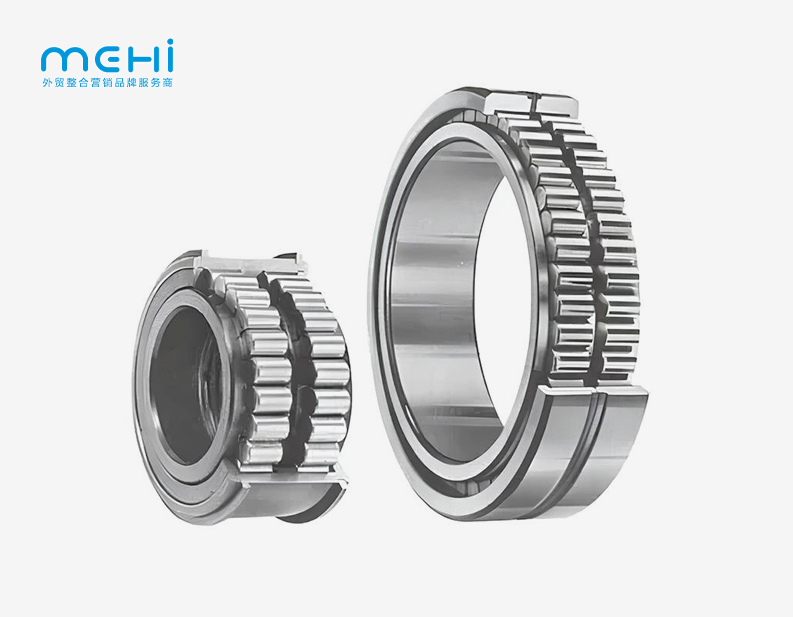
Four Row Cylindrical Roller Bearings are a special type of bearing made for rolling mill applications that need a lot of radial load. The FC, FCD, and FCDP series bearings have small bodies and high stiffness ratings that let them handle huge radial loads while staying precise at high speeds. These bearings are not like normal single-row designs; instead, they spread forces across four rows of rollers. This makes them stable in wire mills, bar and shape mills, cold and hot sheet mills, and cogging mills, where accurate measurements directly affect the quality of the product.
The design includes inner rings that don't have ribs, which lets the inner and outer ring subassemblies be put together separately. This separate design makes it easier to clean, inspect, and remove components, which is especially helpful during planned maintenance windows when minimising downtime is very important.
Load Distribution Mechanics and Temperature Considerations
Spreading the load across four rows of rollers makes line contact between the rollers and the raceways, which gives them better rotational stiffness than ball bearings. Because of this contact pattern, these bearings can hold loads of more than 500 tonnes in large rolling mill setups. Because operating temperatures in hot rolling mills can get close to or above 50°C, temperature control is necessary. The bearing materials are heated until they reach HRC 60–64 hardness levels. This makes sure that they don't wear out over long periods of use. Knowing about these temperature dynamics helps engineers set up the right tracking and lubrication schedules to keep things from breaking down too quickly.
Regular Lubrication: Methods and Best Practices
Selecting Between Oil and Grease Lubrication Systems
Choosing the right lubrication method has a big effect on how long a four-row Cylindrical Roller Bearing lasts. Because they can get rid of heat better, oil-greasing methods are most common in rolling mills. Systems that circulate oil remove heat from surfaces that are rubbing against each other and add new lubricant to them all the time. Depending on the speed and load, the oil flow rate for each bearing is usually between 0.5 and 2 litres per minute.
Grease lubrication is used in some situations where easy closing is more important than managing heat. High-quality lithium complex greases with extreme pressure additives work well for moderate-speed tasks, but strict relubrication intervals must be followed to keep the lubricant from running out.
Establishing Optimal Lubrication Intervals
The main cause of failure in four-row Cylindrical Roller Bearings is grease breakdown, which can be avoided by carefully planning when to lubricate them. Oil research tools keep track of the amount of contamination, changes in viscosity, and loss of additives. Every 500 hours of operation, samples are taken to get standard data for trend analysis. Brass solid cages and pin-type cages are used in these bearings, and they have different lubrication needs. Brass cages need to have a constant oil film thickness maintained to keep metal from touching metal at the cage-roller surfaces.
Automatic lubrication systems with programmable controllers deliver exact amounts of lubricant at set times, eliminating human error and keeping records of lubrication activities for tracking compliance.
Proper Installation and Alignment Procedures
Installation Techniques for Separable Ring Designs
Four-row Cylindrical Roller Bearings have an inner ring that doesn't have any grooves in it. This gives fitting options that maintenance teams must use properly. Hydraulic fastening tools let you apply force in a controlled way, without causing mechanical shocks that damage raceways. When rings are heated by induction, they grow evenly, which lets them fit on shafts without using too much force. To keep the properties of the material from changing, the heating temperature should not go above 120°C.
To install an outer ring into a housing, you need to make sure it is clean and choose the right tools. Because they are separate, both rings can be installed separately. The inner rings attach to the shafts, and the outer rings are secured in their housings before the final assembly. To make sure that the roller sets line up correctly during the final positioning stage, this sequence needs to be coordinated.
Detecting and Correcting Shaft Misalignment
Misalignment of the shaft leads to uneven load distribution across the rows of rollers, which drastically reduces the life of the bearing. With an accuracy of 0.001mm, laser alignment devices can find horizontal and parallel errors. Four-row Cylindrical Roller Bearings can have a shift tolerance of 0.05 to 0.1 mm per metre of shaft length, based on the speed at which they are being used.
A steel mill in the Midwest found that laser alignment protocols used during regular maintenance increased the life of bearings by 300%. Before, replacements happened every 18 months on average. With proper alignment, this lasted 54 months, showing how much money precision alignment practices save.
Regular Inspection and Condition Monitoring
Vibration Analysis for Predictive Maintenance
Monitoring vibrations sends out early warning signals before catastrophic bearing failures happen. On bearing housings, accelerometers measure the amplitude of vibrations across a range of frequencies. When cage wear, raceway spalling, or roller defects develop, four-row cylindrical roller bearings show specific frequency patterns. Setting up baseline vibration signatures during commissioning lets maintenance teams find deviation trends that show problems are starting to appear.
Vibration data, temperature sensor data, and oil analysis results are all combined by condition monitoring systems to make full health assessments. When parameters go beyond acceptable ranges, alert levels send out repair work orders. This lets planned interventions happen before unplanned failures mess up production plans.
Temperature and Wear Indicator Tracking
The operating temperature tells you a lot about the state of the bearings. Infrared thermography can find hot spots in the process, which means that the lubrication isn't working right or there is contamination. Four Row Cylindrical Roller Bearings typically operate at temperatures between 60°C and 80°C above ambient conditions when they are properly maintained. Temperature rises of more than 10°C in 24 hours should be looked into right away.
By looking at wear debris from oil samples, we can see that the makeup of bearing materials changes. Ferrography finds the particle sizes, shapes, and concentrations that separate normal wear from abnormal breakdown modes that need to be fixed.
Contamination Control and Environment Management
Sealing Solutions for Harsh Rolling Mill Environments
Bearings in rolling mills are exposed to water spray, mill scale particles, and coolants that are bad for them. Sealing solutions that work well become important protective barriers that stop contamination from getting in. Labyrinth seals make winding paths that push contaminants away using centrifugal force instead of frictional contact. These designs work well in high-speed situations where heat production needs to be kept to a minimum.
Water and small particles can't get through contact seals made of nitrile or fluoroelastomer materials. In exchange, there is more friction and heat, which need to be weighed against the risk of infection. Labyrinth seals are used as the main form of defence in many rolling mill setups, and backup contact seals are used in high-risk contamination areas.
Storage and Handling Protocols Before Installation
Proper keeping is the first step in making sure a bearing is in good shape before it is installed. Until they are installed, Four Row Cylindrical Roller Bearings should be kept in their original packaging with corrosion inhibitors. To keep condensation and rust from happening, storage places should be kept between 10°C and 30°C and have a relative humidity of 45–65%. Large bearings with internal sizes bigger than 500mm can't bend when stored horizontally.
Handling methods don't allow direct skin contact with machined surfaces because skin oils and salts speed up the rusting process. During unpacking and installing, using clean cotton gloves and lint-free wiping materials keeps contamination from spreading.
Tailoring Maintenance Plans for Heavy Load and High-Speed Applications
Frequency Adjustments for Demanding Operating Conditions
When there are heavy radial loads and high spinning speeds, wear patterns happen more quickly, so repair plans need to be tightened. Rolling mills that work with high-tonnage materials create loads that are getting close to the rated capacities of the bearings. This means that the lubrication intervals need to be cut to 50–70% of what is normally recommended. Maintenance on the oil filter system should be done more often to get rid of wear debris before it causes harsh wear cycles.
High-speed wire mills with surface speeds of more than 20 meters per second need to be constantly checked for problems instead of just once in a while. Real-time data streams let you respond right away to problems as they arise, before they spread and cause more damage.
Selecting Appropriate Bearing Series for Application Requirements
The FC, FCD, and FCDP series names refer to different versions of the design that work with different types of rolling mills. Standard load ratings make the FC series bearings useful for rolling mills in general. The FCD line has better sealing mechanisms for cooling areas with a lot of water. The FCDP series has optimised internal geometries for maximum load capacity in installations with limited space.
Talking to bearing engineers during the specification process makes sure that the series chosen will work in real-world situations. Bearings that are too small fail too soon, and bearings that are too big cost more without improving efficiency. Different types of rolling mill tools can use shafts with an internal width range from 90mm to 1400mm.
Conclusion
Four row Cylindrical Roller Bearings represent critical components in rolling mill operations where maintenance excellence directly impacts production economics. The form of the separable rings, their high radial load capacity, and the special materials they are made of make upkeep very specific. Structured lubrication programs, exact fitting methods, ongoing condition tracking, contamination control, and planning for application-specific upkeep all work together to make bearing service life as long as possible. When manufacturing companies follow these maintenance guidelines, their equipment is more reliable, they spend less on maintenance, and their operations are more stable in wire mills, sheet rolling operations, and heavy forging situations.
Frequently Asked Questions
1. What is the expected lifespan of four-row cylindrical roller bearings in rolling mill service?
Service life depends a lot on how it is used, how well it is maintained, and how much it is used. Bearings that are well taken care of and used in controlled environments usually last between 30,000 and 50,000 hours of use. Rolling mills that get regular maintenance and use the right kind of oil have been known to last longer than 60,000 hours. Life expectancy drops to 5,000 to 10,000 hours when there is contamination, imbalance, or a lack of lubrication. This shows how important it is to have a repair program.
2. How do brass cages compare to pin-type cages in maintenance requirements?
Solid brass cages are stronger and less likely to vibrate, making them perfect for breakdown mills that have a lot of shock loads. To keep the cage-roller contact points from wearing down, they need regular maintenance of the lubrication film. Pin-type cages are better for high-speed uses because they have less weight and drag, but they need to be carefully checked for pin wear during maintenance periods. The choice of cage affects the amount of lubrication needed and the areas that need to be inspected during preventive maintenance.
3. Can condition monitoring systems predict failure modes before they occur?
Advanced condition monitoring that includes sound analysis, temperature tracking, and oil debris monitoring can safely predict 70–85% of bearing failures, giving people enough time to plan repairs. Using more than one sensor's data at the same time gives more accurate predictions than monitoring just one measure. Using machine learning algorithms on failure data from the past makes predictions more accurate as systems gain practical experience across bearing groups.
Connect with Meihao for Expert Four Row Cylindrical Roller Bearing Solutions
You can use Meihao as a strategic hub to connect your business with the best Cylindrical Roller Bearing makers in China. Our business-to-business (B2B) platform connects purchasing managers and engineers with trusted providers of FC, FCD, and FCDP series bearings that are made to exact specs. Our expert team can help you choose the right bearing set for your rolling mill application or give you advice on bearings with internal diameters ranging from 90mm to 1400mm. This will make the process of finding easier.
Meihao has been a Google Premier Partner for seven years in a row and won the 2024 Top Google Partner award in Greater China. To make sure quality, compliance, and reliability, they have strict supplier verification standards that they stick to. Get in touch with us at somyshare@gmail.com to talk about your needs for four-row cylindrical roller bearings. We help you find reliable manufacturers and improve the performance of your supply chain by giving you market information, technical specifications, and procurement support.
References
1. Harris, T.A. & Kotzalas, M.N. (2006). Advanced Concepts of Bearing Technology: Rolling Bearing Analysis, Fifth Edition. CRC Press.
2. Eschmann, P., Hasbargen, L. & Weigand, K. (1985). Ball and Roller Bearings: Theory, Design and Application, Second Edition. John Wiley & Sons.
3. Zhou, R.S. & Hoeprich, M.R. (1994). "Torque of Tapered Roller Bearings." Journal of Tribology, Vol. 116(3), pp. 431-437.
4. Tallian, T.E. (1992). "Simplified Contact Fatigue Life Prediction Model—Part I: Review of Published Models." Journal of Tribology, Vol. 114(2), pp. 207-213.
5. Cao, M. & Xiao, J. (2008). "A Comprehensive Dynamic Model of Double-Row Spherical Roller Bearing—Model Development and Case Studies on Surface Defects." Mechanical Systems and Signal Processing, Vol. 22(2), pp. 467-497.
6. Poplawski, J.V., Peters, S.M. & Zaretsky, E.V. (2001). "Effect of Roller Profile on Cylindrical Roller Bearing Life Prediction—Part I: Comparison of Bearing Life Theories." Tribology Transactions, Vol. 44(3), pp. 339-350.