- English
- French
- German
- Portuguese
- Spanish
- Russian
- Japanese
- Korean
- Arabic
- Greek
- German
- Turkish
- Italian
- Danish
- Romanian
- Indonesian
- Czech
- Afrikaans
- Swedish
- Polish
- Basque
- Catalan
- Esperanto
- Hindi
- Lao
- Albanian
- Amharic
- Armenian
- Azerbaijani
- Belarusian
- Bengali
- Bosnian
- Bulgarian
- Cebuano
- Chichewa
- Corsican
- Croatian
- Dutch
- Estonian
- Filipino
- Finnish
- Frisian
- Galician
- Georgian
- Gujarati
- Haitian
- Hausa
- Hawaiian
- Hebrew
- Hmong
- Hungarian
- Icelandic
- Igbo
- Javanese
- Kannada
- Kazakh
- Khmer
- Kurdish
- Kyrgyz
- Latin
- Latvian
- Lithuanian
- Luxembou..
- Macedonian
- Malagasy
- Malay
- Malayalam
- Maltese
- Maori
- Marathi
- Mongolian
- Burmese
- Nepali
- Norwegian
- Pashto
- Persian
- Punjabi
- Serbian
- Sesotho
- Sinhala
- Slovak
- Slovenian
- Somali
- Samoan
- Scots Gaelic
- Shona
- Sindhi
- Sundanese
- Swahili
- Tajik
- Tamil
- Telugu
- Thai
- Ukrainian
- Urdu
- Uzbek
- Vietnamese
- Welsh
- Xhosa
- Yiddish
- Yoruba
- Zulu
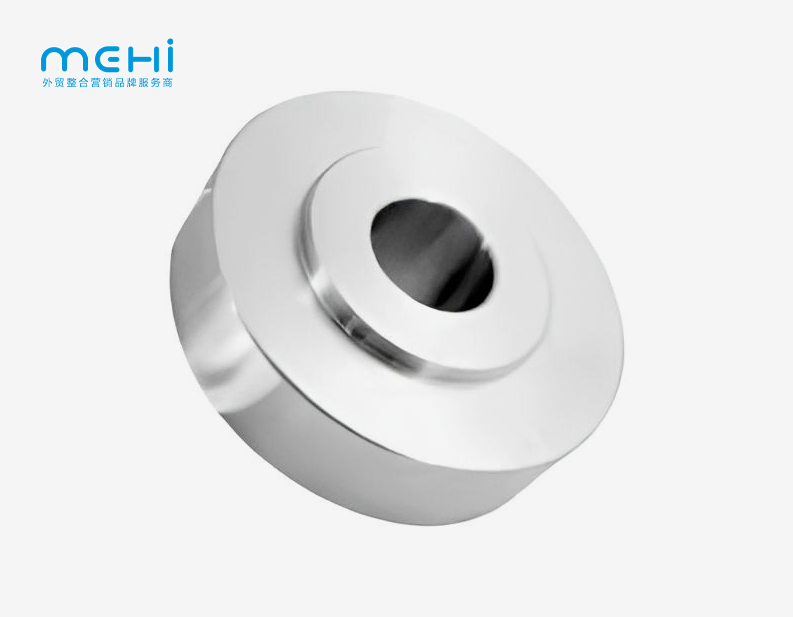
Electrical Nickel Contacts work very well in harsh industrial settings because they combine excellent conductivity with amazing durability. Nickel 200 forgings are unique among contact materials because they are made of a very pure metal (usually 99.6% nickel), which ensures that all switches, relays, and circuit breakers work the same way. The forging process creates dense, grain-refined structures that improve mechanical integrity and maintain good corrosion resistance. This makes these parts perfect for high-precision battery systems, aerospace electronics, and equipment used to make semiconductors.
Understanding Nickel Contacts in Electrical Applications
When making electrical systems that need to work well for years, the contact material you choose is very important. Engineers value the distinctive mix of qualities offered by Pure Nickel Contacts.
The Role of Contacts in Electrical Systems
Electrical contacts are the actual links that allow current to flow between electrodes. Thermal stress, mechanical wear, and exposure to the environment all happen at the same time at these junctions. Nickel Contacts deal with these problems by using the properties of the material itself instead of just covering it. The material's resistance stays the same even after thousands of switching cycles. This means that the system will behave in a predictable way during its lifetime.
Material Composition and Purity Standards
Nickel 200 forgings meet a number of international standards, such as ASTM B160, DIN 17740, and EN 2.4066. This makes sure that the material's properties are the same all over the world's supply chains. The makeup strictly limits flaws; the carbon content stays below 0.15%, and the copper content stays below 0.25%. This high level of purity stops secondary phases from forming, which could make the material less electrically conductive or create stress concentration points. Spectroscopic analysis is used by manufacturing facilities to check the composition of materials. They then provide procurement teams with Material Test Certificates (MTC) that meet the standards set by EN 10204/3.1.
Forging Process Advantages Over Other Manufacturing Methods
Forging is a way to work with metal that involves using machines and controlled temperatures to make better grain structures than casting or powder metalworking. This thermomechanical processing gets rid of pores and makes the grains flow in a way that matches the shape of the part. Machined bar stock is less resistant to wear than forgings, which can handle higher mechanical loads. Sizes range from φ30mm to φ600mm, and thicknesses can go up to 600mm. This means that they can be used for a wide range of design needs, from small relay contacts to big industrial equipment parts.
Why Choose Nickel 200 Forgings for Electrical Contacts?
To choose the best contact material, you have to weigh a number of performance factors against the cost. Forgings made of Nickel 200 can handle this complexity because the material itself has benefits.
Corrosion Resistance in Harsh Environments
Nickel naturally creates a passive oxide layer that keeps the metal below it safe from corrosion, chemical exposure, and water getting in. This quality is very useful in marine electronics, controls for chemical processing, and electrical enclosures outside. Copper contacts form insulating oxide films, but nickel oxide stays semiconductive and doesn't really get in the way of current flow. According to ASTM B117 salt spray guidelines, Nickel Contacts are still effective after 500 hours or more of exposure, which is much longer than what is required for industrial-grade parts.
Electrical Conductivity and Thermal Stability
Nickel is only about 25% as conductive as copper, but this level of performance is good enough for most switching tasks where contact resistance is more important than bulk conductivity. At high temperatures, the material's thermal stability is very important. Nickel keeps its mechanical strength and resistance to oxidation up to 600°C, while many other materials quickly soften or oxidise above 300°C. In high-current situations where contact heating is normal, this thermal margin acts as a safety buffer.
Mechanical Properties and Wear Resistance
Nickel 200 forgings are usually between 70 and 120 HB, which means they are very resistant to damage from mechanical wear and friction. Contact surfaces keep their shape over millions of operational cycles, which means they don't need to be replaced or serviced as often. The moderate hardness of the material also makes it possible to precisely machine and finish the surface, which creates the best contact geometries. Aerospace companies really like this combo because the contacts have to be able to withstand vibration testing according to DO-160 standards and still meet electrical specs throughout the duration of the part.
Cost Efficiency Over Product Lifecycle
The initial cost of materials is only one part of the total owning economy. Nickel Contacts are valuable because they last longer between repairs, fail less often, and need less upkeep. According to data from industrial setups, Nickel Contacts with the right specifications have a mean time between failures (MTBF) of more than 1 million cycles in moderate-duty uses. This durability lowers the cost of keeping inventory, cuts down on production downtime, and lowers the number of guarantee claims. These are all benefits that procurement professionals look for when they are reviewing seller offers.
Comparison of Nickel Contacts with Alternative Contact Materials
When engineers know how different things work in comparison, they can make better design choices that balance technical needs with budget limits.
Nickel Versus Copper Contacts
Copper is a better conductor than most metals, but it oxidises easily, creating insulating layers that make contact resistance rise over time. Copper contacts often break down after a few months of use in applications that need to switch low-current loads often. Nickel's stable oxide properties stop this kind of breakdown from happening. In exchange for stable long-term performance, you have to be willing to live with higher bulk resistivity. Cost analysis should take into account how often things need to be replaced. For example, Nickel Contacts may cost 40% more at first but last three times longer, which means that the annualised cost is lower.
Nickel Compared to Precious Metal Contacts
Even though they are more expensive, silver and gold contacts are the most common in high-reliability uses. Silver is a great conductor, but it tarnishes through sulfidation when it comes into contact with airborne contaminants, which finally breaks the contact. Gold doesn't react with chemicals, but because it is soft, it goes down quickly when put under mechanical stress. These gaps can be filled by nickel-based contacts in situations where the performance of precious metals is not necessary. Nickel is being used more and more in battery interconnect systems because gold's higher cost isn't justified in electrochemical environments. Nickel's stability also ensures consistent energy transfer across charge-discharge cycles.
Surface Treatment Options
Selective plating or coating processes can help engineers improve the performance of Nickel Contacts. A thin gold flash on top of nickel substrates combines the strong mechanical properties of nickel with the low contact resistance of gold. This stacked method uses 80% less valuable metal than solid gold contacts while keeping the same level of electrical performance. Another choice is to nickel plate over copper bases, which uses copper's ability to conduct electricity and nickel's ability to protect the surface. When choosing materials, each application's operating environment, electrical needs, and budget should be taken into account.
Selecting and Procuring Nickel 200 Forgings for Your Electrical Needs
Finding the cheapest supplier isn't the only part of strategic sourcing. You also have to look at their technical skills, quality systems, and how reliable their supply chain is.
Technical Specification Considerations
Material standards (ASTM B160, JIS H4551, or a similar standard), dimensional tolerances (according to ISO 2768), and surface finish needs should all be spelled out in the procurement specs. It's helpful for electrical applications to set maximum surface roughness values, which are usually between 0.8 and 3.2 μm, depending on the design of the contact. Hardness ranges, grain size limits, and mechanical property requirements need to be written down to make sure that the quality is the same from lot to lot. Suppliers should give capability statements that show they can meet these requirements, along with quality control processes that make sure they can.
Quality Certification and Traceability
Suppliers with a good reputation use quality management systems that are certified to ISO 9001 or AS9100 for aerospace uses. Each lot of materials should come with paperwork that shows where the raw materials came from, how they were processed, and where they were inspected at the end. Material test papers according to EN 10204/3.1 show the chemical make-up, the results of mechanical property tests, and data for verifying sizes. This paperwork is necessary in industries with strict rules. For example, companies that make medical devices need it to follow FDA quality system rules, and companies that work in aerospace need it to meet AS9100 standards.
Supply Chain Logistics and Lead Times
Knowing how long it takes to make something helps buying teams plan when parts will be available so that they don't clash with production schedules. Standard Nickel 200 forging forms usually take 8 to 12 weeks to deliver from the time the order is placed, but custom designs can take up to 14 to 16 weeks. Minimum order quantities depend on the supplier and the complexity of the product. For example, for standard shapes, the minimum order quantity might be 100 kg, but for custom configurations, it's higher. Getting in touch with experienced wholesalers who keep stock can cut down on lead times for urgent needs, but they will charge more for this ease.
Supplier Evaluation Criteria
In addition to comparing prices, procurement should look at how well suppliers can help with technical issues, how willing they are to work with engineers, and how often they have delivered on time in the past. Suppliers who know a lot about application engineering can suggest design changes that make things work better or cost less. References from current customers in similar industries can help you figure out how responsive and good at solving problems a supplier is. When it comes to delivery logistics and local technical support, global supply networks are very helpful. This is especially true for companies that have factories on more than one continent.
Case Studies and Industry Applications of Nickel 200 Forgings
Nickel Contacts solves specific technical problems in a wide range of businesses, as shown by real-world examples.
Aerospace Power Distribution Systems
A company that makes business aeroplanes had to deal with early contact failure in passenger power distribution units that were subject to changes in temperature and vibration. After 5,000 flight hours, the original copper-based contacts had too much resistance rise. By switching to Nickel 200 forging contacts, the service life was increased to more than 15,000 flight hours while the resistance specs stayed within 10% of the initial values. Because the material was thermally stable, it didn't soften during overcurrent events, and it wasn't easily damaged by vibrations, which was a problem with the copper design. This increase cut down on unplanned repairs and made the fleet more reliable.
Semiconductor Manufacturing Equipment
A major company that makes semiconductor equipment needed relay contacts for chemical vapour deposition chambers that had to work in harsh conditions because of the corrosive process gases that were used. Standard touch materials broke down in six months, which stopped output and raised the risk of pollution. Based on an engineering analysis, Nickel 200 forgings were found to be the best option. The chemical stability of the material meant that it could handle process gas exposure while still keeping its electrical performance. Three years of data from the field show that these contacts are still working properly, which gets rid of a maintenance problem that was causing production yields to drop.
Electric Vehicle Battery Systems
Battery makers have to deal with special problems when it comes to connecting cells: millions of charge-discharge cycles and the need to keep temperatures under control mean that they need materials that keep the electrical resistance stable. For busbar connections, a well-known company that makes EV batteries uses high-purity nickel strips made from forged stock. The material is electrochemically stable, so it doesn't react badly with electrolyte vapours, and it has consistent conductivity, so current flows evenly across parallel cell groups. Testing in the field over 2,000 charge cycles shows that resistance values stay within 2% of the initial measurements. This backs up the manufacturer's 10-year warranty claims.
Conclusion
Nickel 200 forgings are a smart choice for electrical contacts that need to be reliable, last a long time, and perform consistently. Corrosion resistance, thermal stability, and mechanical longevity all work together to solve important problems in flight systems, semiconductor equipment, battery uses, and industrial controls. Even though the initial cost of the materials is higher than that of generic options, lifecycle analysis constantly shows that they are more valuable because they last longer and break down less often. Teams in charge of buying things do better when they work with providers that have strict quality standards, provide detailed technical documents, and allow application engineers to work together. Nickel-forged contacts will continue to be an important part of next-generation electrical systems as companies strive for better reliability standards and longer service lives.
Frequently Asked Questions
1. What makes Nickel 200 forgings different from other nickel grades?
Nickel 200 is commercially pure nickel that has at least 99.0% nickel content. It is best used in situations where corrosion resistance and electrical conductivity need to be at their highest levels. Because it has less than 0.15% carbon, it doesn't form carbides, which could make it less flexible during thermal cycling. Other nickel alloys, like Monel or Inconel, have extra nickel added on purpose to make them stronger or more resistant to high temperatures, but they lose some of their ability to conduct electricity.
2. How do I verify the quality of Nickel 200 forgings from suppliers?
Ask for material test certificates that meet the requirements of EN 10204/3.1. These certificates show the chemical make-up through spectroscopic analysis and the mechanical traits through standard testing. Heat numbers should be written on certificates so that they can be fully traced back to the sources of the raw materials. Reliable suppliers keep their ISO 9001 certification up to date and are happy to have a third party inspect their work if your quality management system requires it.
3. Can nickel contacts be customized for specific electrical applications?
To meet the needs of an application, manufacturers often change the contact geometry, surface finish, and dimensional tolerances. Custom forgings can be made to fit specific shapes that improve the way current flows or how parts fit together. Working together as engineers during the planning step ensures that the properties of the materials match the electrical requirements and the conditions in the surroundings.
Partner with Meihao for Reliable Nickel Contacts Sourcing Solutions
Meihao's main job is to connect business-to-business buyers with verified Nickel Contacts producers in China's advanced materials sector. Our platform makes it easier to buy things by pre-qualifying suppliers based on their quality certifications, production capabilities, and past delivery records that meet industrial standards in North America and Europe. As a 2023 and 2024 Google Premier Partner, we use our digital know-how to connect your technical needs with makers who regularly provide approved Nickel 200 forgings that meet ASTM, DIN, and EN standards. Whether you need a few prototypes for research purposes or a lot of them for aerospace programs, our network of suppliers can help you at a price you can afford, along with full material documentation and quick technical support. Get in touch with our purchasing experts at somyshare@gmail.com to talk about your Nickel Contacts needs and find out how Meihao's platform makes global buying easier while ensuring quality materials and a reliable supply chain.
References
1. Davis, J.R. (2000). Nickel, Cobalt, and Their Alloys. ASM International Materials Park, Ohio.
2. Slade, P.G. (2014). Electrical Contacts: Principles and Applications, Second Edition. CRC Press, Boca Raton, Florida.
3. American Society for Testing and Materials (2021). ASTM B160-21: Standard Specification for Nickel Rod and Bar. ASTM International, West Conshohocken, Pennsylvania.
4. Braunovic, M., Konchits, V.V., and Myshkin, N.K. (2017). Electrical Contacts: Fundamentals, Applications and Technology. CRC Press, Boca Raton, Florida.
5. European Committee for Standardization (2018). EN 10204:2004 Metallic Products - Types of Inspection Documents. CEN Brussels, Belgium.
6. Schreiner, J. and Wagner, K. (2019). High-Performance Contact Materials for Aerospace Applications. Journal of Electronic Materials, Volume 48, Issue 7, Pages 4234-4245.