- English
- French
- German
- Portuguese
- Spanish
- Russian
- Japanese
- Korean
- Arabic
- Greek
- German
- Turkish
- Italian
- Danish
- Romanian
- Indonesian
- Czech
- Afrikaans
- Swedish
- Polish
- Basque
- Catalan
- Esperanto
- Hindi
- Lao
- Albanian
- Amharic
- Armenian
- Azerbaijani
- Belarusian
- Bengali
- Bosnian
- Bulgarian
- Cebuano
- Chichewa
- Corsican
- Croatian
- Dutch
- Estonian
- Filipino
- Finnish
- Frisian
- Galician
- Georgian
- Gujarati
- Haitian
- Hausa
- Hawaiian
- Hebrew
- Hmong
- Hungarian
- Icelandic
- Igbo
- Javanese
- Kannada
- Kazakh
- Khmer
- Kurdish
- Kyrgyz
- Latin
- Latvian
- Lithuanian
- Luxembou..
- Macedonian
- Malagasy
- Malay
- Malayalam
- Maltese
- Maori
- Marathi
- Mongolian
- Burmese
- Nepali
- Norwegian
- Pashto
- Persian
- Punjabi
- Serbian
- Sesotho
- Sinhala
- Slovak
- Slovenian
- Somali
- Samoan
- Scots Gaelic
- Shona
- Sindhi
- Sundanese
- Swahili
- Tajik
- Tamil
- Telugu
- Thai
- Ukrainian
- Urdu
- Uzbek
- Vietnamese
- Welsh
- Xhosa
- Yiddish
- Yoruba
- Zulu
Durability and Precision: Why Choose Four Row Cylindrical Roller Bearings for Your Equipment
As industrial equipment works under harsh loads and circumstances, bearing selection is crucial to system performance. Four-row cylindrical roller bearings are the pinnacle of heavy-duty innovation, providing contemporary production with unsurpassed endurance and accuracy. These customized bearing solutions improve load distribution, operating stability, and service life in conditions where single-row cylindrical roller bearings fail. Their durability makes them essential for sectors that need reliable performance in harsh environments.
Understanding Four-Row Cylindrical Roller Bearings and Their Design Features
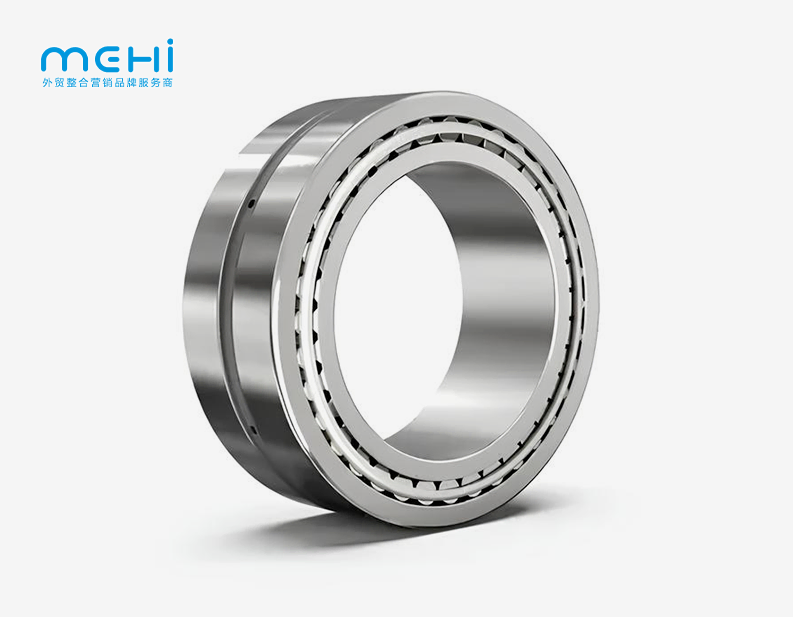
Advanced engineering makes four-row cylindrical roller bearings ideal for demanding industrial applications. Four parallel rows of rollers in a compact form greatly improve the bearing's capacity to withstand heavy radial loads while preserving accuracy.
Advanced Structural Engineering
These bearings' optimum roller design means each row works together to uniformly transfer loads throughout the bearing surface. This design concept reduces stress concentration locations that cause premature bearing system failure in simpler systems. Precision-engineered internal clearances allow thermal expansion during high-temperature applications and smooth operation.
The FC series cylindrical roller bearing's robust one-piece outer ring enhances structural integrity. The FCD series has improved load distribution due to internal geometry. The premium FCDP series offers the greatest precision tolerances and improved performance for essential applications.
Material Excellence and Manufacturing Precision
Superior bearing performance starts with premium materials. For normal applications, GCr15 steel has outstanding hardness and wear resistance, whereas GCr15SiMn has improved fatigue resistance for high-cycle operations. For harsh situations, G20Cr2Ni4A provides exceptional toughness and impact resistance.
Heat treatment optimizes microstructure development, balancing hardness and toughness. Surface finishes from precise grinding reduce friction and wear, extending service life. Quality controls during manufacture ensure dimensional correctness within tight tolerances and uniform performance across all bearing units.
Cage Technology and Lubrication Management
Brass solid cages and pin-type cages guide and retain rollers differently. Maximum strength and dimensional stability make solid brass cages excellent for high-load applications. Pin-type cages guarantee accurate roller placement and good lubricant flow.
Optimal pocket shapes provide lubricant distribution to all key contact surfaces in the cage design. Lubrication management extends bearing life and dependability.
Comparing Bearing Types: Why Four-Row Cylindrical Bearings Are the Optimal Choice
Knowing the pros and cons of various bearing technologies helps engineers choose one for their application. Four-row cylindrical roller bearings provide advantages over single-row bearings.
Load Capacity and Performance Characteristics
Four-row cylindrical bearings handle strong radial loads better than ball bearings, which perform well at high speeds. Roller and raceway line contact has a far bigger load-carrying surface area than ball bearing point contact, resulting in higher load ratings and longer fatigue life.
Tapered roller bearings handle radial and axial stresses well, but need more complicated installation and adjustment. Four-row cylindrical bearings are best for pure radial loads because they are easy to install and have high radial load capacity.
Dimensional Versatility and Application Range
Internal diameters from 90 mm to 1400 mm support medium-sized industrial equipment to enormous rolling mill setups. This wide range removes the need for specialized bearing solutions in most applications, simplifying procurement and assuring supply chain reliability.
Compact cross-sectional dimensions compared to load capacity make these bearings desirable for space-constrained applications. Increased rigidity reduces shaft deflection under load, improving system accuracy and reducing vibration.
Maintenance and Serviceability Advantages
The detachable design with ribless inner rings improves serviceability. Installing inner and outer ring subassemblies separately simplifies and speeds up assembly. Maintenance operations benefit from this design feature since individual components may be examined, cleaned, or changed without system disassembly.
Access to all bearing components allows comprehensive cleaning and inspection, allowing predictive maintenance plans that enhance machine uptime. This serviceability advantage reduces maintenance costs and boosts efficiency.
Applications and Maintenance: Ensuring Optimal Performance and Longevity
Four-row cylindrical roller bearings flourish in industrial situations where their distinctive properties match operating needs. Understanding these uses and conducting correct maintenance maximizes bearing investment.
Rolling Mill Applications and Performance Requirements
These bearings are mostly used in wire, bar, shape, cold sheet, hot sheet, and cogging mills. Four-row cylindrical bearings' sturdy construction and load management overcome certain application problems.
Quick operation and exact dimensioning are needed for wire mills. Four-row bearings' rigidity reduces roll deflection, maintaining wire diameter and surface smoothness. Bar and shape mills need high load capacity to withstand metal-forming forces, while vibration-damping bearings increase surface quality.
Precision bearings enable cold sheet mills to maintain tight thickness tolerances over sheet width. Hot sheet mills place bearings at high temperatures and thermal cycles, where modern materials and heat treatment procedures shine. Cogging mills load the most, requiring the strongest and most durable bearings.
Strategic Maintenance Protocols
Understanding operational conditions and setting inspection intervals is the first step to good maintenance. Check seal quality, lubricant cleanliness, and odd wear patterns visually. Early warning from vibration monitoring allows proactive action before a catastrophic breakdown.
Temperature monitoring shows lubrication efficacy and identifies deficiencies or misalignment. Trending these data over time establishes a typical operating baseline and identifies abnormalities.
Lubrication is the most important maintenance task, with intervals set by operating circumstances rather than timetables. Heavy loads, high temperatures, and polluted conditions promote lubricant breakdown, necessitating more regular care.
Lubrication Excellence and Contamination Control
High-quality cylindrical roller bearing lubricants maximize performance and protection. The lubricant selection procedure evaluates operating temperature, speed, load, and environmental parameters to assure bearing material and operating condition compatibility.
Lubricants are protected from moisture, dirt, and other contaminants that promote bearing wear. Clean handling, proper storage, and good sealing mechanisms ensure lubricant integrity throughout service. Oil analysis systems reveal bearing condition and lubricant performance, allowing data-driven maintenance choices that maximize bearing life and save costs.
Procurement Considerations and How to Choose the Right Supplier
Buying bearings takes careful consideration of several issues beyond price. Understanding these factors helps procurement experts maximize total cost of ownership and equipment reliability.
Technical Specification Verification
To operate well, bearing specifications must match application requirements. Load calculations should include maximum loads, speed ranges, and environmental considerations. Dimensional verification checks fit and thermal expansion clearances with current equipment.
Material certifications guarantee bearing performance under defined circumstances. Comparing material attributes to application requirements helps verify bearing solutions.
Supply Chain Reliability and Quality Assurance
Factory capabilities, quality systems, and performance history should be evaluated. ISO certification and other quality standards give baseline assurance, but firsthand inspection of production facilities and quality processes reveals supplier capabilities.
Maintenance planning and inventory management need delivery dependability. Understanding supplier capacity, lead times, and urgent response helps set realistic expectations and contingency plans.
Delivery is efficient regardless of project location using global logistics. Proper packing and handling minimize bearing damage during transit, reducing performance loss or expensive returns.
Cost Analysis and Value Optimization
Purchase price, installation expenses, maintenance, and estimated service life are included in the total cost of ownership analysis. High-cost bearings with longer service life and lower maintenance generally provide better value.
Volume buying agreements and long-term collaborations may save money and provide supply security. Understand supplier price structures and negotiate conditions to reduce procurement costs without sacrificing quality.
Conclusion
Four-row cylindrical roller bearings are best for heavy-duty industrial applications that need accuracy and durability. Their innovative design, load management, and serviceability make them essential for rolling mills and other demanding equipment. Robust materials, precise production, and smart engineering provide dependable performance, minimizing downtime and maximizing productivity. Proper selection, installation, and maintenance guarantee these bearings perform at their best and provide good ROI for industrial operations globally.
FAQ: Frequently Asked Questions on Four-Row Cylindrical Roller Bearings
1. What makes four-row cylindrical roller bearings superior to single-row alternatives?
Increased contact area and load dispersion in four-row configurations boost radial load capability. The compact construction reduces shaft deflection and improves system accuracy by increasing stiffness while keeping envelope dimensions. The separable design with ridless inner rings simplifies maintenance and decreases service downtime.
2. How do I determine the correct size and specification for my application?
Analysis of operational loads, speeds, temperatures, and environmental variables is needed for proper sizing. Internal diameters from 90 mm to 1400 mm cover most industrial applications, and material selection is between GCr15, GCr15SiMn, and G20Cr2Ni4A depending on performance needs. Bearing professionals help you choose the best specifications for your application.
3. What maintenance practices maximize bearing service life?
Regular lubrication using manufacturer-recommended lubricants, routine inspections for wear signs and contamination, and proper handling procedures during installation and service significantly extend bearing life. Temperature and vibration monitoring provide early warning of developing problems, while maintaining clean operating environments prevents premature wear from contamination.
4. Are these bearings suitable for high-speed applications?
While four-row cylindrical roller bearings excel in high-load applications, their speed capabilities are moderate compared to ball bearings. They perform optimally in rolling mill applications where high loads and precision are more critical than maximum speed. The speed limitations depend on specific bearing size, lubrication method, and operating conditions.
Partner with Meihao for Your Cylindrical Roller Bearing Procurement Needs
Meihao connects you with verified Chinese manufacturers specializing in premium four-row cylindrical roller bearings designed for the most demanding industrial applications. Our platform streamlines the procurement process by providing direct access to qualified suppliers offering FC, FCD, and FCDP series bearings with comprehensive size ranges and material options. Contact our team at somyshare@gmail.com to discuss your specific requirements and discover how our network of trusted cylindrical roller bearing manufacturers can support your operational needs.
References
1. Harris, Tedric A., and Michael N. Kotzalas. "Essential Concepts of Bearing Technology: Rolling Bearing Analysis." CRC Press, 2006.
2. Hamrock, Bernard J., and William J. Anderson. "Rolling-Element Bearings: Analysis and Design for Industrial Applications." McGraw-Hill Professional, 1999.
3. Eschmann, Paul, Ludwig Hasbargen, and Karl Weigand. "Ball and Roller Bearings: Theory, Design, and Application." John Wiley & Sons, 1985.
4. International Organization for Standardization. "Rolling Bearings—Dynamic Load Ratings and Rating Life." ISO 281:2007, Geneva, 2007.
5. Tallian, Tibor E. "Failure Atlas for Hertz Contact Machine Elements." ASME Press, 1992.
6. American Society of Mechanical Engineers. "Load Ratings and Fatigue Life for Ball Bearings." ASME/ANSI B3.5M-1986, New York, 1986.