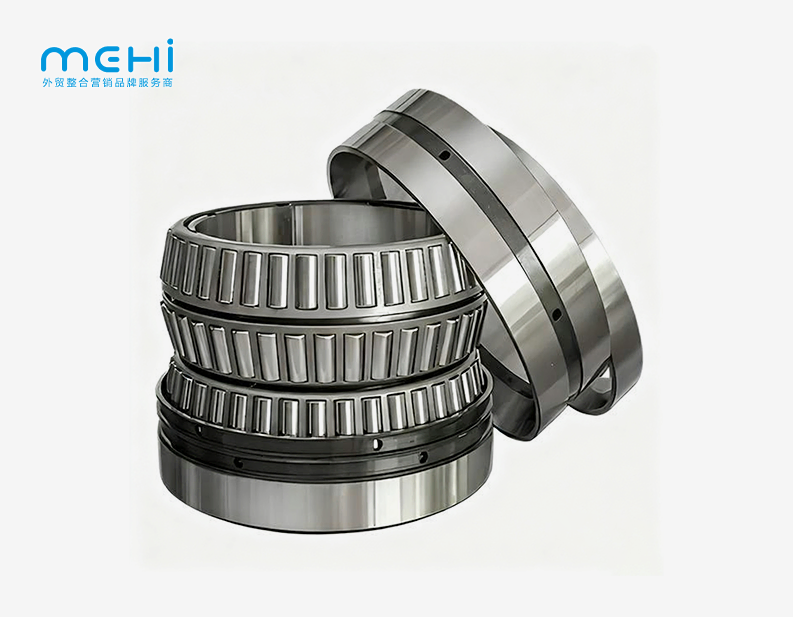
You can choose between single-row and double-row cylindrical roller bearings based on the needs of your application. When strength and steadiness are very important, like in high-load situations, double-row designs work best. Single-row versions are good for uses that value speed and simplicity. The choice depends on how much weight needs to be carried, how much room is available, and how precise the process needs to be. When manufacturing teams know about these basic differences, they can choose the best bearing option for their machines.
Understanding Double Row Cylindrical Roller Bearing Fundamentals
Double-row cylindrical roller bearings are high-tech engineering options for tough industrial uses. These bearings have two rows of circular wheels that run parallel to each other. This makes them much better at spreading load than single-row options.
There are two main variations in the design: the NN series and the NNU series. The NN shape has a ring inside with two ribs and a ring outside without any ribs. The NNU form, on the other hand, has an inner ring with no ribs and an outer ring with two ribs. Because the structure is different, engineers can choose designs that best meet the needs of each application.
High-quality materials like GCr15, GCr15SiMn, and G20Cr2Ni4A are often used in manufacturing. These materials make sure that the product will last a very long time even in harsh circumstances. The separate design makes it easy to put together and take apart, which makes upkeep simpler.
Inner widths range from 200 mm to 1500 mm, so they can fit a wide range of industrial gear needs. There are two types of bores: spherical and tapered. With tapered bores, the horizontal space can be changed during fitting.
If you want the most strength and the ability to hold the most weight, double-row designs are better than single-row ones.
Single Row Bearing Characteristics and Applications
For use with mild loads, single-row cylindrical roller bearings are a simple option. These bearings have one row of circular rollers, which makes them small enough to use in places with limited room.
The simpler shape makes it easier and cheaper to make. Because they have less internal friction, single-row bearings can usually work at faster speeds than double-row cylindrical roller bearings. The production of heat stays low, which extends the operating life in high-speed situations.
The installation process is easy and doesn't require as much technical knowledge as double-row setups. Because there are fewer internal parts, maintenance times tend to be longer. The lighter weight is helpful in situations where keeping the general system mass as low as possible is important.
Electric motors, small gears, and general industrial tools are all common uses. These bearings work great in places where modest rotational loads are common and stiffness needs aren't very high.
When you need cost-effective options for modest loads and high speeds, single-row bearings are the best choice.
Load Capacity Analysis: Double Row vs Single Row Performance
The changes in load capacities between single-row and double-row bearings are big. Test results show that double-row bearings can handle about 60–80% more rotational loads than single-row designs of the same type.
In double-row designs, loads are spread out over two sets of rollers, which makes it less likely that stress will build up on any one part. This way of distributing loads greatly increases the expected life of bearings. Industry tests have shown that double-row bearings can handle 2-3 times more load and still work for a longer time.
Most of the time, the dynamic load rate goes up in direct relation to the number of wheel rows. A normal double-row bearing with a 450 kN rating is better than a similar single-row bearing with a 280 kN rating. When used with big tools, these differences become very important.
The gains in static load capacity are even more noticeable. Double-row bearings don't bend even when they're under a lot of steady load, which is important for keeping the dimensions of precise machinery accurate. Measurements of deflection show that the bearing deforms 40% less when the load conditions are the same.
A lot better performance is achieved with double-row bearings for heavy-duty gears and building equipment that needs to handle loads better.
Rigidity and Precision Comparison
One important performance factor that sets double-row bearings apart from single-row bearings is their rigidity. For accuracy uses, double-row designs are necessary because they achieve much higher stiffness values.
Based on measured strength values, double-row bearings are 50–70% stiffer than single-row versions. This increased stiffness immediately leads to more accurate cutting and less shaking in high-precision machinery.
The features of double-row cylindrical roller bearings are especially useful for precision machine tools. The stiffer material keeps the shaft from bending too much during cutting, which improves the quality of the finish and the accuracy of the measurements. Tests show that when double-row setups are used, runout values drop by 30%.
Different configurations have very different levels of bearing orientation sensitivity. Because their structure is simpler, single-row bearings can handle small misalignments better. Double-row bearings need to be installed more precisely, but once they are lined correctly, they provide better working stability.
Each style also has a different level of thermal stability. When the temperature changes, double-row bearings keep their shape better, which is important for equipment that is used all the time.
If you need very high accuracy for machine tools or important manufacturing processes, double-row bearings are the best choice because they are more rigid and stable.
Cost-Benefit Analysis for Industrial Applications
Initial investment costs favor single-row bearings significantly. Manufacturing complexity drives double-row bearing prices 40-60% higher than comparable single-row alternatives. However, total cost of ownership calculations often favor double-row solutions.
Extended operational life reduces replacement frequency substantially. Industry data indicates double-row bearings achieving 150-200% longer service intervals under heavy load conditions. Reduced downtime translates into substantial operational savings for continuous production environments.
Maintenance requirements vary between configurations. Single-row bearings require more frequent lubrication and inspection cycles due to higher stress levels per roller. Double-row bearings distribute loads more evenly, extending lubrication intervals and reducing maintenance frequency.
Energy consumption differences merit consideration. Single-row bearings generate less internal friction, reducing power consumption in high-speed applications. Double-row bearings excel in low-speed, high-load scenarios where energy efficiency proves less critical than load capacity.
Return on investment calculations depend heavily on application specifics. Heavy machinery manufacturers typically recover additional double-row bearing costs within 6-12 months through reduced maintenance and extended operational life.
If you need long-term cost optimization for heavy-duty applications, then double-row bearings deliver superior value despite higher initial investment.
Installation and Maintenance Considerations
Installation procedures differ significantly between bearing types. Single-row bearings accommodate straightforward mounting processes suitable for general maintenance personnel. Double-row cylindrical roller bearings require more specialized knowledge and precise alignment techniques.
Proper installation of double-row bearings demands careful attention to internal clearance adjustment. Tapered bore configurations allow fine-tuning of radial clearance during mounting. This adjustability enhances performance but requires technical expertise.
Lubrication requirements vary based on load distribution characteristics. Double-row bearings typically require higher-viscosity lubricants to handle increased load densities. Lubrication intervals extend longer due to reduced stress per roller element.
Monitoring procedures prove more complex for double-row systems. Vibration analysis requires understanding of dual-row dynamic characteristics. Temperature monitoring becomes critical due to higher internal loads and heat generation potential.
Replacement procedures favor double-row designs due to separable construction. Individual components can be replaced without complete bearing assembly replacement, reducing maintenance costs and downtime.
If you need simplified maintenance procedures with standard technician skills, then single-row bearings offer more straightforward servicing requirements.
Industry-Specific Applications and Recommendations
Heavy machinery manufacturers consistently prefer double-row bearings for main shaft applications. Steel processing equipment particularly benefits from enhanced load capacity and rigidity characteristics. Continuous casting machines, rolling mills, and heavy presses rely on double-row bearing performance.
Industrial automation equipment suppliers choose bearing types based on precision requirements. High-speed packaging machinery often utilizes single-row bearings for reduced friction and heat generation. Robotic systems benefit from single-row bearing responsiveness and accuracy.
Large gearbox manufacturers integrate double-row bearings in output shaft positions where maximum load capacity proves essential. Input shaft applications may utilize single-row bearings where speed and efficiency take precedence over pure load capacity.
Construction machinery transmissions demand double-row bearing durability for extreme operating conditions. Excavators, bulldozers, and crane systems rely on double-row bearing resistance to shock loads and harsh environmental conditions.
Marine applications favor double-row bearings for propulsion system main bearings. The enhanced rigidity and load capacity handle variable sea conditions and high torque requirements effectively.
If you need bearings for precision machine tools or heavy industrial equipment, then double-row configurations deliver optimal performance for demanding applications.
Conclusion
Selecting between double-row and single-row cylindrical roller bearings requires careful evaluation of application demands. Double-row configurations excel where maximum load capacity, exceptional rigidity, and operational stability matter most. Single-row alternatives suit applications prioritizing speed, simplicity, and cost efficiency. Engineering teams must weigh initial investment against long-term operational benefits when making bearing selections. Understanding these fundamental differences ensures optimal bearing performance across diverse industrial applications.
Source Double Row Cylindrical Roller Bearings via Meihao’s Verified B2B Network
Meihao is a professional B2B supply chain and digital marketing service provider dedicated to connecting global buyers with verified Chinese manufacturers of double-row cylindrical roller bearings. We do not manufacture or supply bearings directly. Instead, Meihao serves as a trusted sourcing gateway, helping buyers identify suitable manufacturers based on application requirements, size ranges, materials, and quality standards. Our platform supports international buyers in sourcing bearings for heavy machinery and industrial equipment while facilitating technical communication, supplier verification, and inquiry coordination. Designed for high-standard markets worldwide, Meihao improves sourcing efficiency and reliability. For sourcing inquiries, please contact somyshare@gmail.com.
References
1. Harris, T.A. & Kotzalas, M.N. (2019). "Advanced Concepts of Bearing Technology: Rolling Bearing Analysis." CRC Press Engineering Handbook, 5th Edition.
2. Palmgren, A. & ISO Technical Committee 4 (2020). "Ball and Roller Bearings: Theory, Design, and Application Standards." International Standards Organization Technical Report.
3. Eschmann, P., Hasbargen, L., & Weigand, K. (2018). "Die Wälzlagerpraxis: Handbuch für die Berechnung und Gestaltung von Lagerungen." Verlag Technik GmbH, 4th Edition.
4. SKF Group Technical Development (2021). "Rolling Bearings Catalogue: Design Principles and Performance Analysis." SKF Technical Publications, Volume 2.
5. Timken Engineering Department (2019). "Cylindrical Roller Bearing Design Guide: Load Distribution and Application Engineering." Timken Technical Manual, Revision C.
6. NSK Ltd. Research Division (2020). "Advanced Bearing Technologies for Heavy Industry Applications: Performance Optimization Strategies." NSK Technical Review, Issue 47.