- English
- French
- German
- Portuguese
- Spanish
- Russian
- Japanese
- Korean
- Arabic
- Greek
- German
- Turkish
- Italian
- Danish
- Romanian
- Indonesian
- Czech
- Afrikaans
- Swedish
- Polish
- Basque
- Catalan
- Esperanto
- Hindi
- Lao
- Albanian
- Amharic
- Armenian
- Azerbaijani
- Belarusian
- Bengali
- Bosnian
- Bulgarian
- Cebuano
- Chichewa
- Corsican
- Croatian
- Dutch
- Estonian
- Filipino
- Finnish
- Frisian
- Galician
- Georgian
- Gujarati
- Haitian
- Hausa
- Hawaiian
- Hebrew
- Hmong
- Hungarian
- Icelandic
- Igbo
- Javanese
- Kannada
- Kazakh
- Khmer
- Kurdish
- Kyrgyz
- Latin
- Latvian
- Lithuanian
- Luxembou..
- Macedonian
- Malagasy
- Malay
- Malayalam
- Maltese
- Maori
- Marathi
- Mongolian
- Burmese
- Nepali
- Norwegian
- Pashto
- Persian
- Punjabi
- Serbian
- Sesotho
- Sinhala
- Slovak
- Slovenian
- Somali
- Samoan
- Scots Gaelic
- Shona
- Sindhi
- Sundanese
- Swahili
- Tajik
- Tamil
- Telugu
- Thai
- Ukrainian
- Urdu
- Uzbek
- Vietnamese
- Welsh
- Xhosa
- Yiddish
- Yoruba
- Zulu
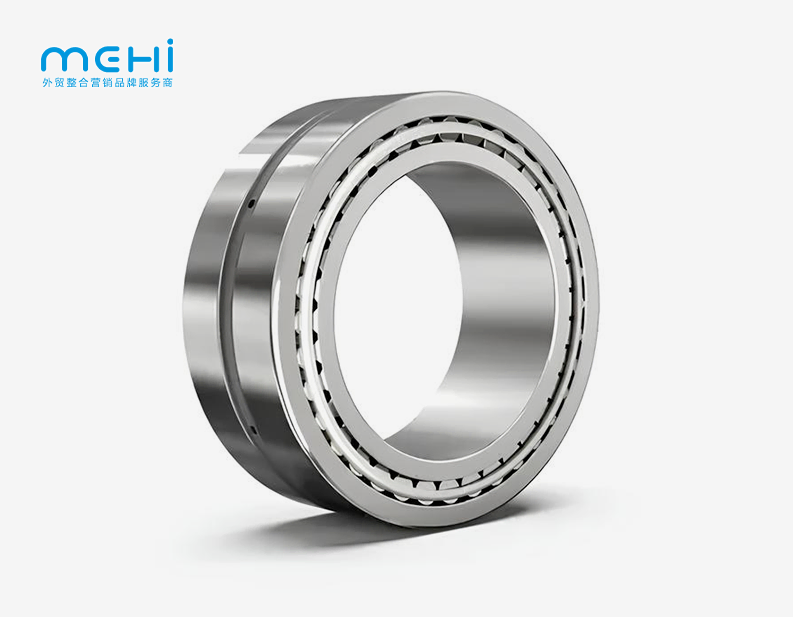
Double Row Tapered Roller Bearings are very important mechanical components in heavy-duty machinery that has to deal with horizontal and axial loads at the same time. These precise parts limit axial movement in both directions and work well as reliable two-way locating bearings in rolling mills, mine crushers, gears, and naval propulsion systems. Even though they are built to last and have a high level of hardness and changeable clearance through inner ring spacers, they can still have problems if they are installed incorrectly, get dirty, or aren't oiled properly. Learning how to use organised troubleshooting methods and being aware of common failure signs like strange noises, excessive vibrations, and unusual heat can help you avoid expensive downtime and make your equipment last longer. This guide talks about the real-world problems that engineering teams and buying managers face when they have to make sure that equipment works reliably even in harsh circumstances.
Understanding Common Issues with Double Row Tapered Roller Bearings
Recognising Symptom Patterns in Operating Equipment
Bearing systems have to handle a lot of stress in heavy-duty uses. There are three clear signs that a Tapered Roller Bearing is about to fail that machinery workers usually notice. Grinding or rolling sounds on the track or rollers' surfaces mean they are wearing down. This is usually because the oil film is not thick enough. It is possible to measure a rise in vibration amplitude when rollers get flat spots or when cage parts wear differently. Temperatures that are higher than usual indicate increased friction, which could mean that there are problems with the preload or the lube is breaking down.
To keep an eye on tools in steel rolling mills and mine crushers, you need to follow strict rules for observation. During initial commissioning, maintenance workers should take baseline readings to find problems early. Thermal imaging cameras find hot spots on bearing housings before they fail completely, and vibration analysis tools find the frequency patterns that are linked to different types of defects.
Root Causes That Accelerate Bearing Degradation
Several installation and usage factors can cause industrial machinery bearings to wear out too quickly:
- Misalignment during mounting: During installation, if the shaft axes are not aligned with the housing bores, edge loading puts stress on the roller ends instead of spreading it out over all of their full-contact surfaces. This situation makes wear lines on the raceway shoulders that can be seen and greatly shortens the life of the bearing. For heavy-duty systems that handle combined loads, you need precise alignment tools and skilled installation workers.
- Inadequate spacer width selection: The ability to change the clearance in Double Row setups relies heavily on the spacer sizes between the inner rings. When spacers are too thin, they create too much preload, which causes heat and speeds up tiredness. On the other hand, gaps that are too big let too much air flow inside, which causes vibration and impact loads. Manufacturers give spacer limits in microns because the accuracy of the dimensions has a direct effect on how well the bearing works.
- Contamination ingress through failed seals: When seals fail, contaminants can get in. For example, abrasive particles from mining or metal chips from cutting work as grinding compounds between precise surfaces. Even tiny contaminants can cause surface cracking that can lead to spalling failures. For equipment to work in tough conditions, it must have good sealing systems and lubricant filters that are cleaned regularly.
- Lubrication regime failures: Failures in the lubrication regime: Metal-to-metal contact is caused by both not enough lubricant and oil that has lost its quality. In steel mills, high temperatures break down regular greases, and in marine settings, water contamination mixes lubricants together. Most lubrication-related problems can be avoided by using the right lubricant for the job and following the plan for relubrication.
In demanding applications in Double Row Tapered Roller Bearing, these root causes combine in complicated ways. A mine crusher that isn't aligned correctly also has a higher risk of pollution because the seals are wearing out faster. Knowing how these things are connected helps maintenance teams come up with complete plans for preventing problems instead of just fixing individual ones.
Learning from Field Failure Case Studies
In a constant casting line, one company that makes metallurgical tools had bearings fail over and over again. The investigation showed that the installation teams tightened the bearing lock nuts to the wrong torque values, which led to different preload conditions in different units. The resulting changes in temperature led to unstable fits in terms of size. Within six months of putting in place training programs and methods for checking torque, failure rates dropped by 70%.
Heavy-duty gearboxes in tunnel-boring tools broke down after only thirty per cent of their expected service life in a different case. It was found that the recommended lubrication interval was based on conditions for surface mining, not the high-vibration, shock-load conditions of deep work. Changing to a synthetic oil with higher viscosity and extreme-pressure additives and shortening service intervals to match the seriousness of operation increased bearing life to meet design standards.
Effective Troubleshooting Principles for Double Row Tapered Roller Bearings
Systematic Diagnostic Approaches for Maintenance Teams
Correcting faults starts with structured inspections that discover them early. Maintenance engineers should standardise testing, measuring, and inspecting.
Visual examination shows damage. Sometimes remove the bearing sections to check raceway pitting, scoring or darkening. Rollers should wear evenly without fractures or flat spots. Cage parts must stay connected without nails breaking. Photograph your findings to monitor degradation.
Vibration analysis gives numerical bearing information without disassembly. Handheld vibration meters measure frequency and intensity. Faults have different frequency. Outer ring faults sound different from cage or roller difficulties. Sound data over weeks or months shows progressive disintegration, enabling you to plan maintenance instead of correcting instantly.
Touch monitoring or infrared thermography may identify thermal abnormalities. Limit bearing temperature by size, speed, and load. A steady temperature rise over baseline increases friction. Lack of lubrication, loading faults, or contamination might cause this.
Maintenance Practices That Extend Operational Life
Heavy-duty bearings are more reliable with proven maintenance. Lubrication management is crucial because dirty or inadequate oil causes most bearing problems.
Schedule relubrication based on actual operating conditions, not recommendations. Equipment in warm or strained conditions needs more oiling than equipment in cool climates with light loads. Automatic lubrication provides enough oil to vital machinery without human involvement.
Choose lubricants for certain uses. High-viscosity greases help mine crushers function more slowly and handle more weight. In high-speed gears, synthetic lubricants are more stable at high temps. Select acceptable oils to avoid chemical reactions while switching products.
Good filtering and closing avoid carrying surface pollutants. Immediately repair broken seals during normal maintenance. Labyrinth seals or purge air systems may be needed for dirty or damp equipment installation. Remove oil contaminants periodically to avoid injury.
Installation Procedures That Prevent Common Errors
Bearing fit impacts longevity. Mounting requires precision and cleanliness.
Parts preparation requires cleaning bearing surfaces, shafts, and housings. Remove new bearings' protective covers using appropriate solvents. Check fittings for burrs, nicks and corrosion that might affect alignment. Stress and premature breakdown may result from tiny surface flaws.
Interference fit installation: monitor bearing temperature. By heating evenly, bearings may be fitted without damage. Avoid exceeding manufacturing temperature limits. Extreme heat changes something. Induction heaters and oil baths manage heat better than bare flames.
Check spacer size to estimate interior room width. Manufacturing instructions outline how to match spacer width to working environment clearance. After fitting, check clearance and setup using dial markers or feeler gauges. Adjust setup before completing.
Lock nuts and other fasteners in Double Row Tapered Roller Bearing need tightening. Over-tightening increases charge, whereas under-tightening lets components move. Systems with several fasteners need sequential torque wrench tightening. Check bearing endplay and rotational resistance before setup.
Comparing Double Row Tapered Roller Bearings with Other Bearing Types for Troubleshooting Insights
Distinguishing Characteristics Affecting Failure Diagnosis
Knowing how Double Row bearings vary from others helps maintenance teams find solutions. Each bearing design has unique failure causes and diagnostics based on its structure and load capability.
Double Row Tapered Roller Bearings can bear rotational and thrust stresses since they have two single-row groups packed into a tiny unit. This design is ideal for rolling mill roll necks due to its two-way axial orientation and adjustable internal clearance. Housing is simpler with the TDO configuration with a common outer ring than with paired single-row installations. Choose the proper spacers, uniformly distribute the load over all rows, and modify the preload when troubleshooting.
Installing single-row tapered bearings in opposing pairs appropriately gives them the necessary preload to support the same weight. Diagnostics are harder since each bearing must be changed independently. Maintenance teams must ensure that matched bearings distribute loads uniformly and check for uneven wear patterns that may indicate improper alignment or preloading. Temperature discrepancies between matched bearings indicate load distribution issues.
Load Capacity and Wear Pattern Variations
SRBs can take more unbalance than tapered designs, but they can't retain as much weight when tiny. Because of their internal construction, shafts may bend without stressing the edges, making them ideal for flexible equipment frames. Though somewhat off-line, roller wear patterns are likely to be the same over their length. First check seals and lubrication, then alignment, while fitting spherical bearings.
Although they can bear pure rotating loads with low friction, Cylindrical Roller Bearings cannot withstand objects along an axis. They fail differently than tapered bearings. Edge tension wears down roller ends fast when misaligned. Troubleshooting requires accurate measurement equipment to align the shaft and casing.
Roller bearings can carry heavier weight, whereas Ball Bearings only manage higher speeds. Broken ones generate high-frequency noise, unlike roller bearing troubles' lower-frequency rumbling. Vibration study helps distinguish between ball and roller bearing issues based on failure frequencies.
Maintenance Requirements Across Bearing Categories
Varying bearings need varied maintenance depending on their operation. Tapered Roller Bearings require frequent clearance checks since wear affects their internal structure. Adjustable spacers allow maintenance staff to choose gap lengths during overhauls to restore clearance. This helps worn-out bearings live longer without needing replacement.
The internal shape of spherical roller bearings is normally determined during manufacturing. Maintenance focuses on lubrication and cleanliness, not distance. Their ability to self-align reduces installation errors, making mounting simpler.
These differences help consumers choose bearings for various machinery. Tapered Roller designs are suitable for mine crushers under large shock loads. However, huge naval gearboxes with flexible frames benefit from spherical roller self-alignment. Engineers may balance the initial cost with the lifetime expenses of ownership by understanding maintenance.
Advanced Strategies to Optimise Performance and Minimise Downtime
Implementing Condition Monitoring Technologies
Modern predictive maintenance plans utilise technology that detects deterioration before it becomes an issue. These technologies make maintenance proactive, so critical industrial equipment never stops operating without a plan.
Permanent vibration sensors on bearing housings transmit real-time condition data to central tracking systems. Complex algorithms search frequency bands for particular problems. The signatures for outer race faults, inner race defects, roller damage, and cage difficulties vary. Trending features monitor subtle changes over weeks or months, making it reliable at forecasting how long something will function. When shaking levels exceed specified limitations, systems provide maintenance warnings so scheduled repairs may be completed during planned shutdowns instead of emergencies.
Automatic screening using thermal imaging cameras detects temperature variations that indicate increased friction from several sources. Infrared thermography shows hot patches on bearing housings or seals to reveal hidden issues. Combining temperature and vibration data gives a complete bearing health picture.
Acoustic emission tracking detects ultrasonic frequencies from fractures, surface deterioration, and border lubrication collapse. Early damage detection before sound rises is possible with this technique. Sensors can distinguish bearing indicators from background machinery noises based on part status.
Selecting Premium Bearings to Reduce Troubleshooting Frequency
Part quality affects dependability and maintenance. Reputable OEMs like Timken, SKF, NTN, and NSK utilise tight quality control to ensure dimensions, material consistency, and surface smoothness meet or exceed industry requirements.
High-quality bearings use GCr15, GCr15SiMn, or G20Cr2Ni4A steel alloys. Controlled heating and cooling achieve the optimum hardness, toughness, and residual stress profiles in these metals. Surface treatments like black oxide coating or speciality platings prevent corrosion in severe environments. These tests ensure cage materials and designs are sturdy and stable in size and form under severe loads and temperatures.
Technical consultation services from heavy industrial bearing manufacturers assist engineering teams in identifying the optimal bearing designs for each application. This alliance considers load size and direction, speed range, temperature extremes, contamination risk, and maintenance ease. When correctly specified bearings fit product demands, they perform dependably with minimum troubleshooting.
Exploring Custom Bearing Solutions for Demanding Applications
Catalogue bearings can meet most industrial needs, but extreme situations need custom designs. Custom bearing development uses non-standard methods to solve important equipment issues.
Changes in internal geometry increase load dispersion in unusual load bands. Strong radial loads need shorter contact angles than axial loads. Even when big shafts change elastically, roller crowning forms may be modified to fit known deflection patterns to reduce edge stress.
In harsh conditions, material changes aid. Case-carburised steels have strong cores that endure contact and abrasive wear surfaces, while through-hardened materials provide constant hardness for huge shock loads. Normal steels break down quickly in mines and marine conditions, while corrosion-resistant materials can survive chemicals.
Changing seal designs may handle special contamination concerns. Multi-step labyrinth locks prevent dust in dusty areas. When working with metal, magnetic covers capture ferrous particles. Elastomers withstand oil and industrial fluid chemicals.
Product list-exclusive developments result from close cooperation with expert bearing manufacturers. This collaborative technique optimises bearings early in the design phase to assist OEMs in constructing new machines for demanding applications instead of repairing faults after usage.
Procurement Tips: Ensuring Quality and Support from Your Bearing Supplier
Evaluating Supplier Credentials and Certifications
Buying decisions have an impact beyond the purchase price. Only choosing suppliers primarily on pricing typically leads to lower-quality items, fakes, or inadequate technical assistance. Experienced purchasing managers evaluate suppliers' competence, reliability, and customer service using several parameters.
Check factory quality and process control certificates. ISO 9001 accreditation certifies quality processes, while bearing-specific requirements provide further assurance. Aircraft and defence vendors have stricter quality standards than industrial bearing suppliers. Ask for documentation that the organisation can perform nondestructive testing, including magnetic particle inspection to identify surface fractures, ultrasonic testing to find body issues, and measurement checking to verify forms.
Check the supplier's manufacturing and technological investments. CNC grinding machines with modern technology provide superior surface finishes. While processing, temperature-controlled manufacturing conditions maintain product dimensions. Suppliers that acquire advanced metallurgical testing instruments worry about material purity.
Check the provider's technical support. Engineering teams should engage application engineers who understand a business's demands and recommend bearing arrangements. Premium vendors are more responsive and willing to develop tailored solutions than commodity suppliers.
Balancing Cost Considerations with Quality Requirements
Prices in Double Row Tapered Roller Bearing should include the overall cost of ownership, not simply the purchase price. When cheap bearings fail early, lost productivity, emergency repairs, and replacement parts cost more than the original savings.
Calculate lifetime expenses by considering projected service life, maintenance, and failure. Premium bearings cost more initially, but they last longer and need less maintenance, saving you money over time. Business-specific equipment downtime costs vary. When machinery breaks down unexpectedly, steel mills and mines lose thousands of dollars each hour.
Consider buying many standard-bearing tools for numerous machines. Combining purchases provides you greater control over pricing and simplifies inventory management. Make arrangements with local distributors to receive goods swiftly in an emergency.
Consider how lead time will affect your timetable while shopping abroad. Shipping takes longer, requiring more safety stock, which drains working capital. Even though unit prices are higher, domestic wholesalers with quicker shipment save inventory costs.
Building Reliable Supplier Relationships for Long-Term Success
Supplier strategic relationships are worth more than one transaction. Connect with bearing professionals that provide high-quality, technical expertise, and fast service.
Make sure everyone knows the application's requirements, usage conditions, and pace. Provide explicit requirements so vendors may offer appropriate product ideas. Give feedback on performance, good and negative. This can assist vendors in understanding field conditions and provide better items or ideas.
Reach more people and receive more things using distributor networks. Established wholesalers have relationships with several manufacturers, giving clients more product options and thorough comparative data. They carry common sizes to ship immediately and collaborate with manufacturers to fulfil unique needs.
Make asking enquiries and comparing quotations quicker and simpler using digital buying tools. Modern B2B platforms connect buyers with vetted suppliers, making international product searches simpler. These platforms usually include supplier reviews, certification checks, and transaction security to safeguard purchase investments.
Conclusion
Double Row Tapered Roller Bearings have a very high total load capacity and can move axially in both directions, which is very important for heavy-duty industrial equipment. Recognising common failure signs, using structured repair methods, and keeping up with proper lubrication practices can greatly increase the service life of bearings and reduce unexpected downtime. To be a good buyer, you need to look at more than just price when considering providers. You should focus on things like quality standards, expert help, and a history of reliability. Predictive maintenance strategies are made possible by advanced condition tracking technologies. This changes maintenance operations from reactive disaster management to proactive optimisation. When engineering teams and procurement managers learn these fixing principles and supplier evaluation criteria, they set their companies up for efficient success in demanding fields like mining, heavy machinery manufacturing, and processing metals.
FAQ
1. How Often Should Double Row Tapered Roller Bearings Be Inspected?
How often you inspect depends on how dangerous and important the operation is. Equipment that works constantly under heavy loads in dirty settings needs to be inspected visually every month and in more detail every three months. Periods may be extended to six months for applications that aren't as demanding. Permanent condition tracking systems that keep an eye on important tools all the time are justified. During commissioning, take standard data to look for changes that could mean the system is breaking down.
2. What Are the Key Indicators That a Bearing Needs Replacement?
If you look at a bearing and see raceway cracking, spalling, or cutting, you should replace it. When vibrations get too high, noise patterns get strange, or temperatures rise above standard working ranges, it means that internal damage has happened. Wear progresses when the spinning resistance goes up or the endplay of the bearing changes in a way that can be measured. Do not use machinery that has clear bearing damage; severe failure could cause more damage to the machinery and pose a safety risk.
3. How Does Lubrication Impact Bearing Lifespan?
Bearings will last as long as they are supposed to if they are properly oiled. Enough and good-quality lube keeps metals from touching, which lowers friction and wear. When lubricants get dirty or break down, they turn into gritty chemicals that damage surfaces faster. Follow the relubrication plans given by the maker and choose lubricants that are right for the temperatures, speeds, and loads that will be used. Check the state of the lube using programs that analyze oil and look for contamination or low levels of additives before they cause damage.
Partner with Meihao for Expert Double Row Tapered Roller Bearing Sourcing
To find trustworthy Double Row Tapered Roller Bearing suppliers, you have to figure out complicated foreign supply lines, check quality certifications, and make sure that technical specifications are met. Meihao's main job is to connect purchasing teams with top Chinese companies that make bearings that meet strict foreign standards and OEM standards. Our confirmed source network includes companies that make bearings from GCr15, GCr15SiMn, and G20Cr2Ni4A steel. These bearings come in sizes ranging from 150mm to 1778mm inside diameter and are used in heavy industrial drives, mining equipment, and metallurgical equipment.
Meihao is a Google Premier Partner for the years 2023–2024 and won the 2024 Top Google Partner award in Greater China. They offer clear buying solutions that are backed by strict quality control and source screening procedures. Email us at somyshare@gmail.com to talk about your unique bearing needs.
References
1. Harris, T.A. and Kotzalas, M.N. (2006). Advanced Concepts of Bearing Technology: Rolling Bearing Analysis. CRC Press, Taylor & Francis Group.
2. Eschmann, P., Hasbargen, L., and Weigand, K. (1985). Ball and Roller Bearings: Theory, Design and Application. John Wiley & Sons.
3. Tallian, T.E. (1992). Simplified Contact Fatigue Life Prediction Model—Part I: Review of Published Models. Journal of Tribology, Transactions of the ASME, Volume 114.
4. ISO 492:2014. Rolling bearings — Radial bearings — Geometrical product specifications (GPS) and tolerance values. International Organization for Standardization.
5. Shigley, J.E. and Mischke, C.R. (2001). Mechanical Engineering Design. McGraw-Hill, Chapter 11: Rolling-Contact Bearings.
6. Moyer, C.A. and Bahney, R.J. (1999). Bearing Damage Analysis. CRC Press, Handbook of Materials Failure Analysis.