- English
- French
- German
- Portuguese
- Spanish
- Russian
- Japanese
- Korean
- Arabic
- Greek
- German
- Turkish
- Italian
- Danish
- Romanian
- Indonesian
- Czech
- Afrikaans
- Swedish
- Polish
- Basque
- Catalan
- Esperanto
- Hindi
- Lao
- Albanian
- Amharic
- Armenian
- Azerbaijani
- Belarusian
- Bengali
- Bosnian
- Bulgarian
- Cebuano
- Chichewa
- Corsican
- Croatian
- Dutch
- Estonian
- Filipino
- Finnish
- Frisian
- Galician
- Georgian
- Gujarati
- Haitian
- Hausa
- Hawaiian
- Hebrew
- Hmong
- Hungarian
- Icelandic
- Igbo
- Javanese
- Kannada
- Kazakh
- Khmer
- Kurdish
- Kyrgyz
- Latin
- Latvian
- Lithuanian
- Luxembou..
- Macedonian
- Malagasy
- Malay
- Malayalam
- Maltese
- Maori
- Marathi
- Mongolian
- Burmese
- Nepali
- Norwegian
- Pashto
- Persian
- Punjabi
- Serbian
- Sesotho
- Sinhala
- Slovak
- Slovenian
- Somali
- Samoan
- Scots Gaelic
- Shona
- Sindhi
- Sundanese
- Swahili
- Tajik
- Tamil
- Telugu
- Thai
- Ukrainian
- Urdu
- Uzbek
- Vietnamese
- Welsh
- Xhosa
- Yiddish
- Yoruba
- Zulu
Heavy-duty industrial uses need four-row tapered roller bearings, but problems with how they work can make the equipment less useful. These load-bearing bearings often have problems with premature wear, greasing failures, infection, and being out of line. To keep tools reliable, you need to know about these common types of failure and use the right troubleshooting and repair methods. By carefully looking for signs and using tried-and-true replacement methods, operators can extend the life of bearings and cut down on downtime.
Understanding Common Issues with Four-Row Tapered Roller Bearings
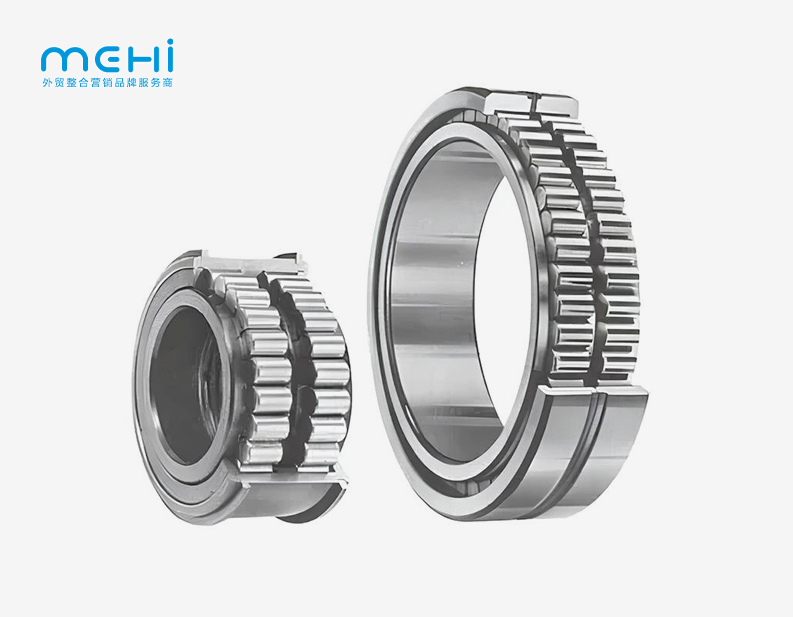
Four-row tapered roller bearings are necessary in rolling mills, big machinery, and large-scale production because they can handle high horizontal and axial pressures. The inner sizes of these strange bearings range from 120 mm to 1320 mm and are made of high-quality GCr15, GCr15SiMn, and G20Cr2Ni4A steel alloys. Because they can handle three times as much radial load as single-row tapered roller bearings, they can handle large axial loads in both directions.
Even though these bearings are strong, they can fail in a number of ways that make them less useful. Heavy shaking and noise are usually signs of damage inside or a bad fitting. Rapid wear patterns are a sign of problems with greasing, contamination, or misalignment that need to be fixed right away.
Primary Failure Modes and Symptoms
Lubrication deterioration, which causes high operating temperatures and strange acoustic signatures, is the main problem with four-row tapered roller bearings. Dust, dampness, and metal particles harm surfaces and hasten wear. Installation errors or structural modifications in supporting equipment frequently cause misalignment.
To avoid cascade failures that might cause lengthy downtime and high repair costs, procurement managers and engineers must notice these indicators early. The reasons are usually poor installation, lubrication, maintenance, or operating stresses over design requirements.
Environmental and Operational Factors
These bearings are employed in hot and cold rolling mill working roll necks, which face difficult operating circumstances. The clearance fit design makes mounting and dismounting easy, but it needs careful alignment and lubricant maintenance to avoid failure.
Diagnosing and Analyzing the Causes of Bearing Problems
Maintenance engineers and quality assurance supervisors must be skilled in accurate diagnosis to maintain bearings. A systematic diagnostic technique starts with thorough visual examinations to detect damage, wear, and contamination. Advanced vibration analysis employing accelerometers and spectrum analyzers detects internal component damage before symptoms arise.
Temperature monitoring reveals lubrication efficiency and internal friction. Hot patches in infrared thermography indicate deterioration or poor lubrication. The oil sample and laboratory tests show contamination, additive depletion, and degradation byproducts that indicate bearing failure.
Load Analysis and Environmental Assessment
Accurate issue detection requires comparing operational loads to design specifications. Process changes, equipment adjustments, or progressive production increases without bearing capacity studies frequently cause overloading. Environmental variables, including temperature, humidity, and pollution, affect bearing performance and lifetime.
Steel-pressed cages in ordinary four-row tapered roller bearings and pin-type cages in bigger sizes possess specific failure characteristics that qualified technicians may recognize via careful examination. Maintenance teams may provide cost-efficient, focused solutions to operational needs with effective analysis.
Predictive Maintenance Integration
Contemporary predictive maintenance solutions use numerous diagnostic methods to set baseline performance parameters and follow incremental changes. Maintenance staff may arrange bearing replacements during scheduled downtime instead of reacting to unforeseen failures that hamper production.
Practical Solutions and Fixes for Common Bearing Issues
A complete solution to bearing issues includes appropriate installation, optimal lubrication, and routine maintenance. Precision equipment and methods are needed for installation to guarantee proper alignment and fit. Clearances, torque requirements, and surface preparation must be considered while mounting four-row tapered roller bearings to avoid failure.
Lubrication strategy formulation starts with lubricant selection depending on operating temperature, load, and environmental parameters. Synthetic lubricants protect better at severe temperatures than mineral oils; however, mineral oils may work for moderate temperatures. Compared to time-based maintenance, condition-based lubrication plans based on operation hours and environmental exposure increase bearing reliability.
Essential maintenance practices for good bearing performance:
- Regular visual inspections, vibration monitoring, and temperature measures to discover possible issues before they become expensive failures.
- Lubrication management plans that include lubricant selection, contamination avoidance, and periodic replacement based on real operating circumstances, not deadlines.
- Development of replacement criteria based on damage extent, remaining service life, and cost-benefit analysis to guide repair vs. replacement choices.
These procedures underpin successful bearing maintenance programs that reduce unplanned downtime and optimize operating costs. Effective deployment involves diagnostic training and thorough recording of bearing performance over time.
Storage and Handling Best Practices
Damage prevention before installation is as vital as post-installation maintenance. Bearing storage facilities must maintain proper temperature and humidity to prevent contamination and damage. Handling should reduce moisture and impurities and avoid mechanical damage during shipment and installation.
Comparative Insights: Four-Row Tapered Roller Bearings vs Alternatives
Bearing procurement choices must consider cylindrical, double-row tapered, spherical, and needle roller designs. Four-row tapered roller bearings outperform other types in rolling mill operations due to their high combined radial and axial load capacity.
Four-row arrangements have stronger radial load ratings than single- or double-row setups and good axial load capabilities in both directions. This makes them ideal for construction equipment drivetrains and big industrial machines with changeable load directions and magnitudes.
In heavy-duty applications, properly maintained four-row tapered roller bearings last longer than other types. When operating within design specifications, their sturdy structure and optimum load distribution reduce failure rates. However, this performance advantage requires more expensive starting expenses and more complicated installation than simpler bearing arrangements.
Cost Considerations and Procurement Challenges
Total cost of ownership estimates must include purchase pricing, installation, maintenance, and estimated service life. Four-row tapered roller bearings are expensive, but their long life and low maintenance frequency reduce lifetime costs for demanding applications.
Custom configurations have longer lead times and may complicate supply chains for particular sizes. Market price changes and supplier capacity limits may impact availability and cost, making supplier relationship management crucial for vital applications.
How to Choose Reliable Four-Row Tapered Roller Bearing Suppliers
When looking for trusted providers, you should look at their quality, professional know-how, and service offerings. ISO 9001 certification and OEM licenses show that a seller cares about quality and reliability. Material certificates, records on the correctness of measurements, and the results of performance tests should all be given by suppliers.
Long-term provider ties are affected by things like technical support, guarantee coverage, and the availability of new parts. High-quality bearings come from well-known names like SKF, Timken, NSK, FAG, and NTN, and only from authorized sellers can you be sure of their accuracy and support.
A supplier's reliability on shipping, ability to handle large orders, and ability to customize applications should all be taken into account. It's important for suppliers to have technical skills and be flexible, since many industrial uses need special design changes. For better bearing performance and fewer costly mistakes, getting technical help during installation and testing may be a good idea.
Quality Assurance and Certification Requirements
Supplier quality systems should meet quality standards if they are audited and certified on a regular basis. It's necessary to have records on measurement inspections, material tracking, and the results of performance proof tests. Suppliers who offer different sizes of combined radial shaft seals and bearing designs show that they are good at making things and care about their customers.
Conclusion
Four-row tapered roller bearings are essential in heavy industrial applications, but their reliability relies on knowing frequent failure mechanisms and taking preventative actions. Proper diagnosis, installation, lubrication, and maintenance prolong bearing life and save downtime. Comprehensive supplier assessment and selection of quality bearings that fulfill application requirements benefit procurement managers and engineers. Organizations may maximize equipment reliability and efficiency via systematic bearing management and supplier partnerships.
FAQ
1. What are the most common signs that a four-row tapered roller bearing needs replacement?
Excessive noise, vibration, increased operating temperature, and visible wear or damage indicate potential bearing failure. Lubricant contamination or degradation also signals the need for immediate attention and possible replacement.
2. How does lubricant selection impact bearing service life?
Proper lubricant selection based on operating temperature, load conditions, and environmental factors can extend bearing life by 50% or more compared to inappropriate lubricant choices. High-quality lubricants reduce wear and prevent contamination.
3. Are customization options available for specific industrial applications?
Manufacturers you can trust will let you change the sizes, materials, heat treatments, and ways the seals are made to fit your specific needs. Custom engineering services help improve the performance of bearings to meet particular operating needs.
4. What factors should be considered when comparing bearing suppliers?
Quality certifications, expert help, on-time shipping, guarantee coverage, and service after the sale are some of the most important things that buyers look at. Another important thing to think about is the supplier's knowledge of similar apps and their ability to make changes as needed.
5. How can predictive maintenance improve bearing reliability?
Using vibration analysis, temperature tracking, and lube tests for predictive maintenance lets you find problems early so you can schedule repair for when the machine is down instead of waiting for it to break down without warning.
Partner with Meihao for Premium Four-Row Tapered Roller Bearing Solutions
Meihao puts you in touch with confirmed four-row tapered roller bearing makers who can make heavy machinery bearings of the highest quality and dependability. Our large network of suppliers gives us access to high-quality bearings with inner sizes ranging from 120 mm to 1320 mm, made from expensive materials and with cutting-edge design features. We connect you with providers who can help you with technical questions, make changes to your order, and provide solid support after the sale to make sure your bearings work perfectly. Contact somyshare@gmail.com right away to find out how our platform can make it easier for you to buy bearings and put you in touch with reliable makers who can meet your unique needs.
References
1. Harris, T.A. & Kotzalas, M.N. (2007). Essential Concepts of Bearing Technology: Rolling Bearing Analysis. CRC Press.
2. Budynas, R.G. & Nisbett, J.K. (2020). Shigley's Mechanical Engineering Design: Bearing Design and Selection. McGraw-Hill Education.
3. ISO 281:2007. Rolling Bearings—Dynamic Load Ratings and Rating Life. International Organization for Standardization.
4. Palmgren, A. (1959). Ball and Roller Bearing Engineering: Theory and Practice of Bearing Design. SKF Industries.
5. Eschmann, P., Hasbargen, L. & Weigand, K. (1985). Ball and Roller Bearings: Technology, Design, and Application. John Wiley & Sons.
6. ANSI/AFBMA Standard 11-1990. Load Ratings and Fatigue Life for Rolling Bearings. American Bearing Manufacturers Association.